“Uniquely Rika” by Ms. Rika [Femdom Review]

Uniquely Rika Cover by Ms. Rika

While the bulk of my review efforts for this year intend to lean towards correcting the paucity of attention paid to femdom fiction (particularly romances), this week my chosen book is Uniquely Rika by Ms. Rika. It’s been sitting in my to-be-read pile for a while, a couple of years now in fact. Published in 2008, it’s generally on the short list of recommendations in online femdom spaces, alongside The New Topping Book, The New Bottoming Book, and The Mistress Manual. As far as placing it relative to those, it’s almost like The Mistress Manual’s aggressive opposite. It’s attempting to be a dominant pleasing first guide, for people who aren’t interested in replicating the stereotypical dungeon experience. Inversely, based on others’ comments, it’s also got a reputation for advocacy against standard practices to maintain consent. While there are some folks who treat it like their Bible, there’s many others with strong negative feelings in the other direction. That makes it popular, but controversial. 

Going into it, I was therefore curious about what to expect. Was this going to be alarming or were the criticisms overblown? Additionally, I had another piece complexity as a reviewer. I run in the same circles as Ms. Rika, at least on the internet, and in my arms length observation of them, they generally give well reasoned, patient advice. Therefore I also want to stress that my feelings about their guide are not a reflection on their overall capacity to advise people, and should be limited to this text. Inversely, as I will discuss further on the review, as a somewhat seasoned part of the kink community, I have some observations about what happened when this book’s advice was put into practice over the last 17 years. 

Uniquely Rika attempts to solve one issue: Dominants (or would be dominants) in F/m relationships are disproportionately dissatisfied, because they feel that how their role is presented to them prioritizes their partner’s gratification at the expense of their own. While everyone agrees a major cause of this is excessively pushy subs and a lopsided popular understanding of what is possible or how F/m works, this guide is part of the school of thought where the solution is to tell them this isn’t real submission, but also that a true sub is completely selfless. The best way to reflect this selflessness, in Rika’s mind, is constant 24/7 anticipatory service. 

Where the guide is weakest is that strictness of definition, and what I would describe of as having way more good faith on her part in the people trying to put her advice into practice. While it’s never a good idea in BDSM advice to talk about a true *anything*, her other major stumbling block is something she is pretty up front about in her forward. This is written for sub dudes trying to get their wife into this; vanilla women with a sub partner; and  generally kinky couples who are trying to transition intermittent play into a more encompassing dynamic. Nowhere in that list is solo dominant women, or dommes to whom this is their idea. This is an oversight that tilts things wildly, because the foundational premise leans to assuming that the dominant is starting from such a place of alienation that a sub needs to lean with all his weight in the other direction to over-correct past damage. And, if I am being honest, I find her approach to more traditional BDSM activities internally contradictory to how she frames them. 

To her credit, she makes it pretty clear this is just what works for her, in a sample size of 1, an, at the time of writing, 20 year 24/7 dynamic. That is not nothing, but she doesn’t claim a PhD in counseling psychology; a lit review of the 200 most useful books; or even makes anything bigger than claiming this is her perspective after a lifetime of observing other people’s dynamics fail to work. 

To place her ideas in the larger spectrum of what’s out there, she’s a Pyjama Domme (or fuzzy slippers Domme). That’s a byproduct of the late aughts to mid 2010s who collectively awakened to the problem that the conventionally understood idea of femdom was not working for most of us, since we weren’t interested in operating in a commercial context. Our actual problem was sexism (and remains so), and our mission to amplify ourselves and be heard was based on the very real need to assert that we did not need to wear a specific uniform of fetish wear and play a character to be permitted to do this. We particularly centered casual, deliberately unsexy loungewear as our symbols to emphasize this wasn’t about us performing for others. There were some significant upsides from this (omisspearl.com existing being one of them!), but Uniquely Rika also reflects some of the problems we were prone to.

At our worst, we could be very SWERFy, often lashing out more than needed at sex workers over the fact that we were immersed in the lock step advice that if you were a dominant and a woman/even vaguely femme, you needed to be an amateur dominatrix. To this day, we have both positives, but also a hard edge of a sort of heterofatalist tendency to throw a self defensive elbow in the direction of everything we have been historically harassed with, even as you aren’t prepared to give up on it entirely. That and the human tendency to simplify and ignore our own personal grey areas. A lot of dominants with criticisms of femdom culture will over state certain parts as being entirely the idea of silly and demanding men, while eliding over other parts we want to keep. 

For Ms. Rika, that probably shows up most in her effort to grapple with the idea of fetish versus vanilla. Everything femdom, in her cosmology, is either the false version of submission (summarized as that craving for a corseted, whip wielding, high camp goth disciplinarian) or “normal” female sexuality. Some of this is being deliberately hands off with trying to define specifics, in an effort to make this be more universal. But in practice, her efforts to illustrate why her method is more inviting flips into being a lot more specific than she seems to realize.  

Where she has her best strengths is where she breaks down why different models of how this is supposed to work fall short. Her examples of why hanging your whole dynamic on a specific fetish fails are inspired, stressing that a partner hanging their motives entirely on cock cage or similar prioritizes their accessory over their partner. Likewise, when she starts talking about the S&M side of it there’s an approach that’s relatively novel to topping if your goal is supposed to produce certain psychological outcomes in the partner. Were it not for her unfortunate attitudes towards limits and negotiations, I would actually say she tends to demonstrate a pretty good understanding of the theory of why a lot of things work. 

However, despite the emphasis on these being clearly important enough to figure out, her method insists that all fetish activities (the tying, the butt stuff, roleplaying, etc…) are categorized as gifts we should assume the dominant isn’t personally into, but may choose or not to give the submissive. She’s very clear that it’s a gift, not a reward, as nothing is ever owed. She also figures if these were your thing otherwise, as a dominant, you would be doing them already and your partner’s desire for them wouldn’t be potentially vexing.

Unfortunately, this misses that a lot of dominants also struggle with the thing we actually want being forced on us or given to us so awkwardly this undermines our own relationship to it. Making it a “gift” certainly gives you a cooling off period from the usual experience dommes complain of, when this is shoved down our throats. Inversely, all this distance also subtracts your own ability to take ownership of the thing. Nevermind her general tone that if you like this stuff at all without a man wanting it you are kind of weird because these are all “male centric”. 

There’s no curiosity there might be a female centric version of these things, or introspection of why we needed so much emphasis on these if they are so darn distasteful. Men are from Mars and sadomasochists; women are from Venus and like cunnilingus and sex where he doesn’t finish. Because obviously he isn’t getting primary enjoyment from *that* without you forcing him too, but no woman ever saw some tall boots and thought she looked sexy in them. And this gets especially bewildering the way she keeps going back to the same scenarios of her partner kneeling with clamped nipples and clothespins on his scrotum, even as she emphasizes the bizarreness of this.

Ms. Rika is very able to break down things effectively to explain why it usually doesn’t feel dominant to be told you may (or worse, should!) do a lot of traditional fet stuff. But she has a massive blind spot around whether her own wishes should be perceived as kinky, and how 24/7 anticipatory service is over stated as the secret sauce. Sure, lots of people like to get what they want. It assumes all women are secretly wanting the upper hand in every important aspect of their relationship. 

It also assumes all subs can make literally anything work, as long as they remind themselves that doing a favour for the dominant is always a privilege. Maybe this is a little bit of an absurd reach, but based on how Ms. Rika defines this, that would include collaring your partner and being the perfect dominant for her 24/7 as an act of selflessness. With no expectation of it ever stopping or getting what you want, because that other stuff is a gift. 

A hypothetical extension of the Uniquely Rika system is that her version of a fake male sub could find a real sub of the gender they prefer and order them to do anything they want. You can imagine how much the average self identified femsub with a guy trying to pull that stunt would laugh them out of the room. That’s probably another problem with the pyjama domme approach, collectively. A lot of us are so personally repulsed by submission and how much the mainline scene pushes it on us that we kind of stop paying attention to how a whole other population of kinky women are navigating living with demanding partners and sexism, and how they deal with it. 

An even more crotchety read here, on my part, is this abdication that you even think about your partner’s needs and get him to figure it out for himself  is bordering on the dubious idea of stealth submission. And it does go there, with examples like shoe care causing the sub to realize as a foot fetishist they should be grateful to be allowed near that. What is working here is that it’s making the sub a more active participant in making space for the dominant, not just his fantasy. The problem here is that this isn’t really sustainable. 

Guides like “Conquer Me” by Kacie Cunnigham can also be contrasted here. That book is preoccupied with making a sub in a M/f relationship feel submissive while the sub remains safe, and not at all with a dominant feeling dominant. But inversely to Uniquely Rika, Conquer Me emphasizes the theatrical bells and whistles matter. Which, some sort of part of that usually does. There’s a distinct paucity of magic doormats, no matter what they angrily type about how their submission is actually true and real. 

Thus, the problem with Uniquely Rika’s approach is also that 24/7 anticipatory service (as she describes it) is not going to work without a whole bunch of stuff she is assuming will automatically follow. Ms. Rika talks about the hardline posture she occupies, but we don’t really get Mr. Rika’s side of things except through her reassurance men will eventually be grateful even if they seem reluctant at first. Which, I would suppose, now requires me to talk about her constant emphasis on no limits or safewords directly. She does that a lot, and believes it’s the other core part of this working. 

This is what I would call Ms. Rika not realizing what a good, loving and patient person she is, and having the smart and thoughtful person blunder of not understanding just how dumb and terrible other people are. 

Ms. Rika assumes your love and appreciation for your partner makes doing the things she classifies as “gifts” fairly regularly a natural extension of that love. She clearly sees the want for these things as an extension of who your partner is, and something that ultimately needs to be warmly accepted. In a lot of ways the unspoken foundation of her theory functioning for her is she is offering her partner the reassurance that when she does these things it is because she wants to and he doesn’t have to worry this is under duress. 

Since a lot of subs, particularly dudes, think their desires are an icky box of spiders, that can be powerful. Wow, no more begging, it was even her idea! But, because a lot of people think the theatrical stuff actually is icky spiders AND the idea of subs being a limitless well of support is hot enough to forget most people can’t sustain the practice of that, evidence shows that the average person trying to do her method eventually runs into a wall. 

In practice, you can’t hold Ms. Rika entirely responsible here, but it fucks up so many couples to basically decide that the sub is not to be trusted with their wants. It’s like even the folks who agree we need to start with an egalitarian foundation take the sub’s half of it, and rather than emphasize it’s to be weighted equally to the dominant, throw it out the window. 

As a submissive, you do not get to decide what makes a dominant feel dominant. Inversely, as a dominant you do not get to decide what makes a submissive feel submissive. If this gulf is too big to bridge, that doesn’t make either of you invalid, just incompatible.

You can tweak what you are doing to see where compatibility is, but you can’t fix things by deciding that one of you just needs to suck it up and deal. That’s a sexy premise to a fantasy, but so is being kidnapped and forced to marry a fairy prince, or having a permanent residence in a cage in someone’s basement.

Ms. Rika goes one step worse here, because she sort of loses the plot when she transitions from the loving egalitarian relationship she says you need to start with and how you should conduct yourself in the D/s relationship she puts on top of it. Specifically she thinks you get there via a my-way-or-the-highway approach to BDSM, complete with withdrawal of the right to serve at all if they ever balk at anything, with an emphasis on no negotiation other than consciously assuming the dynamic itself. Otherwise, she places a repeated emphasis on dommes having no obligation for the dynamic other than honest feedback and being calm, firm and unyielding. If they refuse to do anything ever, you simply end the dynamic. First, as a warning shot for 24 hours, but you make it clear you will easily make it permanent if they don’t both change their mind about the refusal and apologize.

This is fucking bananas. I can’t stress how bad the advice here is. Ms. Rika says this is just what works for her, and maybe it would work for you, but she has really poor insight into how this will go down for other people and the actual role of limits play in a relationship for the benefit of both parties. 

Ms. Rika is assuming that not only do you not want to cause real harm to your partner (because you love them), but that you will be very good at determining your partner’s level of distress as it approaches lasting harm, and that it is appropriate to incentivize cooperation with only your one version of submission with no input from them. She also assumes that you are so otherwise indifferent to receiving his submission that anything less than the extreme is worthless to you. Therefore if he cannot do that, you would prefer he stop asking at all. 

If you use her method you also need to assume that you are a better judge of what your partner is capable of than they are.  And that your partner is not to be trusted, and without an imminent threat of losing your interest in BDSM all together they will sabotage the submission they supposedly want. 

I try to avoid the whole “are the straights ok???” thing because honestly the whole business of BDSM, even done badly, is as queer as a three dollar bill, but this book does have a giant begged question of why you are tolerating someone who is apparently so shit at basic relationship skills. It’s very “control your husband by withholding sex, because as a woman you could take or leave it.” For a person who spent a lot of time telling you not to act like their mom, Ms. Rika still tends to lean that way, that your underlying vanilla dynamic is adversarial and your partner is at best lazy and at worst out ot get everything they can get too. Tirelessly work on this submission to me, young man, or we throw it away! Men are idiots. That’s just how men are, honey. You gotta break’em in or they will walk all over you. (etc..) Yes, this was written in 2008, and there’s a generational gap in how compulsory relationships were to Ms. Rika’s generation versus my own, but it is already a hostage situation just get a fucking divorce already.

And really, the problem is that as a result there is no room for most dominants in her method, because we are incentivized to also want this. At best her method is playing chicken, counting on your partner having lower self worth or higher desperation. At worst this is dominant fap, as much a fantasy as the Surrendered Wife teaching you how to get your husband to do everything you want by selectively ceasing to do anything you don’t want to do.

I don’t think Ms. Rika wants anyone doing anything unsafe to their partners when she repeatedly emphasizes a no limits approach. I just think that, in the history of people in fetish communities emphasizing the absence of their limits, she does the usual thing of assuming the actual limits someone might have are so radioactive (and so universal) if they were ever transgressed it would immediately end the dynamic… so it doesn’t count. Then she doesn’t need to think about it because it maintains the mutual fiction of greater power.

All this no limits business is also a kind of an emotional security blanket from self reflection about the other elephant in the room. Ms. Rika says she doesn’t feel dominant from doing traditional sadomasochistic stuff, but she takes enjoyment in knowing her partner is inconvenienced. This is where the strictness of her world view gets in her own way. What she’s describing is a flavour of sadism. This is a fetish. Ditto the way she tries to sell sex where he doesn’t come by default.  A lot of people would feel as uncomfortable doing what she is describing as they would scowling in thigh high boots. And by the time you get to the sex manual part where she keeps talking about removing your partner’s choices (push them past them saying no!), over and over again you really get a feeling that the lady is protesting too much. There’s only so much you can say you aren’t all that invested in your partner’s fetishes when you won’t stop talking about the thought you have put into them.

Essentially, the core of Uniquely Rika is her effort to create a space where she feels safe being unreasonable. Just as much as she observes her spouse becoming more open minded about what he can work with to feel submissive over, she’s given herself breathing room to get comfortable with what he wants and figure out how to make it work for her. What’s missing here as point of emphasis is that 20 year marriage with implied years and years of exploring and experimenting and knowing each other’s personal quirks.

And I can, through my own experience, see how she arrived where she did, even if I think the result is bad advice. As a baby dominant, how everything is presented to you is basically two versions. You are either here to master giving your partner the physical and psychological ride of their life or you are a dangerous psychopath to be strictly reigned in. More frustratingly, you get to be treated like the latter, and your partners often get deeply offended if they are asked to do otherwise than pretend you are a villain… but also somehow still entirely here for their benefit.

Also I was often really bad at the skill parts, or wouldn’t always nail what my partner(s) were looking for, and the culture of communication was that I deserved lots of feedback on how well I was doing for them, but my ability to feel dominant was something I was just supposed to figure out how to extract for myself by doing this. I think Ms. Rika was under the same pressure. Seriously, nothing was more discouraging that much of the aftercare I got from people amounted to “I have a few notes about how you can do this better for me next time…”

Now I am becoming an old, and have been doing this almost as long as Ms. Rika did when she wrote her guide, what I realize was there was no room for me to be vulnerable and imperfect.  

The problem is flipping this on its head (no actually, subs are villains who are entirely here for my benefit!) would have been a wild over correction. And the Uniquely Rika school of doing things, now with plenty of people trying to put it in practice, we can see where it goes wrong. For couples trying to get a dynamic off the ground, even with a bit of kinky bedroom play, suddenly jettisoning all your feedback tools and pretending all the sub’s needs are invalid. 

Ms. Rika’s approach to safewords, etc… are that these are things that the sub uses against dominants to correct and control their behaviour. Safewords, properly used, actually benefit the dominant because they require the sub to do the work in self introspection, such that the dominant can relax a bit of the pressure in monitoring everything. The sub skill learning curve is usually about getting away from needing the dominant to be a mind reader, and a mandatory safeword demands subs always keep one foot on the ground and never lose sight of your experience of this.

Uniquely Rika’s hardline approach removes most of the lopsided burden from dominants, to let them find their own joy, but it never really realizes it’s simultaneously just as much a set of training wheels and is foundationally resting on her having the sort of trust with her partner she can push him a little bit or the distinction that she is actually only asking him to approach what she wants with the same open minded way she makes what he wants work for her.

Thus Ms. Rika identifies correctly identifies that cock cages or cross dressing alone cannot sustain a dynamic, but neither can defence mechanisms. For a few folks, coming from a foundation of trust, it will take the pressure off long enough to let things feel most natural. But for most people, this is just going to cause even more resentment and insecurity.

Therefore, I don’t think this is a good beginner book, or even really one I would personally suggest, even as something to follow at all. I think if you take it as a personal snapshot of how someone constructed their dynamic, its value is a lot more that there’s not many other books like it. It’s not trying to be a universal work like The New Topping/Bottoming Books, appealing to every possible permutation of kinky. Neither is it like most other femdom manuals, either concerned with appealing to hubby’s fantasies with the same indulgence you might learning your mother in law’s holiday dishes; but neither is it stealth porn, which a distressing number of other manuals turn out to be.

What she offers is there in the title, that to be a lifestyle dominant and not want to claw your own eyes out in frustration, there has to be space to uniquely be yourself. Where it falters is a lack of trust in your partners to ever be able to follow through without some sort of pressure beyond that being your preference.

I would be interested to see, nearly two decades later, what if anything Ms. Rika would change on a re-write. It’s a 17 year old sex and relationship manual, daringly novel in its approach, but if you are remotely following the discussions people have around lifestyle femdom, it’s also somewhat blatantly of its era. But that’s not a bad thing. No Individual Lifestyle only Domme is going to have it nailed down in every aspect, and we can’t really ignore that Ms. Rika’s commitment to being herself.


Barnes & Noble Link: Uniquely Rika
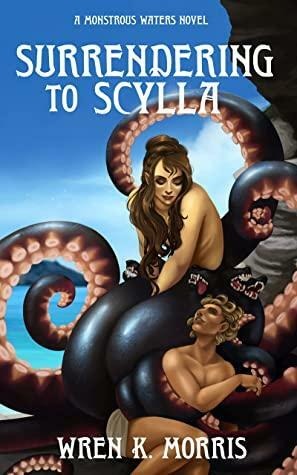
“Surrendering to Scylla” by Wren K. Morris [Femdom Book Review]

Surrendering to Scylla but Wren K. Morris

A cursed nymph living a life of violent retribution comes to love and be loved by a gentle, shipwrecked fisherman. She’s been hurt badly before, but through the power of his endless patience, a strong fawn response from his own prior trauma and the power of forced proximity, love is found (as well as general deference to her authority). 

It’s a Greek myth retelling and monster romance, between Scylla, the sea monster, and a man who is like not like the other terrible men she has met before. He is patient enough with her prickly side to let her come to trust him, and he is devoid of the dominating masculinity of all her prior suitors. There’s lots of overtly coded, unapologetic femdom and a lot of feelings.

If you like your ladies strong and your men soft, and you want to watch the most bitter woman in the world be loved anyway, you may find this was just what you were looking for. There’s lots of action, tentacles and high drama, and pretty reasonable pacing. It’s even the first book of the series, rather than sticking the femdom in the ass end of the book list when all the creative juice is wearing thin. Unfortunately I didn’t personally find it worked for me, but I can see why people do, and what in it was done very well. 

For positives, you get a heroine who is allowed to be physically monstrous, biblically accurate style. Scylla has tentacles aplenty and vicious dog heads at her waist, and rips several people in half. She is a Gothic villain in the style usually only permitted to male characters, the brooding brute. The plot is also constructed into a coherent narrative by someone who clearly knows their myths. A barren island’s cave system makes for a novel and occasionally oddly comfy setting. I liked the slice of life parts. 

Unfortunately, for me, all this is held back by a chronically weak male lead (in more than the physical sense) and a cartoonish level of simplicity to its approach to the bad guys. And, as a modern retelling, for all it tries to tweak itself to a more feminist framing, with its emphasis on female rage, the rewards of being true to yourself while opening up a little to love are a bit dubious.

I also found it couldn’t seem to commit to how unlikeable the heroine is supposed to be. That’s not something I would call a fatal flaw. It’s well understood that female characters are held to higher standards to sweetness and thematically this is about not having to be nice. Nonetheless, there’s a bit of awkwardness in how much we the reader are supposed to buy her self justification. Retellings of the villain figure stories often struggle with this, explaining away what modern audiences might particularly take issue with to the point of dilution or failing to address them satisfactorily. While the Greeks themselves gave most popular characters in their stories different interpretations that could be completely contradictory, I found Surrendering to Scylla a bit tonally indecisive in how bad it wanted her to be read as. Greeks often elided around that problem with tragedy, of which this would otherwise stand well as, but Romances have to give you a Happily Ever After. Unfortunately, this one tried to do so without deciding if the characters needed to resolve or soften most of their flaws, or lean into them. 

So, we linger on Scylla’s suffering to make her understandable, first her objectification as a nymph, her status as collateral damage to a deluded Circe, and so on. Usually this sort of framing is done to make a character’s behavior understandable and sympathetic. Inversely, she has an awful lot of self pity for a serial killer and very little self reflection about her own prejudices around other monsters. The story also acknowledges that she is actively luring people to their death for the crime of being in the same zipcode and not as discriminating a killer as she puts herself to be. Morris isn’t going for the me-or-them completely misunderstood monster. I actually liked this part, but her unchanging embrace of that came at the expense of Ophelo’s likeability in a way that I don’t think was intended. It also ends up highlighting how simplified all the other characters are in their uncritically described awfulness, which can be confusing.  

Because additional characters are left in very reductive shapes, it’s very undecided about what I would describe as how much we should take seriously the leads’  trauma goggles. Narrative seesaws between hints of complexity and hard binaries, where people are all good or all bad.  It therefore feels a bit like we are getting things through the perspective of our two leads, but not given space to acknowledge they are unreliable narrators. 

For example, in the setting “Sailors” are officially distinct from the male lead, a “Fisherman”. The former is a sort of long voyaging traveller, the latter, we are led to understand, is a skilled trade everyone spits on. Why do Sailors sail? Scylla would say they are greedy, but stops short of saying they are all raiders. They have treasures on their boats sometimes. That’s about the level of motivation we get here, so we can only infer most of them are traders. Regardless, Sailors are all characterized as absurdly awful, murderous jerks. Some of this is being played for laughs, with how ridiculous the characters are. But at the same time we are supposed to see them as a real danger to Ophelos, including implications (off page) he has been repeatedly sexually assaulted. Thus, the book struggles with the nuance it wants to insert. 

Scylla has a massive blind spot where her interactions with the world essentially amount to avoiding Gods and being exasperated strange horrid Greek men want to fuck her. She’s clearly never thought about any mortal who wasn’t cut in the heroic measure, and while those that do have nothing to recommend them, those that don’t are largely outside of her interests.

For example, she is hard done by and alone thanks to the curse. But she also keeps mentioning off hand there’s another monster in line of sight from her own home that she has clearly made zero effort to contact. We never learn why, but she is also offended to be compared to other monsters without a lot of caveats on Ophelos’s part. This isn’t one of those “monster is our word, you can’t use it” either. She just blithely assumes that her neighbour isn’t worth talking to.

Ophelos, on the other hand, is comically bullied. He is so bullied, the story makes it clear that even his father was bullied. Everyone bullies him so hard and so mean, but he kills and catches fish so good that the Sailors brought him along in the boat. The rest of his character is basically one giant trauma fawn response. When he isn’t fawning he is clinging. The clinging is framed as the courage of his love, but given the other thing we know is the only people who didn’t bully him were older women he helped in the past, there’s a streak of self preservation here that never gets addressed. And nonetheless, his actual backstory is life in a small village followed by travel with horrid louts. For all his time on boats he has never seen the world without bringing a gang of assholes with him wherever he goes.

While Sylla is permitted to do things female characters usually don’t get to, Ophelos’s most positive trait is his complete inability to pose any meaningful threat to Scylla. This makes her feel safe, but ultimately that’s all he can offer. It feels like in an effort to emphasize the distinction between them it ends up giving Scylla depressingly low standards. 

Ophelos embodies that observation that if you are the sort of person who waxes at length that dogs are better that people, what you mean is you prefer beings you have all the power over who depend on you completely. It’s not wrong to fantasize about making someone into your literal emotional support pet.  It just made it hard for me to feel Scylla was actually getting a good deal. 

I think my “come the fuck on” moment with this book was probably the relationship’s third real conflict. After an interlude of innocent-in-a-Gothic-castle style standard warming to each other, a gang of Sailors show up and attempt to fight Scylla. Ophelos wanders into this, and, after the Sailors’ offer of rescue is rejected by him, turns on Ophelos as well. As is a traditional trope, Scylla takes a mild injury defending him, but when she is snuggling him in the aftermath he is also not comfortable with the carnage he just witnessed and blurts out he forgot she was a monster.  Scylla reacts by storming off, rejection sensitivity dysphoria personified. When they both cool off, Scylla apologizes for not realizing gore could be off-putting… and Ophelos apologizes for letting his empathy get in the way of her murder and making her feel bad that he was openly upset. Even though, he says, he can’t help noting those dudes she ripped asunder could have easily been him, he knows she needs to do this as a part of herself. 

Not “you were only protecting yourself and me!” Not “you couldn’t help it, you lost control” or even “yes, it’s bad but your monster part needs to feed”. Just that this is important to her, so who is he to get in her way or question that? We see that Ophelos fully acknowledges that Scylla is a monster in the behavior sense not the physical sense. It’s this point that we realize just how cooked this young man’s brain is. Supposedly soft, gentle and almost cloyingly sweet Ophelos is very bought into his role as a barnacle on bad people. 

Scylla can kill a thousand other Ophelos, in his mind, as long as he gets to stay by her side. He doesn’t even characterize the victims as bad people, they just aren’t him so it is not his business. His thought process is that he believes he has to be with a monster anyway and at least this one loves him and confines the violence to others. Ditto, we are supposed to take Ophelos’s repeatedly refusing to be sent away as a strength of his devotion and character.  He is just more scared of being alone and losing Scylla’s angry defensive energy. Ophelos isn’t nice, he is a Nice Guy. 

I think why this galled me is that I spend a lot of time around people with a lot of overt female rage, and have had a fair bit of it myself. I am often spikey and bristle easily. And one thing you have to be mindful of is that there’s a category of Not Like Other Boys that will sort of remora onto women they see as having more fight than them. And notably they tend to conflate ability to be mildly helpful to people and a lack of their own ability to express agency as being inherently more good and thus above reproach (and more worthy of you). Ophelos gave up trying to be meaningfully good a long time ago, and his frightened reaction is supposed to be a momentary lapse he will try hard to get over.

There’s a bit in the last third of the book where she’s temporarily restored to a nymph and they maintain their D/s dynamic. Normally I would find that refreshing, as often resolving the plot’s source of conflict in a femdom story ends the dynamic. Unfortunately Ophelos’s unaddressed trauma and perpetual identity of victimhood dilute its impact. Scylla the nymph is still stronger than Ophelos, because his level of ability to stand up to her begins and ends with requesting that she only call him Pet during play (and not leave him alone). You get the clear impression that even subtracted from her physical augmentation, if she wanted to she could still take him to the tideline and hold him under water until the bubbles stopped. The part of her that made her a monster is also still there, even if the tentacles are temporarily back to legs. And, ultimately, they are basically living in a rental owned by her divine dad at this point. He might have insisted this is where he wanted to be but the alternatives have been clearly spelled out as death or more Sailor based abuse.

I also think the other point of hesitation for me is that in femdom circles there’s a tendency to be uncritical about the motivation for doing sadomasochistic hijinks is only just retribution for the pain of living under patriarchy. As a fantasy flavour it is no worse than say, pretending to be a pirate. As a thing to wade through though from people being serious, it’s basically the constant message that femdom is just another trauma induced personality disorder. Not that the drama of trauma can lead to accidental fetish material, but there’s a slice of the larger community who are doing this because they sincerely see it as a compromise needed to deal with the hazards of heterosexuality.

If Scylla, given choice, is still the monster, I would have also liked to have seen how Ophelos handled choice more meaningful than “noooo, I want to be with yooooooou” when confronted by separation others chose for him. Morris was probably being true to the myth here, in so much that there wasn’t any material to build out from, but at least once it would be nice to see him choose her when the alternatives weren’t objectively and unambiguously more crap. 

Nevertheless, being fair, this is a fantasy not a relationship guide. If Ophelos is little more than the rescue dog that encourages a traumatized woman to finally leave the house, that’s still an interesting story. And sometimes the best a real happy ending can offer us is living in a different, better house, and still with the good dog. Sometimes we don’t get over our bullshit or address our internal contradictions. And, I mean, come on, there’s graphic alien physiology monster sex. And captivity based femdom that stays femdom post captivity. And a happy ending that pleases the characters, even if it might not be perfect. 

“At His Countess’ Pleasure” by Olivia Waite [Femdom Book Review]

At His Countess' Pleasure by Olivia Waite. The cover depicts a woman in a red dress with clasped hands. She is standing against a blue background.

After a scandal between the families puts Anne Pym and her sisters in a socially precarious position, Simon Rushford, Earl of Underwood aims to resolve this reputational damage by making her his Countess. A whole bunch of light, entirely consensual femdom ensues while Anne adjusts to this marriage and comes into her own, with the rest of the plot conflict being driven by Anne attempting to live up to her own expectations as much as those of others, and Simon being a bit dumb. 

This is one of those 3.5 star situations, where its good parts were somewhat smothered by its problems. That’s not to say I hated the book, even if I was exasperated with it (and the characters) at times. Its main flaw is that it’s under done, but in the sense that it desperately needed more book to fill out what it was trying to do. Waite can write, with a particular knack for sex scenes, but the flow of individual pieces is very choppy. However, as far as erotica and hand under the covers reading, it executes what it is trying to do sincerely and with enough story and commitment to physical realism to underline it’s trying to take its own material seriously.

Other than that, though, the conflict here is probably the book’s weakest part. There’s plenty of problems for the heroine to solve, such as finding her feet in society, managing various scandals, and reconciling herself to things she can’t have, but we take until the last third of the book before there’s any real challenge. Capital R Romance (as a genre) has a beat structure and theme that isn’t being hewed to very hard here. Particularly germaine to abandoning forumula, the hero is a kind of gormless easy going individual who seems to exist to be agreeable and reassuring, but also cause most of the fuck ups. He is certainly very earnest, but also very stupid in a way that’s never particularly explored, essentially leaving the other half of the potential plot conflict entirely unaddressed. 

Particularly notable is that he is an utter dumb-dumb about sex, to the extent that a first major point of drama in the relationship is that he is flabbergasted to discover that a change in costume is enough to render his wife attractive. Nevertheless, his Madonna/Whore complex causes no further dysfunction in their love life and does nothing to change his opinion of her when he discovers she likes fucking him. This is a bit of a head scratcher that he is very bought into the idea of duty, proprietary and the fragility of women of his social class, but has none of the drawbacks this is usually packaged with in real life. 

Instead, Simon is written like someone who would be startled to discover carriages that aren’t painted red can still go fast. Inversely, Anne’s makeover from debutante pastels to bright colours (this being all it takes for Simon to realize she is hot) is in no way an effort to dress for his benefit, a purely happy accident. She likes fucking her husband, once he shows an interest in her, but her love for him never shifts from an increasingly appreciative check list. Additional tinkering could have taken this from Anne reacting to things and concluding it could be much worse, to her own example being a more traditional catalyst of change in her partner as well. 

Still, the main conceit the book is built on is pretty refreshing. Anne is a plausible sexually dominant, including approaching the inevitable historical romance virginity loss scene with full enthusiasm instead of a rather cliche reticence. Inversely, I enjoyed her hesitancy in figuring out her new social milieu and reconciling the real fact that dominants are not magic fountains of universal confidence. The plot, had it held together a little better, had its interesting points and avoided a lot of the more irksome versions of the tropes it explored. 

But I would have liked to see Simon ever have to confront the fact that he caused not only most of the problems in this book, but is largely insulated by his privilege in a way others are not. We are supposed to treat his marriage to Anne as some sort of mutual sacrifice, but in reality, he gives her a very difficult job entirely for his benefit. At no point does his terrible decision making process ever cause him real consequences, largely because Anne keeps dealing with it for him. No lessons are learned, Simon shall be Simon until he dies. 

This earnest range of fuck ups even starts with the prior book in this series, where we are told he plays an accidental part in the leaking of someone’s nude painting. The scandal from that is what puts Anne in a position where marriage to her is a sort of rescue, but even so she also represents a convenient solution to his feeling of obligation to marry someone out of duty. Then, once their sex life is off and humming we discover actually he knocked up his last mistress, but once again Anne is dealing with the worst of it entirely to his advantage. I am not even asking for a comeuppance. It’s just that Simon is never significantly impacted by any of this, and always less than Anne.

Indeed Simon does not get so much as a side eye from being surprised all the unprotected sex he had with other women he wasn’t married to resulted in pregnancy and then this secret being mismanaged by him. He talks about not being as slutty as his brother, and this, by his measure, seems to have been enough in his mind and nobody confronts him about this because the book keeps very modern sensibilities. No sex, no matter how irresponsible, is to be shamed. So, instead, he is briefly flustered by the mess, then Anne solves his problem, he then wanders off to play with the new baby. 

The strongest conflict, found in the last third of the book, doesn’t really concern Simon at all, just Anne putting up with a lot for her cousin (heroine from the last book) and confronting finding out something about herself that will impact their life together, rattling her confidence in the process.  This, about three months into their marriage (timelines are a bit rushed, it might have been max a year), puts a bit of a damper on their sex life while she deals with her feelings about that. It’s here you see where this would be a better book if Waite had given it more time. We could have built into this better about what sudden sexual dysfunction means to Anne. Instead, problem established we lurch into a happy ending by way of a pegging scene and then a time skip. 

Honestly, the pegging prose itself was well done, and so rare to find that I can forgive a lot. Nevertheless, it’s that ongoing choppiness of flow here that makes this scene nice but bewildering, rather than fantastic. What could have been an additional escalation becomes simply a dildo out of left field. 

To emphasize on how bizarre this is, nothing to this point suggests anything more sexually adventurous on Simon’s part than oral sex. A bit of editing could have handled this better, dropping the more complicated kink sooner into his perspective or maybe exploring that as part of the Madonna/Whore thing we started with. Instead we are left head scratching. How does Simon know about butt stuff, a historically realtively supressed sex act even compared to oral? We never get much insight, but for plot convenience he has a porn image to share with his wife as a way of guide and the firm belief this is just what Anne needs. Is this a secret vulnerable fantasy he dwelled on, revealed only as an act of trust? Did he do this loads with those prior partners? No, it’s pretty much just Simon doing Simon things.

By his logic, if Anne is feeling depressed enough she doesn’t want to do PiV, clearly what Simon thinks will cheer her up is putting a dildo in his butt. Tahdah, no more pressure on her to be wet enough to penetrate! Luckily, as pretty much every other hare brained idea of Simon’s so far, it goes great. 

About the only thing I can say to Simon’s credit is that he always does the wrong thing, but says the right thing afterwards. He offers Anne no help figuring out posh society, but cheerfully reminds her she is doing great while watching her struggle from the sidelines. He drops a surprise baby in her lap, fluffs about in a panic until Anne rescues him and then turns into instant perfect modern dad so the audience can coo over baby time. When Anne is sad because of a thing she has learned that impacts their sex life he says something supportive about centering her feelings not his. And then he offers her his butthole in this trying time. 

This is probably something of a pattern with how the book treats solving problems. When Simon played a part in harming Anne and her family, his solution to marry her is treated rather like a unilaterally good thing, rather than either excessive to what had been actually asked of him (and a gift with considerable strings). When the impregnated former mistress shows up on the doorstep, Anne in turn adds her to the household with a job, purely so Simon can get more time with the baby, and we are supposed to assume that this is a lovely, gracious thing to do to the other woman and not, again, a hard job that asks her to continue to subordinate herself to both main characters for a problem largely caused by Simon. The pegging at the end is almost a rule of thirds conclusion of this pattern. The problem of being unable to feel as aroused because of a very real point of stress is treated like Anne’s problem that Simon tenderly solves. In reality, it’s Simon saying “here is a sex act we can do when you aren’t as horny that will still benefit me”.

Simon adds to Anne’s life by adding massive social prestige and wealth, but in his own self characterization, this is more like the desirable cart attached to a particularly clumsy ox. The rest of Anne’s life is not particularly a net positive by his presence in it, and at times he feels his positives are more like a sexy lamp that could be replaced by a wise mentor stock character. One can even read a darker interpretation of his marriage to Anne that he knows he’s actually offering a less than good deal and figured her desperation would make up for it. 

These, incidentally, are all interesting conflicts that could have been addressed if we had about 25% more book. I credit Waite here that she’s clearly got the insight and writing ability to have ironed out these problems and made Simon either less of a bliss-ninny or have him reign in more of his worst tendencies in regards to this flaw as part of character development. I also don’t think the circumstances this was published in gave Waite the support to do so, thus one can’t complain too much.

This forms, by the way, the crux of my review dilemma. To nurture more femdom books into existence, existing works must be more widely read and shared. Nevertheless, this must be done with compassion and the knowledge that writers in this niche are operating at a severe disadvantage, most typically in the indie space.

As an indie, “At His Countess’ Pleasure” must be judged, not by the standards of the bigger budget books, but what is accomplished with less. One thus forgives much: typos, lower grade graphics on the covers, things that didn’t always land as precisely as we might hope, and so on. Often they are the byproduct of a single creator wearing many hats, and these errors really can be treated as irrelevant to the overall whole.  As an example of the genre of Romance, and assuming the creator had all the tools of a big budget book, this needed to go back to the metaphorical kitchen. As an example of something put together cottage industry style with no support to speak of and profit margins that border on an entirely labour of love level, Waite pulled this off phenomenally, bringing her talent and technical skill to a part of the book market that can trend into shovel ware. 

Thus my conclusion: it wasn’t a waste of time to read this and if Waite does any other femdom I’d happily give that a shot too. As an Erotic Romance, it’s a bit weak in how it assembles the R part, but if you are into firm but gentle F/m, the E is solid and could stand on its own if that was all you wanted.


Where To Buy: At His Countess’ Pleasure by Olivia Waite