“The Everlasting” by Alix E. Harrow [Femdom Book Review]

This one was an outside recommendation, initially seeming like another version of the big warrior woman (Una) paired with a squishy male scholar (Owen) trope. That’s practically old hat by now, at least in indie works, but it makes sense this had now proven bankable enough to get a foot in the trad published door. I think if this was just a goofy little romp, that would have been fine. But, as a queer-feminist work trying to be very grim and serious, I don’t think it has enough self reflection to escape the very problems it is critical of. About the only positives I got from this book is to hold it up as a mirror to the history of actual woman warrior characters.

In particular to this, is the observable way that sword and sorcery fantasy shifted in different eras, telling stories of what should be possible according to a justification for why women get to have adventures and fight… while still pleasing the presumed audience’s suspension of disbelief. And, what that disbelief said about what they thought real women were capable of.

First, stepping beyond Tolkien, outside of princesses and damsels getting a bit more spicy and plucky, the girl characters got to be witches, healers or thieves; or sometimes simultaneously bodaciously booby and gracile swordswomen. We could be samurai (but only with pole arms) and ninja. Or shield maidens, though there wasn’t much venturing thee as much as at least getting to be in your family’s retinue. In sports we might be likewise, first with softballs, ice skates and rhythmic gymnastics, or with the one girl on an ensemble cast of misfit tweens trying to fight to regionals (if it is a sports story). Or if you were lucky, the heroine in inspiring stories everyone knew were just for girls (boys being seen as incapable of empathy with such characters, though not the inverse), where their raw exceptional talent will bust through the otherwise accepted norm that boys are the default. Books boys should be expected to read (at least in the last two centuries) make sure it’s clear physically accomplished girls are a part of the support ensemble, whether armed with sports equipment or battle axes. 

And I remember reading quite a few non-fiction essays and forum debates over the years, discussing this problem of the woman warrior, seriously, of the how, always with more incredulity over than than elves or dragons. Those, we can accept are entirely fictional, but women? Those are as real and mundane as toasters! Once characters start having gender outside of hero, you need a justification, don’t you? Usually, phrases like “upper body strength” were thrown around liberally as the lack to overcome, the X factor for why certain doors were still to be assumed closed due to the requirements of realism.

And then outside of fantasy, the popular consciousness went through a reckoning, a fad for strength training for women (as the new antidote to fatness, mind you), a re-examination of how weird it was that we starve female athletes and retire them on the cusp of adulthood. Brienne of Tarth and other, muscular but beautiful women became another possibility for viable marketing. We thought a little bit about that, about how book Brienne was characterized as ugly while actress Brienne was nothing of the sort, but most blamed the shift in medium. 

Now in stories women can be stockier, more solid, playing the Barbarians and whatnot. The characters are still considered exceptional, but not impossible. Overall, an improvement. As someone who fenced saber, who never had any less restraint or subtlety than a mace when it comes to my physicality and couldn’t pull off dancing ninja dexterity to save her life, I should be flattered. Likewise the world needs more room for masculine delicacy, though those characters have had a much longer tenure as general reader inserts and underdog runts to root for. But I will admit, now spoiled by more abundance of feminine strength and size, I am bored to tears with the implication  that a strong woman cannot be properly loved except by a man who is distinctively “deficient” in that specific quality. He will, in these stories, always find instead it is inner strength he compliments her with. And only be can truly appreciate the nuanced woman beneath the muscle. 

That’s not to say I hate the pairing altogether! His Secret Illuminations for example, remains a favourite, very much depending on muscle on her and squishy on him. But this also reflected the book bordered on a lit RPG, a place where nobody gets to be good at everything due to game mechanics. Here… eh. Owen’s frailty is so conveniently hand waved as never being a real disability (he is even a mysteriously crack shot despite having vision so poor as to need to cheat on the exam), but he won’t shut up about it while simultaneously making it clear he doesn’t respect Una’s intelligence in the least. It’s tedious, as if we can’t trust the heroine’s potency without making things oddly re-gendered. 

Perhaps some day will be a reliable trends of romances about two warriors who loved each other and they didn’t need her to be this magical creature who excelled in a clearly defined as male field or needed completion by a character framed as able to see past her lack of femininity. Indeed there’s always an element of the monster fucker genre in these sorts of books. A powerful woman is the beast for whatever nebbish man shall magnetize himself to her. Additionally, and making this problem worse, The Everlasting is very firm that at no point, even in the chapters told from her perspective, are we to consider Una outside of the hero’s contrasting admiration. He takes a while to get correct about who she is, but it’s still his gaze that stays the strict focus we should see everything through, like a person getting the right prescription. Once he can see Una correctly then he has truly mastered things and can he the true hero of the story.

The book proposes to be a fierce, queer deconstruction of nationalistic myth and the sanitization of stories in service to that. Instead, The Everlasting is a book about an exceptional man realizing he is as special and good as the few exceptional women he has surrounded himself with. The evil villain lady will be defeated; the wise, acerbic academic mentor exceeded in rebellion and achievement in pursuit of truth; the immortal Una will literally kneel before him and then he will climb still higher. How, really is this progress?

Going in, The Everlasting gave me mixed feelings. I wanted to like it. Aesthetically, it is very pretty, an alluring elseworld with a vaguely inter-war feeling and the pageantry of the Arthurian elsewise it dressed itself up in. There’s definitely a reasonable point there from a starting premise, both the problem of being a fan of old things being infested with RETVRN assholes, that one’s dark academia daydreams are of a people who benefited from both class and empire, or the real sanitization of old stories. For example the original Arthurian myths have multiple non-white knights. This hasn’t stopped more contemporary depictions from leaning heavily into the idea of a round table that looks like a 1950s suburban HOA. 

One does want to figure out how you get beyond that, or reconcile one has left wing politics with ones love of things that are unavoidably attached to stuff contradictory to them. The Everlasting knows this and wants a solution, and that the current path of ever changing stories might hold a kernel of that. 

There are moments though, when the self awareness is a bit too much of an echo that overwhelms the original speaker, the camera pandered to too much, too intrusively. A little might be accepted as thematically in line with the book’s intent, but here, too much so is an authorial elbow nudging you “nationalism is a lie for imperial fascists, get it?”

And while I don’t doubt the left wing bonafides, there also is the book a victim that no matter where you go, there you are. The Everlasting is trying to talk about finding a pure place out of time, but it is not written from that place because such a utopia does not exist. It carries the problems of its own era without ever really escaping them. It cannot imagine identity without core nations, even if its base units of acceptable identity are (red headed) fantasy Gallics, swarthy Hinterlanders, vaguely sketched Roma coded travelling people.  It’s concerned with the domination of people who imagine themselves bright blond and blue eyed, but applies an odd sort of martyred purity to everyone else. Remember what I said about an infestation of the RETVRN assholes if you are a fan of the past?

And I don’t mean to say everything is a morally grey area where actually the conquered people of this story deserved it or it was an equal conflict (in this story, hardly, as the imaginary racist fascists have a magical advantage), I mean that it never thinks the other groups might just as much be stories. And it absolutely abdicates thinking about the mobility of people outside of an imperial lense. Without too many spoilers, it’s solution is for a minority of the right sort of misfits to fall out of sequence with time and place into a sort of pocket. It’s trying to use the idea of a found family but sort of fumbles the what’s next bit. 

And so, without it meaning so, in so many small ways, it grates and argues against its own point. There’s the way the background misogyny of the setting is handled with all significant female characters speaking with frank simplicity about how hard it is to be a woman as a major defining quality. (As if anyone reading a sprayed edge, marketed as Romantasy novel is surprised by sexism being a problem?) Or there’s the discordant Monty Python reference pulled directly from a Life of Brian joke about left wing infighting through precision on shifting faction names. The background eternal wars of the story, too, are pulled from WWI in a way that suggests a more recent imperial conflict just isn’t romantic enough.

And then of course there was a moment in which the hero, described as having skin the colour of golden beer with dark hair, and subjected to all manner of casual discrimination for his foreignness by the more hateful within the Dominion, in a setting where it’s been hammered how the evil people want everyone to be proper blonds, not even redheads… where he finally ascends to his specialness. To show that his hair now matches the female lead all nice and white so we know he is now truly ascended. I had to go back and re-read that part a few times to confirm that one actually happened. 

But you probably aren’t reading this review project to hear my feelings on the ham handed parts of left wing fantasy. You wanted to know about the femdom. 

Outside of the little man/big woman, yes, the sex scenes make it clear that the couple is kinky but also that the female protagonist is as submissive as the male one. Dialogue swings back and forth about being of service and being of use equally. We learn that the hero wants to be dominated and pinned down by the heroine, yes, but also that she likes to get permission to come. 

This is, of course, not outside of how real people fuck. It’s not offensive in so much as it is arguing women cannot be truly dominant in bed, it just gives both leads a sexuality based on their roles of being there for use, for sacrifice and to take the punishment that results. They are both bottoms.

On the femdom front, what remains is mostly the villain, Vivian. In the old Arthurian myth that’s the witch who finally stuck Merlin in a tree after seducing him. Given Merlin’s happy willingness to help various Arthurians get up to rapey nonsense and the implied “no fool like an old fool” cautionary tale of old powerful men chasing young women you can easily make things more morally grey empowerment tale. 

In The Everlasting, Vivian is an immortal mastermind, the scheming politician of the protagonist’s era, the divine Queen of an elseworld Avalon. She is power hungry to the point of insanity, successful to the point it makes her the most interesting of the characters, and intensely brutal. And then she opens her mouth next to the male lead and whines. “Don’t you know how much I suffered to pull this off, even as a woman?” just so Owen gets to roll his eyes and point out actually everyone else suffered more than she has. 

Don’t you understand, you silly woman, that being a child slave and molestation victim warped by forces beyond her control isn’t an excuse?

Inevitably, eventually, Vivian gets killed, undone by the heroine and hero, the bad single mother-of-nations thrown down so that the good, heterosexually reproductive couple can escape her and live forever as a perfect family in vaguely implied commune with nature. 

There’s probably an anchor here in quintessential Britishness (at least as much as a person from the US sees Britain through their fiction, Harrow is American). There is a country with a habit of producing Queens who eclipses their Kings, or later Thatchers. They are an indelible and weighty part of their history with long claws on the psyche of the smaller kingdoms that ended up clasped together by them into a whole nation. But it’s not these women who seem to whine much about their struggles on basis of sex. Elizabeth I, nor Victoria, nor even Thatcher didn’t seem to linger on that and they certainly didn’t need the sympathy of their minions. But Harrow is writing amateurishly, second hand, attacking the pedestal elite women often get placed on, and gives Vivian dialogue of the fandom of queens.

And of course whistling girls and crowing hens always come to some bad ends, so Vivian loses to a man and a woman who have the courage to care about proper things like babies and romantic partners. And, for me, if you can’t tell a story without making your avatar of villainy your resentment of Liberal Feminism’s flaws, even more so than genderless violent nationalism, you aren’t going to make a very satisfying conclusion either as a leftist response to the right wing parts of fantasy OR as a source of femdom. 

Where to Buy

Author’s Site

Liked this review? Check out more titles in my 2026 Femdom Book Review Project!

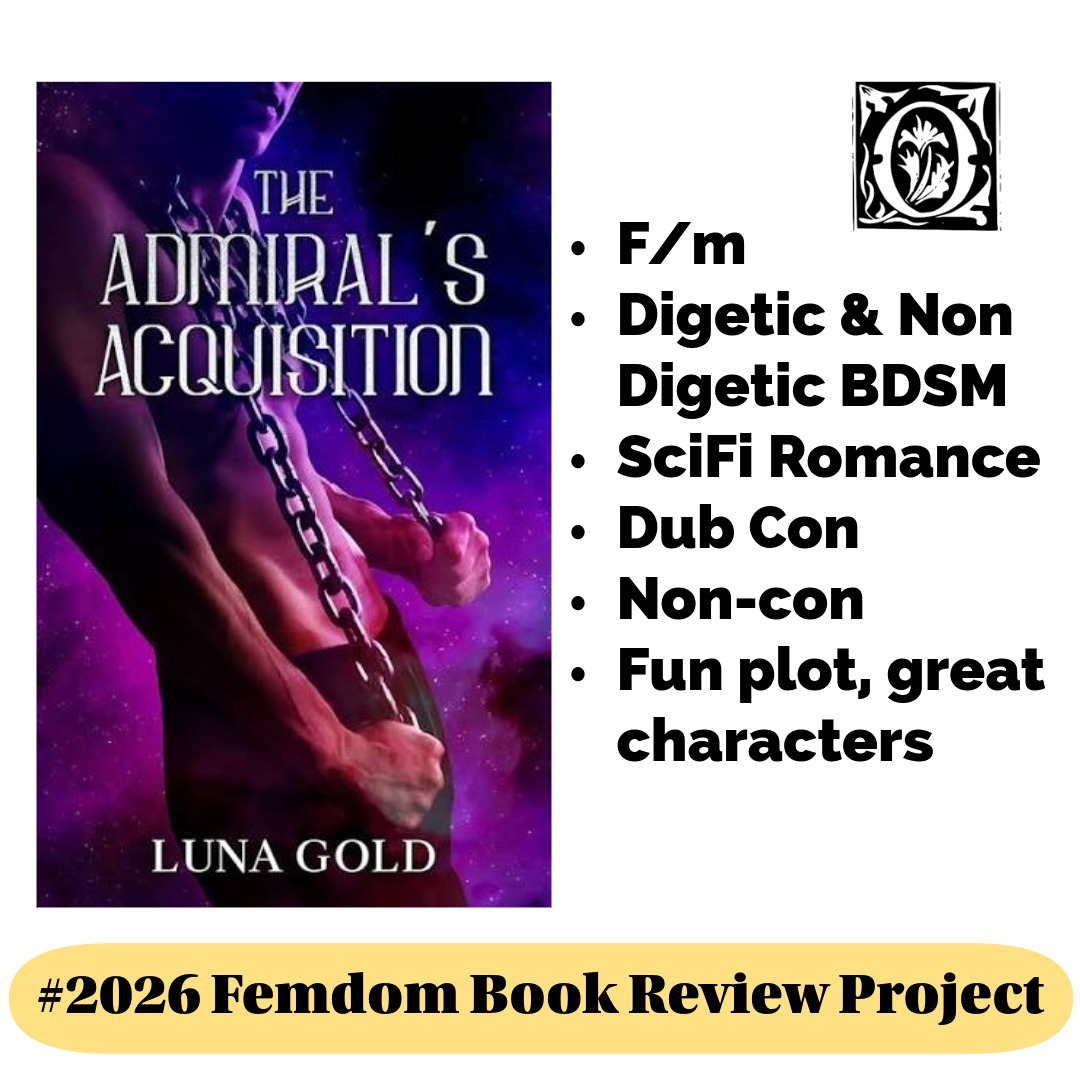
“The Admiral’s Acquisition” by Luna Gold [Femdom Book Review]

The Admiral's Acquisition by Luna Gold F/m, Digetic & Non Digetic BDSM, Dub Con, Non-con, Fun plot, great characters #2026 Femdom Book Review Project

This one is another favourite, an 100% for dommes F/m delight about a gruff space admiral (Kira) and the ruggedly handsome slave (Mak) she rescues and then comes to love and appreciate. I think what I enjoy most about this book is that it’s not only completely focused on wish fulfillment, and not afraid to go absolutely off the deep end into the background grim, but that there’s a sort of amusing self awareness about things that bug dommes. Additionally, there’s enough plot and worldbuilding to keep things interesting between scenes of the characters making gooey eyes at each other and hopping into kink, so much so that even if this was somehow closed door I’d still find it fun. Gold tells a good swashbucking space yarn, but it also has the rare distinction of a character in a leadership role who is given a lot of on page time to show why they are a good leader. 

A lot of books don’t do that. Be it royalty or a titan of industry, the day to day of how the character is awesome is made as vague as possible. They might work long hours with paperwork, close amazing deals or be narrated as giving stirring speeches, but ultimately things are pretty handwaved or worse, gives rather the opposite impression. As a reader who has complained of other books with queens being all tiara, no tax policy; or that make the supposedly business savvy characters feel like failsons and saps, I can’t emphasize how much I enjoyed seeing Kira take charge thoughtfully.

It’s a workplace romance of sorts, where the workplace just happens to be a hypercapitalist libertarian, slave owning space dystopia and where BDSM is just the normal recreational activity. I am not even sure this society has a concept of vanilla, even among consenting parties. 

Otherwise, as far romances go, The Admiral’s Acquisition leans to incredibly horny insta-lust, with a very rapid escalation into sex and both diegetic and non-diegetic BDSM aplenty. Obviously you can expect a happily ever after, and this one does a pretty good job of letting the sub show they are useful without making them the main event. While the story is told from a dual perspective, it also has a very unusual technique of running scenes a second time through the viewpoint of the other character, rather than using the jumps between Kira and Mak just to advance the external plot. The effect is almost like when you play with someone and then you get them to run back with you how much they enjoyed it during aftercare. 

I flagged earlier that non-digetic BDSM makes a big part of the setting (and the resulting conflicts that follow from it). That’s worth an additional caveat for some readers that Kira will be threatened by odious coworkers (though she defends herself well) and nearly everyone in this universe is bisexual and very comfortable with public sex between any combo of genders, consenting or not. Kira is a bit of a stick in the mud for her society, and rejects what other people get up to, but if you don’t want to see male dominants with female subs, even depicted negatively, consider yourself forewarned. And if the idea of the book that almost immediately shows you a very graphic, on page M/m sexual assault is distressing, consider this flagged as well. Mak’s need for rescue is lingered on enough that it’s clear it’s there for titillation as much as extra emphasis. I liked this because I like the rougher stuff, you might not find that your cup of tea.

And, if you are a strict nothing but un-caveated consent person, ditto this might not work, because the power imbalance between the characters remains consistent even to the ending. Nevertheless, I think Gold’s emphasis on Kira being an actually good boss also helps here. It’s not just that she doesn’t whip her crew or do the other awful things villain characters are depicted getting up to, but she also sets crew up for success and independence, a mindset she’s clearly also applying to Mak. In the various ways we might try to tell a BDSM romance with non and dub con while still leaving the dominant character sympathetic, the twin tropes of “oops I accidentally a slave” and “my society is worse than me by comparison” remain the most tried and true ways to gently elide around the reader’s sensible moral scruples and let one just be indulged by a fantasy. This, in itself, is nothing new, but Gold does a good job of not letting her privileged character be lazy about their moral obligations, which books also don’t always do well.  You get a sense that some of the meta-point here is that the massive social inequality is getting in the way of the D/s the couple would naturally prefer. Mak doesn’t want to be chattel, and Kira doesn’t want to be objectified. 

Kira, the dominant lead, also grapples with both a fair bit of sexism around her role as an Admiral (in this case meaning the commander of a large combo cargo/combat ship with a fair bit of other authority in her society) and in navigating the way other people tend to project their own fantasies onto her, both a a challenge or expecting her to play the admiral with them in her personal life. Mak, our sub, was submissive in the kink sense before he was thrown into slavery bombards her with a fair amount of idealized hero worship, but part of his arc is about rediscovering he can enjoy submission again in a (mostly) consenting context.

All told, this one remains on my top 10 lists, probably even top 3. About the only thing I can really complain about it that we probably aren’t getting a third book in the series, but as this is also clearly a labour of love, I am going to count myself luck with what we got.


Where to Buy

Where to Find the Author

I cannot locate so much as a defunct twitter account, but if anyone has anything better than an Amazon author page I would love to update this.

Liked this review? Check out more titles in my 2026 Femdom Book Review Project!

“Lady Venom Takes A Mistress” by Kat Blackthorne [Femdom Review]

Lady Venom Takes A Mistress

What in heaven’s name did I just read? This is a gothic lesbian sex farce. In the large part it is amusing, but brute force style, and full of awkward inconsistencies amidst the self indulgence. I would best describe  it as having class clown energy, cracking jokes at any cost to itself. When it is working, the vibes are a contemporary Ruddigore, when it isn’t it hits moments you aren’t sure it was trying to be humorous and may have just unintentionally fallen on its face. 

Thus while it gave me more than a few chuckles on purpose, you also get moments like the scene when the evil villian (Lord Harkness) pats his horse and announces after a few bearings and fuckings and the protagonist (Posey) will be just like his mare. And one is left pondering if this is intended to imply he has had sex with his horse? It’s very hard to tell. Tongue might be very firmly in cheek here, but then the book is chomping about so wildly it still manages to bite it off. 

Which is probably strike 1 of the book, but not a problem that’s entirely unredeeming. Accidental pratfalls can still be funny. Where it does drag the most is major problem 2. For a Lesbian romance, characters are inordinately preoccupied with men. In the titular Lady Venom’s case, murdering them and in Poesy’s case, describing in detail their immense ugliness. If I wanted to complain about awful men there’s perfectly good heterosexuality for that. I think they were trying for the fantasy of being able to reject the idea that only M/f could be happily ever after, instead it ended up delivering political lesbianism.

This is made more so bewildering by a cast of ghostly servants that include several jovial male phantoms who nod along with the endless dialogue about how nice killing men is. And that the 11th hour reveal that the domme character in the romance might be responsible for the misogyny the protagonist grew up with through some sort of series of whimsical misunderstandings. Which happens so fast and randomly that it’s almost incoherent.

Of course there’s certainly ways you can do a splatterpunk rejection of having anything to do with straightness, but the tone here is just so unstable that it gets in the way of the good pastoral cottagecore escape bits. 

Consistency is something the book struggles with in the sex parts, too, going from lots of gentle femdom/pleasure from scenes with nothing more dramatic to fingering to the lead suddenly being consensually fucked with a novelty dildo described as being as thick as her bicep and able to make her bleed enough to coat the dildo. Again tonally unclear if this was severe vaginal tearing as one might expect from a more or less unprepped large insertion, or ham handed cherry popping drama? Probably the latter given the book layers things with the literal presence of that fruit as a symbol for the thing Posey had that Lady Venom wanted, but not skillfully done enough to make that clear. Especially not since everything else in this book was tell, so an interlude trying to lean on show will just be awkward. 

Asides from that, my more essential problem is not a flaw. It’s a feature the author intended, that I am not the target audience. 

This is submissive wish fulfillment, the fantasy that a literal magic dominant will immediately treat you like the most beloved, sexy thing ever and indulgently orally service you to as many orgasms as possible (or guide you through masturbation for their enjoyment) while lavishing you with praise and gifts. All you need to do is tell the dominant you like them and presto! Suddenly you are the most special subbie that ever subbed and the dominant lavishes you with more praise for appreciating them. That’s just not going to be my thing. 

Of course self indulgent sub fantasies are perfectly valid, but in finding fiction for me instead of for a sub, this is a perennial problem. Dominants are, by and large, the fetish *object* when we are featured, not the audience. As a result Lady Venom (aka Alabaster Beaudelaire) is endlessly giving and inexplicably into a protagonist who offers nothing more compelling than wanting to stay in a palace where she is cosseted and every need is catered to. 

If I am to imagine myself in Lady Venom’s shoes, what is in it for me, here?

I mean, sure. The little hide-away palace with delicious food and infinite hobby dress making, training in ninja like combat skills and hot people who care about you in the most reassuring way possible would be nice. And who wouldn’t want magically intelligent animals who protect and serve you and ghosts that make you gourmet food, but also enjoy having you hobby bake in their kitchen? The ghosts even act like wise best friends when you are needing a pick me up but have no personal needs beyond housing! It’s a fantasy story and it’s good to daydream. No criticism if this is your dream.

But when I am going to self indulge, I want to be the fussed over one. My silliest, most selfish fantasies where everyone either loves me or falls in a hole and I am so comfy and secure and rewarded do not require my submission as the price of admission. And so many books about BDSM do focus on that theme: Surrender yourself and then get everything handed to you by the dominant. 

Which is counter to the core of this project’s purpose, finding writing that constructively gives dominants what they want. Whether guide books for practical exploration in the real world or romance for comfort, titillation or inspiration it’s a difficult needle to thread that needs more than just that a dominant happens to be female in this particular context or story. Lady Venom Takes A Mistress isn’t pretending to be anything but a goofy, campy frolic, but in recommendations the only endorsement I could give would it might be a good birthday gift for the sapphic sub in your life.


Where to Buy (for a deserving sub :P)

Author Website

Liked this review? Check out more titles in my 2026 Femdom Book Review Project!

“Discipline: Adding Rules & Discipline To Your BDSM Relationship” by Lily Lloyd [Femdom Book Review]

DISCIPLINE Adding Rules & Discipline to Your BDSM Relationship Lily Llyod

This book, taking a neutral approach that attempts to be equally applicable regardless of your preference of D/s role, sets out to tell you how to take a bedroom only kink relationship and shift it into a one where the experience of that extends outside of time boundaried and limited scenes and into one where kink can be enjoyed on a more ongoing basis. The author is a switch, speaking from their experience with both roles, but in practice I find things tend to put a lot more emphasis on struggles from the dominant side.

I also think the title poorly gets across what it is actually doing, because it leaves the impression of a preoccupation on punishments and prescriptive (and very strict) high protocol. It’s actually about communication, negotiation and a much more organic approach to adding additional structure to your life. Lloyd’s philosophy is a matter of romantic intentionality, with the belief that all relationships are already built on (often unspoken) rules and agreements. What she is concerned with is helping you work with what you already have to make your changes sustainable.

She’s also very sensitive that this can be emotionally fraught and load bearing to the long term survival of a relationship. And, as much as it sets out not to be a BDSM 101 book, it still spends a lot of time on the foundations of how you and the other person work as a couple. It’s assumed you know what a dominant or a sub is, and the basics like safewords, but she does not suppose you are starting with more than that. This is not to say at any point the advice is tedious or obvious, rather she assumes that because most vanilla relationships got that way with a lot of help from external scripts that are treated as the human default, your relationship’s seriousness and pre-existing momentum do not preclude you having never seriously talked about what you wanted outside of very basic things.

What I otherwise think makes Llyod’s manual distinct is the emphasis on rules and discipline as romance and reassurance for both parties. Otherwise, I believe this book benefits from its assumption that you have to meet people where they are at and not over emphasizing living up to a fantasy ideal. Inversely, I believe the title and opening premise of the book fail to capture that you will also be thinking about the psychology and intentionality of what you are doing in a long term relationship and how it will bleed back into those so called “bedroom” scenes. 

 When she does talk about the rules part, she breaks them into three categories: rituals and protocols; standing orders; and things that are actually supposed to cause behaviour modification.  Lloyd classifies the former as a matter of aesthetics and mood setting, serving to help hold a head space. For example, you might be familiar with the idea of starting a scene by formally putting on a collar. Standing orders, on the other hand, are the realm of goals that are important to one or both parties in the relationship, but which generally leave it up to the submissive to figure out finer points of execution. Lastly, she makes behaviour modification distinct because this is probably the only place where real change is being expected, with an emphasis in her examples on an almost unilateral benefit for the submissive.

Where I think the book over reaches is that it also tries to define dominants by these three rule types. That much, I think, is a hammer looking for nails problem. It’s good to know that some people care primarily about lots of precise little aesthetic/immersion things while others might get their enjoyment from what is being prioritized by the submissive as a holistic matter, but I don’t think it’s very helpful to try to type yourself as some sort of quiz. The problem of overreach also pops out most broadly when she talks about “behaviour modification” dominants being unusual. 

That’s not to say Lloyd is not self aware of aspects of why. She cites a long gone (alas) blogger Dishevelled Domina (formerly of DischevelledDomina.wordpress.com) when going over a major issue of the sub displacing inappropriate levels of helplessness onto the dominant. Still, Lloyd muses about dominants who do behaviour modification as mysterious unicorns as much as they are lavishes with praise of being sweet “geeky” or “a bit nerdy” in the level they will invest in their sub’s psychology. But, ultimately she concludes correctly that over weighting benefit to the sub is what makes these sort of dynamics fail to survive the long haul.

The other book’s weakness, I think, is a common one. That’s that you can still see a ghost of the over valuing of the ”inherently more responsible dominant” mindset where she talks in terms of needing to consider the sub’s well being by default to “deserve” the submission of the sub. While “do no harm” is a good watchword that any reasonable BDSM guide emphasizes, I find it a bit incongruent that Lloyd can notice that hey, unilateral dynamics seem to burn dominants out and give lots of useful insight about subs needing to work on their end… but somehow along the way I find that a lot of writing about BDSM forgets about the equal partnership part underlying things. Lloyd is better than most, but it’s not surprising that the second quarter of the book focuses on the problem of unacknowledged dominant vulnerability without, per say, realizing what it was is doing. Similarly it is telling that at no point does it take subs aside and tell them to really think about what they actually want, but there’s a whole subsection for dominants that assumes it is likely they forgot to do that.

And where she starts talking about the practicals of rules again, I believe Lloyd does a much better job of implicitly centering the work involved. While we opened with an introduction to the writer that mentioned, almost casually, her first marriage failed because the dominant was bad at follow through, in practice she strongly emphasizes rules as being a gift with strings, effort and weighted meaning for both parties. What Lloyd wants always boils down to moving from the pure fantasies of either the benevolent task assigner dominant or the selfishie meanie and victim and figuring out workable, smaller scale compromises.

And in aggregate, that’s probably the best platform to embark on the rest of the book, which gives a lot of granular, easy to follow advice on choosing, testing and sustaining rules that will actually work for you. Lloyd consistently keeps things flexible, but whether your end goal is 24/7 TPE or honestly even just improving the bedroom side of things and never going any further you will still find something useful.

___

Where to Buy:

  • Shockingly hard to find, may have been delisted recently from online retailers

Author Website:

  • Unfortunately Lily Lloyd appears to have scaled down or stopped their online presence. 

Liked this review? Check out more titles in my 2026 Femdom Book Review Project!

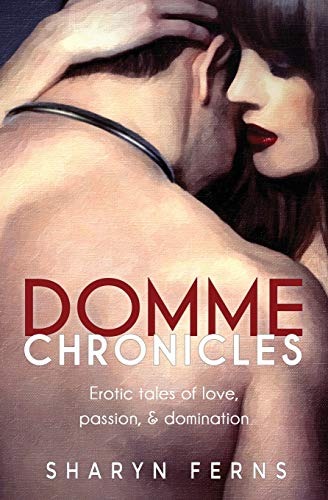
Domme Chronicles by Sharyn Ferns [Femdom Book Review]

Domme Chronicles Erotic tales of love, passion, & domination Sharyn Ferns

“Sharyn Ferns” or just Ferns, as they are known to the internet, is an lioness of the Lifestyle Femdom Revolution of the late aughts and 2010s.  These days, that seems absurdly dramatic to say it happened. Young kinksters make Mommy or femboy jokes with casual comfort. Whole forums  are dedicated to a squintillion facets of how to femdom with thousands of members able to drill down and look for what they want. Mainstream romance groups periodically demand more representation. 

And while censorship is threatening all that has been built, we have never had it so good, thanks in no small part to this person.  

Before, there was a time when ideas that femdom could be anything other than a strict fetish dominatrix being paid or that anything vaguely male and submissive could be attractive to a woman were both radical even among niche libertine pockets of the world. Gentle Femdom was a novel idea. Wearing your pajamas to play was an act of surprisingly scandalous rebellion.

But, then things started to change. Tumblr had glorious indie porn, Fetlife had thriving discussion groups and most information about kink was disseminated through blogs. People pushed back on the status quo, sharing, arguing and creating.  Ferns was a part of all this, stalwartly managing various bickering groups and sharing her journey on first a blog and then later a podcast. If you are under the age of 30 and into Femdom with partners outside of a professional context, even if you don’t know her or of her, you have probably been influenced by her work. 

A huge part of that was making information more accessible, and working on improving representation. Her short read guide books remain a great introduction to the how to part, while her collated anthologies of Happy Femdom Stories are of enormous importance in recording the words of people who are seldom otherwise allowed to share their world. Domme Chronicles, on the other hand, is her story, and as much an important part of her achievements as her support of others in pursuing personal fulfillment.  

That being said, when the book came out circa 2013 and review copies were being handed out, my rather exacting approach to review made me a poor fit. What this is to the author is less a commercial endeavor and more an act of extreme vulnerability.  It is published in the spirit of that old poem:

“I have spread my dreams under your feet;

Tread softly because you tread on my dreams.” 

W.B. Yeats, Aedh Wishes for the Cloths of Heaven, 1899

So, how to describe this book, then, over a decade later? It is a collection  of short, really bordering on flash fiction erotica. No, that’s not enough to sum it up. It’s a raw ripped open glimpse of hunger and hope. 

Ferns gives you a full immersion of the sensation of desire where sadism and adoration are so tangled up in each other that the sub becomes an elusive ideal, hunted, and to simultaneously be had and consumed. It’s the caught breath when your lover does something that just clicks in your brain and shoots straight down your spinal cord into arousal so intense it’s an act of masochism to feel it and something transcendental all at once. 

Ferns made her blog about the surprisingly mundane, discussing the functional bones of relationships, the gripes of her cohort and the mundanities of life. For an activity treated as the lewdest of lewd like BDSM, there’s very little sex in most of what she’s written there. Not this book. That’s where the metaphorical clothes come off. 

And while the majority of it is intensely loving, almost worshipful in the presentation of how impressed her nameless partner(s) can make her, and the pieces could be read as stand alones, the back and forth is telling a larger story that allows it to carry along the darker bits. For example, nestled amidst multiple paens to the pleasure of a beloved partner coming home is a savage fantasy that can only exist in that context of the imaginary, of murder. Alongside a dozen or more likely real life stories of things going very well is a little memory of a first time going very right at a BDSM club, where by all measure they shouldn’t have. It’s a very unsafe story of being flung well out of your depth and swimming despite a world that set you up to sink. 

Contrast here is important to the work as a whole, with the softer bits almost serving as protective padding to the metaphorical knives. Nothing is particularly very long, but some things are very sharp. 

I think, also, in reading this it might be helpful to realize they are designed with another intentional aspect. The stories’ short (often almost abrupt) length and prose structure makes them read aloud ready. There’s no narrative of a single character here, indeed nobody has any names and it’s never clear how many different subs, real or imaginary, are being talked about. But that’s rather the point, as this is her voice, and ultimately about being allowed to want things. 


Where to buy:

Author website:

Liked this review? Check out more titles in my 2026 Femdom Book Review Project!

“The Snow Queen” by Elizabeth Gannon [Femdom Book Review]

Oh no, it’s dreadful. There’s no redeeming moment or characters here, and it slides into him dominating her by the middle of the book, after a captivity segment that was tedious and free of any sort of enjoyable tension. And it’s not like the writer doesn’t know it, we even finish with an author’s note this is early career and they don’t think it’s very good.

The original Snow Queen is a lovely fable about a girl (Gerda)  on an adventure to rescue her childhood friend, one that feels ancient without being actually all that old, dreamy, sharp and with a brutal edge lurking in the background. Gannon’s Snow Queen trying for an endearing villainess romance retelling, but mostly manages to replicate the experience of a creepy fantasy wanker in your inbox asking you to help him try out femdom and calls you Mommy without your consent. Before sliding into the even more annoying idea that dominant women want to be called good girl all along. 

To accomplish this, the character of Kai goes from an urban dweller twisted by a shard of a beauty distorted mirror in his eye, to an immensely ham-fisted depiction of a neurodivergent person in a small village. He is still selfish, but rather than a remote coldness, now he impotently gets into trouble by making everyone’s lives harder, while we are supposed to think he is sympathetic were it not for being awkward. Gerda is now his sister, head shakingly tired of his antics, as is everyone else in the village. 

Otherwise the theme is uwu cutsie, and peppered with modern references in an otherwise fairytale pastoral. The Snow Queen is significantly defanged to merely making threats, even an assassination attempt just being brushed off with a bit of thumping. She’s no longer an icy, fae like personification of winter, but the new sorcerer-monarch whose reign has been marked by complete disinterest in ruling due to her sulking. She started when she was 16, has ruled for 30 years and is written as if she got stuck at the age she started.

This is what powerful women need, to be proven as not as scary and humanized. Clearly. 

Meanwhile, within day 2 of his captivity Kai is making pancakes and getting in trouble for starting fires without permission, has agreed with the Snow Queen that people in his village should be murdered, and is otherwise doing the usual gothic beauty and the beast retelling shit of offending the grump while befriending her talking animal minion. To justify his durance in the Snow Queen’s custody, this version’s Kai has to reassemble a shattered artifact the villagers broke. Which he is good at, but still bad at everything else. How bad he is at everything is being milked for comedy, and the more that teat is squeezed the more aware you get this is about as productive as milking a bull. Which is to say eventually painful. 

The intent is that we are supposed to see her won over by his good heart. The reality is that actually the evil village Council member “Derriks” almost immediately becomes the most sympathetic character. He has tried to rebel against the Snow Queen with violence, but the narrative lets us know diplomacy has failed and the Snow Queen’s neglect is killing the village. His dialogue is cartoonish but deeply unfunny, yet ten minutes with the other characters you can see why he got voted in. Through his eyes we learn the hero, Kai,  spends most of his time drunk, or wasting your time with poorly done presentations about how he is going to totally find artifacts that will return the village into a tourism hotspot.  

I think we are supposed to take it, as a modern audience, that archeology is a worthwhile pursuit. Kai imagines if he can just uncover the early history of the village a place we have established is shit to do shipping through will suddenly host all sorts of visitors who want to see ancient but mundane relics. The book does a pretty good job of convincing us this isn’t the case, regardless of what the author intended. Kai not only bores and annoys the villagers, he bores and annoys me. When bad guy Derriks fantasizes about throwing him into the harbour, rather than emphasizing the character’s villainy, the main feeling I get is sympathy. 

Even more damningly, the narrative gives us no explanation of how Kai got so good at archeology, which is incredibly lazy writing. You can do a neurodivergent awkward professor type character well, with the right grounding, but the text spends more time introducing Kai’s head of resentment that he isn’t special than it does anything else about him. He is an entitled ass with nothing to justify it. Not even to us. It would have taken absolutely not effort to sketch out any sort of self taught back story or demonstration of a technique better than digging up the local town square at random (yes, really) but the book prefers to spend its effort on interminable whining from Kai about how he isn’t even short or ugly, just average.

His attitude and treatment of the titular Snow Queen isn’t much better. It’s ironic that evil Derriks is depicted that way via having him leer over Kai’s sister, because that’s exactly what Kai does the moment he meets our female lead. Brooding mostly silent heroines of great potential violence are, themselves, not bad tropes, but we really lose something here by not getting her perspective until a quarter of the way into the book. When we do it’s even more disappointing. Apparently despite lots of emphasis there’s nothing remarkable about Kai, the Snow Queen immediately thought he was hot.

Unfortunately, while there’s a half hearted attempt at the trope of melting your dominant’s frozen heart, the cozy/comedy aspect of the story constantly undermines things with Kai’s cringe banter. It’s not funny, it’s a jerk finally reaching a point someone can stop him continuing to not take things seriously. Confrontations with the Snow Queen are tedious and frivolous, for example he is as concerned with disliking the soup as much as not getting to work on the project properly. This was written in 2013, there’s not even the start of a “it was a different time” argument here.

Of course in addition to displaying 0 respect for the female lead, he instantly puts his mind to determining if she is single, and because of the plot she also finds him inexplicably adorable. All while her wolf minion irreverently makes little comments to remove any remaining mystique. While there’s probably a clear overlap here with Disney’s Frozen for the book’s publication (also 2013) for the choice of the subject, it’s an achievement to manage a botched retelling where Kai is even more made the center of the universe than the nonsense Disney inflicted.

I think as far as failing its tension, in addition to just plain bad writing, this is a problem role reversal occasionally finds itself in where sexism plus fretting about the right kind of consent lead to a complete and repulsive defanging. The captivity plot is pure gender flip, but since the rest of the world is leering male counselors and Kai consistently treats her with the same disrespect he approaches everyone else, the impact is closer to a very specific male fantasy. 

That one is that a sparkling perfect magical woman will see him, the saddest of sad sack schlubs, as a diamond in the rough. Her dominant aura will do all the work to make him feel horny/submissive and she will transform him while falling hopelessly in love. As a submissive fantasy, sure, but I have yet to meet a dominant who sees gross incompetence as hot. Since the target audience here is women, this is even more baffling.

And then we get this line, after he discovers her real name. Said un-ironically. 

You should smile more.” He said finally.  “It… it suits you.”

This is pretty much Kai through and through. Not why she doesn’t smile, but then she, like everything else in the universe, exists for him, the main character. Basically she’s that joke by Kate Beaton. 

http://www.harkavagrant.com/index.php?id=311

But weird gender dynamics aside, the other reason the book sucks is that it doesn’t respect its own narrative in favour of creating more opportunity for (failing at) clowning. During the pancakes scene we are told Kai, who is a cook at his family tavern, can actually make edible food. Despite this, the book wants to have a funny kitchen disaster some time later, and settles on him not knowing the difference between oil and vinegar when he fails at making lunch. This is despite being previously told he could cook reasonably well in a proper kitchen. The author just wanted to have a getting to know you kitchen scene where he gets to be a quirky screwball.

And of course the person he is supposed playing off doesn’t fit the role she’s been assigned either. She is treated like she’s the rules follower to his chaos, but the rest of the book has already established the Snow Queen is shirking responsibility and not particularly rules bound herself. The sub-genre might have dynamics like it was trying for enough people might expect it, but the book is lazy and poorly edited enough to ram this level of randomness into the text without backing it up.

The least said about the deeply unfunny random heroes who attack the better. Joke wasn’t good, characters added nothing. Tonally this feels like runtime padding. However, having fucked around enough to reach the middle of the book and to establish the characters are on speaking terms we abruptly switch to them having terrible sex where he rips her clothes off (destroying them) and tells her that he doesn’t have to listen to her and he is too good at sex for her to correct him. Kai, king of the losers, with no information for the audience about his past experience, is a sexual savant.

Then the artifact is fixed, the village rejoices and he then dominates her while she’s tied up with chains of ice. It’s not a good sex scene either. This is about as erotic as calling the tax office to make a correction.

That that’s just 60% in. The rest is more time wasting wank, unfunny banter, and no stakes confrontations with councilman Derriks. A happy ending is achieved, Kai gets everything he wants. The Snow Queen is slavishly devoted to him and he gets to enjoy a badass is at his beck and call and being special. The last part of this book was read with a fixed disgusted expression, all charity gone. If this wasn’t for review I would habe DNF’d ages ago.

Yuck. Who is this for? About the only thing this book serves to do is encourage you that if you worry you aren’t good enough for publishing to do it anyway. If this shit got 4.4 stars out of 167 reviews, your personal pet project can’t possibly be worse.


Where To Buy:

Author’s Sites:

Liked this review? Check out more titles in my 2026 Femdom Book Review Project!

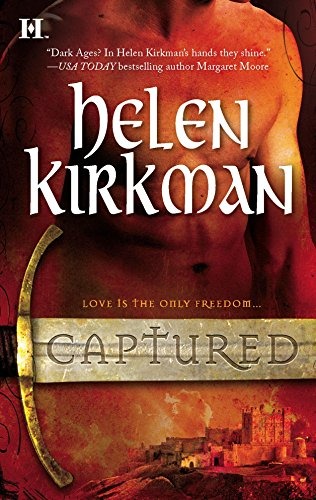
“Captured” by Helen Kirkman [Femdom Book Review]

One of the hardest parts of this project remains that books with femdom in them are poorly labeled, giving you little warning about what you are getting into. It’s only recently that romance.io even made a distinction between “fem-dom” (do not ask me why they think it needed a hyphen) and general “BDSM” as a tag, and otherwise we are stuck with recommendations and trying to judge books by their proverbial covers. When is a “take charge” heroine code for one who merely shows a modicum of competence, and when is it signaling and will grab the hero by the literal balls? 

At the same time, it usually takes me a couple of days of focused attention to read a novel length book, and at a weekly review schedule that means that it’s perfectly possible to pick a book that *might* be potentially worth it and come away bleakly disappointed. Which, for pleasure reading is just part of the experience, but for my (self imposed) deadline eats into time I could spend on something I know definitely at least meets criteria of having femdom. That inversely is at odds with my other hope with this project, to expand the pool of searchable works beyond the same handful of titles getting recommended over and over. But if I find a dud and other people thought it was femdom I am at least doing a public service by calling attention to a false flag. 

Inversely, I am not sure how much people want to read 600 to 1000 words of “Pearl had a hunch based on the ghost of a hint and was wrong”. And you really can’t tell. You would think a work like Her Bridegroom Bought And Paid For would have delivered, but that one was rather Alphahole male dom. This is a game of roulette with both my time and exposure to squick. 

Captured, therefore, was a big risk only made possible by slotting reading it into what was supposed to be fun time not review time. Having found Daughter of the Blood an unpleasant read, and stumbling on a thread of books that inverted the trope of a Princess being given to a Barbarian to a Barbarian being given to a Princess, I gave it a careful look over in case anything popped out. Most of the titles suggested were the usual he men alpha shocks priss who then surrenders to his aura of erotic menace, but on the list was Forbidden by Helen Kirkman, promising to be a princess and slave. The male lead was in chains on the cover.  So I tried to find a copy. 

Only Kirkman is a now obscure, trad published (Harlequin) historical author who seemed to stop writing in the late aughts. The best even behemoths like Amazon can do is help you buy you a second-hand paperback from a third party. You cannot buy her work as an e-book, at least through any search engine I tried.  And yet, I gave it a shot in my library catalogue and found not my goal but another captive male romance by her later in the series Captured. It was free, so why not? I could always just DNF and it was Sunday night so I had time to grab a more reliable replacement if I had to. 

I say all this to let you know how low my expectations were going in. Reader, I inhaled the damn thing that night, staying up until midnight to finish it. I liked it. I liked the dynamic, the setting, the plot, even the purple prose sex scenes where everything is a bit discombobulated and dream-like. 

As for what you get: It’s England in the 700s, a period when everything was a fractured bunch of smaller tribal groups and you could find three absolute kings in what is now day trip driving distance. This may be a tough setting to jump into for people whose preference for historicals leans more to the restrained and familiar Regency period, but for someone whose parents met through the SCA, the deep cuts of the cultural roots of the UK are my happy place. 

Princess Rosamund is living in a Viking camp after being handed to them by her Mercian Royal relatives as a bargaining tool. Things have not gone well. The Viking are plundering their way through Wessex, and just brutally murdered a bunch of hostages so that they can keep doing that. Rosamund, knowing this will not end well one way or another, is looking to get the hell out of here with the money she has squirreled away being the favoured mistress of one of the ranking members of the group. And then she stumbles upon Boda, a battered, chained and unconscious captive in the hands of the guy who personally carried out the killing of the hostages. Rosamund takes one look at his helpless body (and red hair) and is smitten. She assertively wins the guy in a game of dice and hauls him back to her tent. 

She then waits until he is conscious to have her way with him, in a dramatic and immediate escalation. I had been extremely worried that the books genre and time period would mean things would go the way things usually do, where the captive male lead (restrained or not) terrorizes the heroine with his erotic assertions. But, while there’s a brief point where he tries to assert himself, it isn’t via sexual assault to put her in her place or some such, and Rosamund takes control again by giving him a handjob she is very clearly enjoying, both the act itself and the knowledge she has the literal upper hand in her skill at seduction. 

The book also takes advantage of her understood profession as a camp follower to give her lots of dialogue about just wanting the captive as her bed warmer. We do not need her to be a virgin he opens to pleasures she has never known, or coy about this or her immense sexual confidence. While Rosamund’s not exactly happy about having been handed over to Vikings, she’s been thriving about as much anyone can, with remarkable savoire faire.

But all isn’t as it seems. Boda is an escaped slave-convict from the peasantry of Mercia, rough speaking and working as a mercenary for Wessex, but his capture is no mere chance. Meanwhile, cultured refined Rosamund is hiding a secret of her own. Nevertheless they both have their own reasons to be unwilling to return to Mercia and Boda agrees that when the time is right he will help her and her teenage maid Merriwen escape. 

Merriwen is one of the other things that adds charm to the book. With everyone’s perception she is “simple” you get what would be more accurate to a describe as an autistic person who has been accidentally infantilized due to people underestimating her capacity to function. Now 16, Merriwen will do some things that cause problems for our leads, but these make sense once you know who Merriwen really is and compare how she is being treated. Honourable mention also goes to the way two side characters, Olga, another camp follower, and Od, one of the minions of the book’s villain, are handled. Both could have been depicted as one dimensional, the bad sex worker to contrast with the virtuous heroine, and the superstitious mini-boss to be overcome. 

Of course you are probably mostly wondering about the femdom, and what I would say is that you have is a combo of plot conveniently giving some fetish fodder (whump, bondage) and structural explorations of fealty that dovetail nicely with maintaining Rosamund’s power even into book end.  This is another place to see handled well, particularly more than just “well you won’t have any more real world power any more, but let’s be kinky still” is usually as good as it gets.

Working in service to this conclusion is Boda’s massive childhood trauma. He has deeply internalized his lowly status, not just peasant but the tier below it, as a thrall  pushed into that status by his father’s crimes. Thus the other obstacle in the characters’ way, outside of the primary issue of marauding Vikings and medieval war crimes, is his ambivalence about accepting rewards for his exemplary military performance that would raise his rank. He has already turned them down once, and Rosamund, regardless of the real truth about her, is a noble. Despite her clear and straightforward interest in him and repeatedly pointing out absolutely 0 people would successfully prosecute a war hero in a completely different kingdom for being an escaped slave, he’s all set to throw away their HEA based on not being good enough for her. 

The resolution of that is deeply satisfying and narratively consistent to that concept of fealty. After receiving lands and status as a reward for various heroics, he passes them all to her. He will marry her, yes, but she has to be the head of their household. While it also turns out she was correct and the risks of his dark past putting him in trouble is him wildly blowing things out of proportion, their respective roles with each other remain in a way they both find works for them. Even no longer a slave, they are able to turn the dynamics of fealty and of knight and lady into a very satisfyingly implied FLR.

—-

Where to buy: 

Look for copies on places like thriftbooks.com or check your local library because this one is a hard to find gem. 

Liked this review? Check out more titles in my 2026 Femdom Book Review Project!

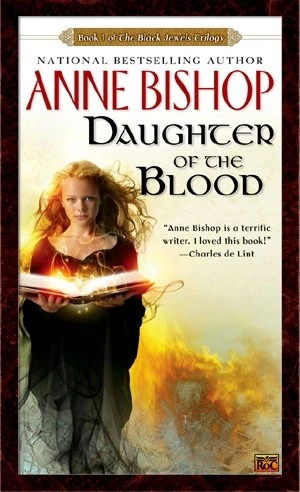
“Daughter of the Blood” by Anne Bishop [Femdom Book Review]

In composing lists of books with femdom in them that might appeal to women, the Black Jewels series used to be a regular recommendation on people’s top 10s, but perhaps because it’s on the older side I haven’t had it pop up recently. Nevertheless it’s been on my to-be-read list for years, even well before I started exploring my kink identity in any meaningful way. I even have distinct memories of stumbling into it in a book store as a teen and considering getting it. And there’s definitely femdom. I am told by Silver that it even used to be one of the things people would roleplay on chat rooms during his teenage years, alongside other staples like the Witches of Dathomir

Unfortunately matriarchal witch queens with magic cock rings of control that they inflict on pretty male sex slaves cannot save something that reads like if you combined the aesthetic approach to the gothic of “My Immortal” with that scene in Dragonball Z where a character shrieks “over 9000!!!” to indicate just how much stronger a character someone is than any of the already overblown cast. 

Otherwise it is very much of its era, a loosely gnostic fantasy world where hell is a revered place of power and the two male leads are named Saetan, and Daemon. The writer is very smug about that and even has one of the characters remark what a nice name one of them has incase we didn’t get the reference that he’s king of hell. Women theoretically rule by right of gemstones that mark their rank and can control similarly distinguished males up to two levels more powerful than them, but the story is inordinately preoccupied with virginity and the damage one’s first time going wrong could be to ones magic. If one is a woman, that is. For the men their magic is so phallically over the top that not only is the act of sex occasionally violently described as “spearing” but so are the channels by which they communicate telepathically with each other, even if they can also access the more feminine “webs”. 

Of course I think to criticize the work written in the late 90s just for sounding like the apex of fluffy gothic paganry is unfair.  There are many works that, in hindsight, are intensely of their era that still hold up. The Lost Boys and the first Matrix movie these days are unmistakably 80s and late 90s to no detriment. The parts here that do not age well are not necessarily just backwards sex politics, or the fact that it’s a bit of a fawning hagiography of a Mary Sue in heavy eyeliner. And, to its credit, it’s excessive obsession with trying to sell you on the intensity of its magic system calms down but the midpoint. 

It’s just hard to get past all the paedophilia.

Daughter of the Blood is about the early years of a Chosen One (Jaenelle), destined to have the world and all the men in it fall at her feet, should she come into her true power. As a framing device we never get her perspective directly, just everyone reacting to the immense gravitational pull of a seven-to-twelve year old little girl and what their role in her life is going to be. Unfortunately, with a magic system so built on female virginity, the result involves everyone fretting that someone is going to fuck the magic child and stop this from happening. Or in the case of Daemon, deal with the fact that he can’t fuck the magic child until her late teens as a sort of fated mate. At the same time the characters are faced off against a cabal of evil paedophile men, so cartoonish in their exploits they wander from being part of the banality of evil to being part of the larger decorative lurid backdrop of eroticized cruelty. At the same time even one of the heroes, for all he talks about the idea of doing it with a child as disgusting, spends the second half of the book wrestling with her allure and their mutual chemistry. All while the character of focus is no more than twelve and the narrative also makes sure to remind us how small, delicate, innocent and childish she is. And with the vast majority of male characters agreeing that forbidden or not, nothing is more plausibly hot than the many, many underage victims. That, alone, makes it an uncomfortable read and most people will nope out on that aspect alone. 

But what about the femdom? I love a good decadent world where everyone is preoccupied with hedonism and intrigues. And in theory there’s lots of frankly exciting ideas, men being held in thrall to please. Reluctance of outright defiance being broken. Mixed enjoyment, humiliation and rage to being stripped and whipped. For the late 90s it even had an unusually positive approach to the idea of male beauty and men as the object or even the victim of desire. And yet, in practice all female sadism is not only narratively condemned, but almost immediately corrected with bloody mutilations and horrible deaths. You can enjoy the non-con titillation bits, but the rape-to-revenge part is going to be pretty immediate for the male main characters.

And to get even these you are going to have sit through a lot of graphically bad things happen to bystander men in the line of castration, and to all the female characters, who are awarded much less ability to fight back. The cabal of paedophiles I mentioned is a larger symptom of a world that while technically female dominated, gives powerful men enough leeway that the average woman must fear men. Of the female rape victims, revenge is a lengthy process with a lot of victim side casualties, and the two perspective female characters, Tersa and Surreal, needing significant help to achieve anything approaching justice.

Of course the book tells us that a good enough witch will get the willing and eager submission of powerful men lesser women cannot truly force. But then on page it makes it pretty clear that what that means is going to be fluffy pillows and experienced and manly lover being experienced and manly. There’s a really cringe scene near the end where Jaenelle expresses misgivings about how living eventually means more of the bad sexual experiences she has had with men and she’s coaxed to give life another chance with the promise that she might actually enjoy it in future via showing her a literal silk sheets and cushion strewn bed. So there’s a power fantasy of women ruling here, sure, but between  the gender essentialism and the undermining of anything that’s not being joyfully girlish or earnestly sweet, the femdom parts really suffer for it. It’s the very depressing idea women are potentially morally better than men, but ultimately also responsible for misogyny in the world through catty infighting .

Thus as a book, the only merit here you are going to find is a nostalgia read, a pretty good snapshot of what was cool with the spooky and alt people when I was young. But if you are under the age of 30 I somehow doubt you will be able to extract even that much value. It’s stuffed full of moments that might inspire you to run off and write your own version, but while we are starved for femdom books, I think this one can be left behind where it came from.


Where to Buy:

bookshop.org

Author Website: Anne Bishop

Liked this review? Check out more titles in my 2026 Femdom Book Review Project!

“Come As You Are” by Emily Nagoski [Femdom Book Review]

Come as You Are The Surprising New Science that Will Transform Your Sex Life Emily Nagoski Phd.

Why am I reviewing a sex manual intended for a broader audience of women as a part of my 2026 Femdom Book Review Project? While the majority of my focus remains on romance in particular, this being (I feel) the genre most concerned with depicting femdom in a way dommes may enjoy, I also approach this as books that may be relevant to dommes who are trying to figure themselves out beyond finding fantasies that work for us. 

Come As You Are is one of those self help phenomena that has successfully lodged itself in popular acclaim, popularizing a broad sweep of helpful information about sexuality so well that people don’t even realize it’s a source. It is also notable that if you dig into kink manuals or forum advice posts, it’s also likely to pop up in a “further reading” section or just have its advice paraphrased on the spot to the benefit of whomever is receiving it. Mostly you have probably interacted with it if you ever heard people talk about “responsive desire” versus a spontaneous kind. 

Specifically the book proposes to be a sort of owners manual for women and their sexuality. I think that Nagoski’s efforts are laudable overall, and where it is held back is probably an artifact of the medium of self help as a larger genre. To its credit it is kink positive and interested in normalizing diversity of how people experience sexuality. It’s also dedicated itself to the important work of undoing the years of shame and lousy messaging people get about sex even long before they are adults. In practice, however, I think the main thing that holds it back is that its suggested outcomes, of modulating desire, are at odds with its actual message of there really being no shoulds. 

It therefore ends up being like a Healthy At Any Size nutritionist here to help you develop a better relationship to food largely stuck giving you diet advice to change up your body because all their patients still want to know about gaining or losing weight. Or in this case Nagoski clearly believes compulsory sexuality is as bad for you as compulsory purity, but has to take a harm reductive approach because the majority of people still are preoccupied with having the “right” amount of sex with a monogamous partner. 

That some of her anecdotes are about bisexual or lesbian women is nice, as is her stolid insistence it is ok to get off to m/m fanfic or kink. But this is a world where the asexual spectrum is not a factor of consideration, which I think isn’t her fault. We are largely the invisible orientation and Nagoski’s concepts can at least apply to the spectrum part of that experience. But, ultimately, for all she wants you to know and love your body she thinks of sexuality as first and foremost a partnered activity. 

When I first decided to read this I thought maybe I would use the hands on aspect of the book to do a sort of read along. I quickly determined that probably this was going to be an issue because the majority of this is about trying to figure out why you don’t want to have sex with your partner, with a smaller amount of focus on making yourself want sex less of this desire is vexious to your circumstances (and partner). Other parts are likewise not something I need personally (I know where my clitoris is, and this book really does start you off from 0) and the rest of the book supposes it’s trouble shooting some sort of problem between you, another person and your feelings about yourself.

Therefore the premise weaves between improving communication and mutual understanding with a partner and repeating various versions of letting you know you are normal in all your infinite variations and that there’s a lot of bad information about sex we internalize. She ties most of this to the three Ms, Moral, Medical and Media. I can hardly think I am immune to misunderstandings and myth, but I think it’s an ironic testament to the strength of her thesis Nagoski’s own work still has a bunch of assumptions from those categories in the advice she is giving.

One of those sticky ideas is that she frames this through a lens of men being fundamentally different than women. I think her gender reductionism, paired with appeals to what science says, are some of the weaker parts of the book. She does a lot to criticize that sex research treats women like men lite, but not at all that our assumptions about men are as incorrect as the ones about women. She repeats various traits in women show more variation in that category than comparison to men, and in her examples treats men as if how she describes women is equally applicable, but there’s still a tendency to frame things in terms of “we know this about men, but for women…”. I think Nagoski must know this, but it’s almost like she’s been swept along with the long standing assumption that sex ed for women has to be delivered in a “secrets of womanhood, just between us girls” format.

Still, some manuals that are popular have their own problems of coming from an iffy starting place, and can still be useful. Love Languages, for example, crawled out of the land of Christian Heterofatalism. Critics correctly note a rather depressing foundation there of both reductionism (one love language!) and over use of demands on women (his love language is touch so put out, you silly girl!). With these books you can extract value, but you are going to need a sturdy shovel. And, just by the presence this book has in discussions on the topic of sexuality it’s clear a lot of people have been finding this helpful.

So if Nagoski’s Come As You Are occasionally veers into a bit of gender-essentialism, I think the book can be forgiven not quite making the leap to point out that while it proposes that women are different than how we believe men to be, men are also different than how we believe them to be. That topic, itself is a whole piece of queer theory most people aren’t ready to digest. Introductions to chemistry uses simplified models of the atom in graduated complexity, from balls joined by sticks to eventually fuzzy energy clouds only comprehensible through advanced math, but in 2012 a child still discovered a hitherto undocumented molecule through playing with a sticks and balls set, so a good simplification is more useful than a bad deep dive. 

The other, honestly more important thing she’s doing here, however, is actually using our relative openness to What Science Says to chip away at our self destructive defence mechanisms. There’s a bit of a hidden aspect here, but it’s less trojan horse than trojan my little pony. It will be very hard to read this without an extra layer of re-enforcement on your self acceptance.

Beyond that, and an introduction to general anatomy, her main theory is the idea that sexuality has variable levels of excitability and inhibition. She believes that the vast majority of women are experiencing problems not because things don’t turn them on, but because most women are easily turned *off*. The whys of this are a bit more vague, but she also believes these are more of a factor of things we internalize than say, hormones. 

Thus for Nagoski, generally the root cause of inhibition is attributed to mental baggage or to current life circumstances that make it actually reasonable to not want to have sex. Therefore the majority of her efforts are towards helping the reader think what that might be. Nevertheless you can see a contradiction that she writes in her examples of essentially trying to get women to acknowledge they don’t have to do this and can be ok with not being horny when they think they are supposed to… by telling them how to want sex with another person when it is convenient. 

If I had another pet peeve it would probably be that while Nagoski is plenty kink positive, she generally defaults to examples of female submission. It’s true there’s a lot of submissive people out there of any gender, so this is hardly all that remarkable. Indeed, for all her women in her illustrative anecdotes, BDSM makes up a part of what the women do as an unremarkable part of their sexuality. Nevertheless, it’s always some variation of the sub role that’s described in the most positive terms. Two of the women find significant results in having their partner deny or otherwise restrict them, while the third, in a sapphic relationship, has it mentioned off hand that the only part of her desire that seem to be working going into therapy is when she imagines herself the bottom in a male/male multipartner scenario where she is being dominated. Everty so often around her storytelling, we then get some light reminders about how healthy the bottom/sub side of kink is. And while a lot of people need to hear that, there also is a certain point when I am absolutely and entirely sick of being reassured it’s ok to have submissive fantasies. Even more so when they are paired with glurgey comments that of course since you have so much pressure on you in the real world it makes sense you want to pretend you have none in the bedroom. Hurkblergh.

And then there was one moment where things went frankly bizarre. Fueled by a desire to accept the whole spectrum of possible sexual experience while pushing back on the idea of a pure physiological arbiter being the ultimate signal of true longing, Nagoski goes from the more sensible reassurance that wetness or similar are not contradictory signs of enthusiasm if the rest of you thinks otherwise, and into defining orgasms as something entirely abstract and personal. An orgasm, according to Nagoski, is whatever the person having it says it is.

After coming in through a tagline about “The Surprising New Science” and the first three quarters of the book woven with quotes from various studies, this was an odd place to find myself dropped. While I agree to Nagoski’s larger point that orgasms have a wide range of sensory difference for those who have them, here we are departing from what any science says on the subject with the velocity of a glitching kerbal space program launch. Sure, for some people orgasms are transcendent full body thrashing and for other kind of like the pop of a fresh jar of pickles opening, but the physiological part is still not entirely subjective. If you are so inclined and armed with an electrical current you can give a freshly deceased cadaver an orgasm.

And the sudden turn to hand wavery here is so abrupt that I had to take a break here and wonder what the hell I was just reading. Was Nagoski just using a bit of hyperbole here to stop women from discrediting their orgasms as not good enough and further psyching themselves out? Was she, despite setting the expectation that anyone should be able to have an orgasm, hedging by leaving the door open for women to decide anything they can mange is still enough? Did I misread something here?

But, be that as it may, for me I think the book’s strengths, outside of the reassurances and the basic anatomy, are the approach of troubleshooting sex as something that requires making space for it and removing distractions. This kind of is a skill that you have to figure out in long term relationships and approaching this with your expectations at a realistic level based on your actual circumstances can be very helpful. And if your problem with sex with your partner is you a psyching yourself out or worse, refusing to acknowledge good reasons why you don’t actually want to do this, this book may be really helpful.

Ultimately, for me, this book wasn’t something I needed. It’s good to have vocabulary to talk about the steps to setting up to have some flavour of successful intercourse with another person. Ditto to describe variations in desire patterns. I am also glad someone’s catching the traumatized religious conservative survivors and getting them to look at their own genitals. Lives are going to be saved by doing that, since your reproductive system is also one of those body parts that has a high chance of trying to kill you. But this really is a 101 primer and ultimately a 10+ veteran sex blogger probably isn’t going to be surprised to learn the clitoris is important or that you don’t need to feel shame about your fantasies.


Where to buy: 

Author Website:

Liked this review? Check out more titles in my 2026 Femdom Book Review Project!

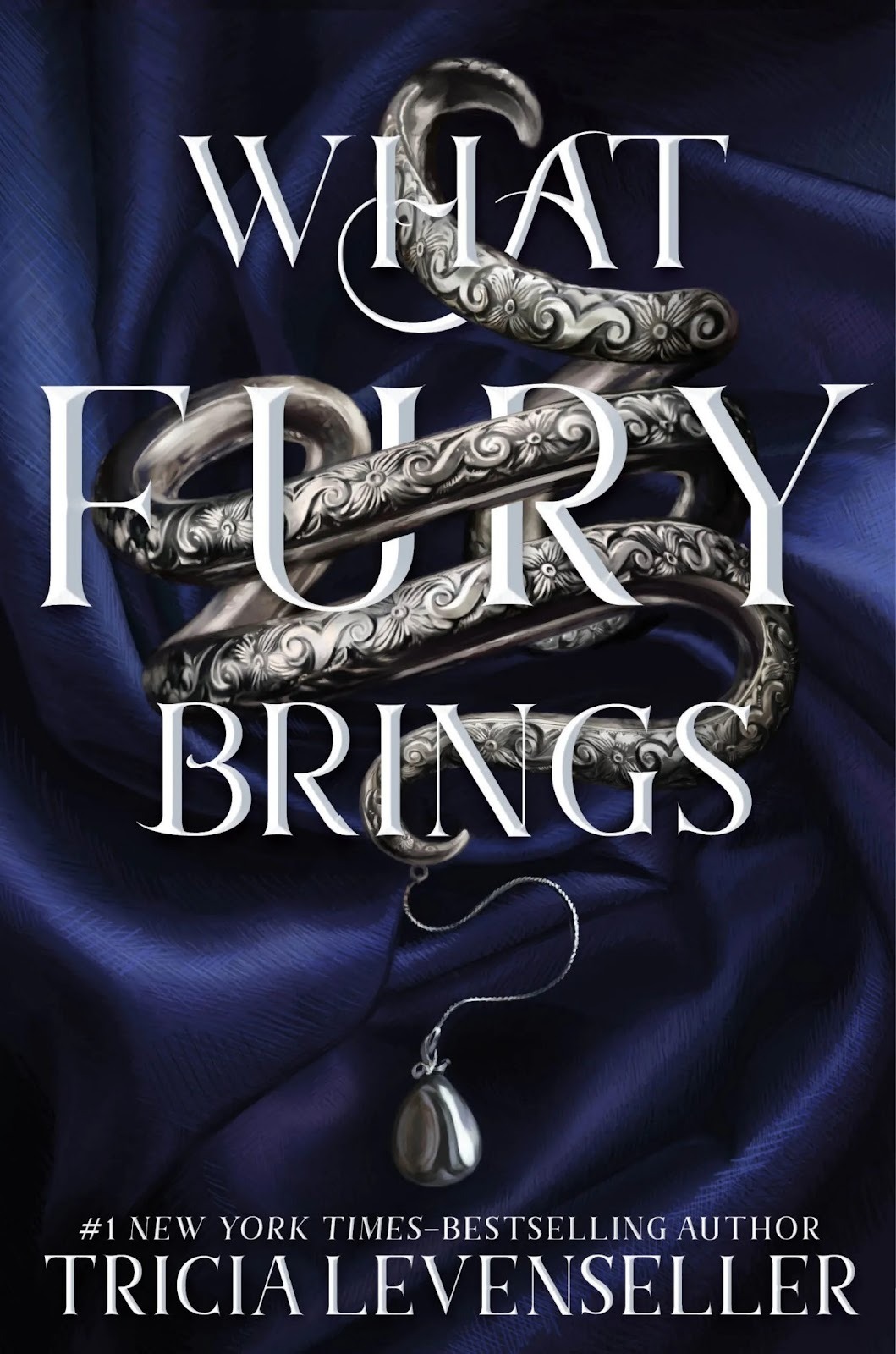
“What Fury Brings” by Tricia Levenseller [Femdom Book Review]

What Fury Brings by Tricia Levenseller

In a Greco-Roman fantasy world, various gods award their client populations gifts. For the country of Amarra, that’s to be stronger than any (cis) man, a fact that has led to a warlike society of Amazons with a distinct man shortage in their upper caste, causing them to have a practice of forced marriage harvested from their neighbors. Meanwhile everywhere else is a sea of ultra machismo masculinity.  In reaction, the Amarrans are also hard, harsh and violent, including our protagonist, Olerra, one of the leading candidates for the (elected) throne of her country. She’s hoping that she can leverage her status as general to impress her electorate (a small council of noble women), and in service to that she decides that nothing but the hand of a neighboring prince will do. 

Amarra’s’ most immediate rival a people who worship the god Brutus and therefore are known even internally as Brutes.  It is known that Brutes get higher than average fecundity thanks to their deity, but turn around and use that to create a culture of very fragile patriarchy, where the most powerful treat their wives and daughters as non-entities, but live in terror of their sons. For me I was a lot more curious about the fertility gift. We established that the Amarran strength wasn’t limitless as the King of the Brutes could still fight off multiple warriors, is the fertility a gender based blessing? What are the limits here? The King has multiple children but nothing unusual for someone having a lot of sex sans birth control over several decades. We hear about his five sons, of which the male protagonist is the eldest, and a daughter, while a reasonably determined person can get into the double digits if they keep at it most of their adult reproductive life. My grandfather, for example, is the youngest of 10.

When we learn Olerra’s darkest secret, that she lacks the strength awarded to all cis women of her society, I had suspected the actual truth would be that nobody in the society had real magic and it was social constructs the whole way down. You can still take that reading here as correct, but that’s not where this story goes. 

Instead it’s warrior/warrior, abduction and forced proximity plus fake romance, with a liberal pile of femdom to glue it all together. Olerra conspires to abduct a husband from the heart of her enemy’s kingdom and grabs the wrong brother, Sano, the crown prince. Sanos decides, for strategic reasons, not to correct this misunderstanding up front and then they slowly come to fall in love as Olerra does her level best to “housebreak” her captive into the more demure model of Amarran masculinity and he comes to appreciate her pure hearted sincerity. 

The way to read this is to turn your brain off and enjoy the ride. Up front, any nitpicking of the world building comes at the expense of the dubcon femdom. Likewise, a book which gives you an on page reason to refer to men as Brutes is not trying to be subtle and realistic. And in doing relax and enjoy approach, it also needs to be said that there’s nothing here that, gender flipped, would be remarkable in a romance about a male warrior-noble abducting a bride. Romance heroines have been slowly chipping away at their hot blooded ambitious warrior captors until they mutually surrender to the bonds of true love since forever. And they have done so on looser premises than this. 

It is true that somewhere in the back of What Fury Brings you can see the DNA of Wonder Woman, in the idea that a society under loving female authority would be largely utopia, but unfortunately somehow men get in their own way of accepting that. But this is also a sort of gender flip Gor, for despite being liberated for 500 years, the glue that holds Amarran society is the humiliation and subjection of men. Amarrans are inordinately obsessed with that, particularly the nobles, with lots of stories about how terribly rapey men are amidst a brutal culture of female on male rape. Again, take this as a feature not a bug. 

Probably because of that aforementioned clause that deity gifts are still beatable by exceptional individuals, Amarra really leans into restrictions on their men well past even the strictures of even an actual historical roman slave.  Even fighting back to the point of drawing blood from a woman is a death sentence and the murder of one noble woman, Olerra’s mother, lead to a purge of all adult noble men. 

Timelines get a bit hazy here, as the husband kidnapping is described as a tradition, but the massive gendercide that’s made it more popular happened within Olerra’s lifetime. The absolute trauma of everyone else’s father, adult son, brother or grandfather being murdered is not something that ever comes up, even though every adult noble woman you would interact with in the story would have lost multiple loved ones to a purge that made even some of the more out of hand European witch burnings seem restrained. You really have to just accept this is a convenient man shortage. 

Still, what is difficult to put your finger on is just how much this is a matter of unreliable narrators, how much is plot convenience and how much is a society that really, really hates cis men to the point of undermining its own modern feminist inclinations. What point do you need to be, after all, to overreact so wildly you are murdering everyone from 85 to 18 under suspicion of conspiracy to rebel? And what does this end up saying to the idea that “if women were in charge things would be different” when they are objectively worse? 

The book gives the on-page explanation this is what fury brings, but 500 years is a long time to stay mad, a timeline under which, for example, the real world went from medieval to space exploration (or if you want to stay Greco-Roman, the Athenian heyday to the advent of Christianity in the Roman empire). This has nothing to do with fury and everything to do with an intersection of fantasy clichés of excessively long timelines. The geography is pretty handwavey too, with the capital of Amarra and Brutus a short carriage ride from each other, yet different enough in climates to justify one character needing sun protection. Again, the parts of Northern Italy and Southern Italy where you can get that much genetic and climate drift are still considerably further apart. But will we let errors in cartography get in the way of pornography?

I only flag the nitpicks in the end, not because I think the book is bad for its flaws, but because the audience for femdom romance is excruciatingly selective. Forewarned means that you can go into this without a common response I find in our reader circles of getting your hopes up and then feeling particularly betrayed. I obviously can’t flag everything you the reader might personally find irksome, but I do these reviews to help people get an idea of what might be worth taking a risk on. 

And, ultimately everything is just here as a premise to justify the kidnapping of the male lead and make him more special. This isn’t a story about a woman trying to reform her society because her brother’s life was made forfeit by a deeply violent society, it’s one where the heroine being middling bad (for no reason other than random chance) in a society of terribly bad is a ray of reforming hope. 

Of course, lest you worry this is a TERF paradise, the opening glossary makes sure we are aware the Amarrans have a queer positive culture, with trans, non-binary and same gender couples galore. This is unlike the Brutes, who expect this to keep on the downlow.  Unfortunately though, it’s the sort of trans positive culture where any gender non-conformity to the binary firmly lands you in third gender status. The goddess gift of strength doesn’t work on trans women, yes, but they don’t get it, and it also does not work on trans men. I am going to give the writer the benefit of the doubt and say there’s no reason to assume their deity is perfect rather than that it’s an endorsement modern trans people are less valid.

The other part that’s very much a symptom of the modern era is what’s *not* included in the trigger warnings. We hit the ground running in a battle to take down the King of the Brutes, whereby the solution to his behaviour was to live capture, tie him to a chair, gloat a bit and then release him to his people stark naked to humiliate him. The King then goes home and strips his adult sons stark naked to flog them. Four chapters in and the fetish counter is making constant dinging noises, but none of this is being interpreted as vaguely sexual for purposes of warning the audience. 

This is really a problem about fetish stuff versus social norms about content notes. Because much of what is kinky is not inherently sexual, it means that it exists in a context of plausible deniability. But neither is the dubcob being flagged. The book depends heavily on body betrayal syndrome, and the male lead being aroused by something to make it clear surprises are ok. Things like tying the lead up and fingering his ass, without him realizing that was a possibility, are ok if he expected to have some sort of non-PiV sex. The trigger warnings demurely say the sexual assaults are off page, but every facet of this story is relentlessly horny.

Which is probably the books most winning feature. Every single part of it is twisted itself into the sole purpose of offering you more attempts at femdom for women and theorizing about a masculine friendly version of F/m. Want not men doing naked oil wrestling for your amusement? It’s got that. Sex markets where you can get a skilled man into what really gets you off? It’s got that too. Lovingly lavish descriptions of male fashions to simultaneously emphasize masculinity and make the man into a delectable and beautiful object of desire? It wants you to have that. 

But for me, my biggest personal nitpick (outside the recent voluntary gendercide being handwaved as more inconvenient than traumatic) is probably the part where Sanos comes to internalize Ammaran social superiority. There’s a reasonable conversation about the limits of trying to protect your kin from sexism versus social reform, but the point he is won over is that common men in the street seem happy in their subjugated position. There’s some contrast here in that while Amarran nobles are absurdly decadent in their harems, whereas there’s implication that commoners don’t have time for thirty men to exist in entirely decorative subjugation, but enough context clues to know that men are so constrained in this society they aren’t really out without female escort and they aren’t handling money. 

This is generally held up to being what Sanos and Olerra both see as ok. They don’t want all the grooming and domestic violence in either direction, but they are nobles and their concept of the world is not one where hierarchies are flattened, only softened. 

But there are moments where that background assumption gets a bit messy, never more so than the self congratulatory attitude around the penis guillotine scene. It’s presence is framed as being used to punish the worst of the worst, a man who raped a child. The idea is that it tells you that Amarra is harsh but fair, at worst a little preoccupied with certain risks over others. 

In actual impression it comes across that there’s such an appetite for seeing bad things happen to men that Amarra, lacking enough villains in their own borders, imports criminals from other countries so people can come and watch an evil man get his comeuppance. And our female protagonist gives our male protagonist a little lecture about how it helps with the inherent make tendency to rape…despite our introduction to her culture involving a paralytic toxin that leaves you with an erection used on consorts who misbehave, the villain openly being known to being likely to force an underage member of her harem to consummate and another character being considered unremarkable that she has a harem of entirely children. The book lets us know she is actually running a clandestine orphanage not a grooming operation, but apparently Amarra is so anti man that keeping a couple of dozen boys as consorts in training is less weird than openly running a school for under privileged boys. 

Meanwhile a lot of dialogue between the characters repeatedly confronts Sanos with his hypocrisy. Olerra is supposed to be the one who thinks bigger than him, but from an audience perspective, we are able to see her blind spots but he can’t. Inversely Sanos is not so far behind her as Olerra acts. She calls out his tendency to use chivalry in place of systemic repair, but he has something that’s much harder to discard in misogynistic cultures, the belief in fundamental inherent gender equality. Sanos somehow manages to avoid all the usual baggage that women are dumber, more cowardly, manipulative, etc.. that goes with real world sexism. 

So the guillotine becomes one of those moments where I can’t tell if this was supposed to be porn or praxis, but mostly it was a moment of the book trying to have their cake and eat it too. I base this on the fact that Amarra also uses voluntary eunuchs as high prestige servants  for unclear reasons. These men, it is made clear, are not being punished, but if you want a job in a noble household as a man it’s a mandatory requirement. Why? No reason given, so I think Levenseller just likes castration as a fetish. But the narrative also wants to have some moral line and it does ask you to give them more but in that I can here. 

Finally, in trying to bridge that problem of making members of a monstrous society sympathetic, the tactic deployed is that we are shown much worse people. The king of the Brutes abuses his sons, and Olerra’s rival to the throne is (most disgusting of disgusting vices)… a sadist!!!    

Sadism here is depicted as impossible to exist in a context of consent. It has to be the violent mishandling of unconsenting men, and is contrasted with the mainline Amarrans way of controlling their men, keeping them physically restrained and sexual tease and denial. It’s a sort of tyranny of gentle femdom, which as a story is supposed to let you relax your moral calibration to sample your edge fetishes as bad things and have your main ones as acceptable. As a premise it is understandable, but it also puts you in an awkward position that your happily ever after creates a line where half the stuff you enjoyed as a reader is going to arbitrarily be put in the shameful category. 

Thus penis guillotines are for good women to get off to bad men being chopped. Abusing your sex slaves is for good women to be titillated by but to ultimately condemn.  Other things are made arbitrarily ok, but ultimately when good triumphs in this story most of the stricter and more cruel fetish parts are to be swept up off the stage like discarded lingerie after a burlesque show. 

And I think the part of the ending that might make at least some potential audience give it a hard pass is in the HEA. After Olerra has fought many times over and won due to a combination of sheer skill, cunning and purity of heart, and after Sanos has learned to trust her and let her lead; they are cozy together as a couple discussing the future. And Olerra mentions they might switch sometimes. As character development it’s her learning to trust men and be vulnerable, as a Domme it was the disappointing inevitability of how tied to the situation a lot of the kink was. Olerra wasn’t constantly restraining Sanos because it was her fetish, she was frightened of him having the upper hand. When she loses that fear, she loses her justification to tie him up. 

For most people that’s going to be enough, but I know some of you would find a hint of switching would make you feel entirely undermined, so I think I need to mention that. 

But, caveats aside, I actually liked it. I liked the sex scenes. I liked the slow mutual understanding. I liked Sanos being an object of display and the almost fourth wall breaking internal observation he made about how shocking it was he got to be beautiful. I even liked the premise that the most popular brothel in Brutus as a make-believe version of Amarra because while the narrative through Dani’s perspective implied it was just to humble powerful women, I think it also pointed to how miserable men in ultra patriarchy are that they can’t help yearning for something else. It also delivered something a lot of femdom books struggle with, two leads I liked and thought suited each other. It even evaded one of my least favourite femdom tropes that submissive men in particular have to be inherently feminized to occupy that role. 

And, ultimately, even if the leads end with the shy possibility of switching on the table, it’s also notable that in a book which is incredibly open about sex, did not see fit to write that.  Sure, it’s there to let us know femdom doesn’t have to be compulsory, but you never get the vibe you as the audience were being told you had to endure some male dom as turn about. 

Which, review-wise, it’s good. It hits everything most people who want more femdom romances are looking for. While some books are a chore to get through, I knocked this one off in two binge read sessions, entirely entertained the whole time.


Where to buy: 

Author website: Tricia Levenseller

Liked this review? Check out more titles in my 2026 Femdom Book Review Project!