“The Admiral’s Acquisition” by Luna Gold [Femdom Book Review]

The Admiral's Acquisition by Luna Gold F/m, Digetic & Non Digetic BDSM, Dub Con, Non-con, Fun plot, great characters #2026 Femdom Book Review Project

This one is another favourite, an 100% for dommes F/m delight about a gruff space admiral (Kira) and the ruggedly handsome slave (Mak) she rescues and then comes to love and appreciate. I think what I enjoy most about this book is that it’s not only completely focused on wish fulfillment, and not afraid to go absolutely off the deep end into the background grim, but that there’s a sort of amusing self awareness about things that bug dommes. Additionally, there’s enough plot and worldbuilding to keep things interesting between scenes of the characters making gooey eyes at each other and hopping into kink, so much so that even if this was somehow closed door I’d still find it fun. Gold tells a good swashbucking space yarn, but it also has the rare distinction of a character in a leadership role who is given a lot of on page time to show why they are a good leader. 

A lot of books don’t do that. Be it royalty or a titan of industry, the day to day of how the character is awesome is made as vague as possible. They might work long hours with paperwork, close amazing deals or be narrated as giving stirring speeches, but ultimately things are pretty handwaved or worse, gives rather the opposite impression. As a reader who has complained of other books with queens being all tiara, no tax policy; or that make the supposedly business savvy characters feel like failsons and saps, I can’t emphasize how much I enjoyed seeing Kira take charge thoughtfully.

It’s a workplace romance of sorts, where the workplace just happens to be a hypercapitalist libertarian, slave owning space dystopia and where BDSM is just the normal recreational activity. I am not even sure this society has a concept of vanilla, even among consenting parties. 

Otherwise, as far romances go, The Admiral’s Acquisition leans to incredibly horny insta-lust, with a very rapid escalation into sex and both diegetic and non-diegetic BDSM aplenty. Obviously you can expect a happily ever after, and this one does a pretty good job of letting the sub show they are useful without making them the main event. While the story is told from a dual perspective, it also has a very unusual technique of running scenes a second time through the viewpoint of the other character, rather than using the jumps between Kira and Mak just to advance the external plot. The effect is almost like when you play with someone and then you get them to run back with you how much they enjoyed it during aftercare. 

I flagged earlier that non-digetic BDSM makes a big part of the setting (and the resulting conflicts that follow from it). That’s worth an additional caveat for some readers that Kira will be threatened by odious coworkers (though she defends herself well) and nearly everyone in this universe is bisexual and very comfortable with public sex between any combo of genders, consenting or not. Kira is a bit of a stick in the mud for her society, and rejects what other people get up to, but if you don’t want to see male dominants with female subs, even depicted negatively, consider yourself forewarned. And if the idea of the book that almost immediately shows you a very graphic, on page M/m sexual assault is distressing, consider this flagged as well. Mak’s need for rescue is lingered on enough that it’s clear it’s there for titillation as much as extra emphasis. I liked this because I like the rougher stuff, you might not find that your cup of tea.

And, if you are a strict nothing but un-caveated consent person, ditto this might not work, because the power imbalance between the characters remains consistent even to the ending. Nevertheless, I think Gold’s emphasis on Kira being an actually good boss also helps here. It’s not just that she doesn’t whip her crew or do the other awful things villain characters are depicted getting up to, but she also sets crew up for success and independence, a mindset she’s clearly also applying to Mak. In the various ways we might try to tell a BDSM romance with non and dub con while still leaving the dominant character sympathetic, the twin tropes of “oops I accidentally a slave” and “my society is worse than me by comparison” remain the most tried and true ways to gently elide around the reader’s sensible moral scruples and let one just be indulged by a fantasy. This, in itself, is nothing new, but Gold does a good job of not letting her privileged character be lazy about their moral obligations, which books also don’t always do well.  You get a sense that some of the meta-point here is that the massive social inequality is getting in the way of the D/s the couple would naturally prefer. Mak doesn’t want to be chattel, and Kira doesn’t want to be objectified. 

Kira, the dominant lead, also grapples with both a fair bit of sexism around her role as an Admiral (in this case meaning the commander of a large combo cargo/combat ship with a fair bit of other authority in her society) and in navigating the way other people tend to project their own fantasies onto her, both a a challenge or expecting her to play the admiral with them in her personal life. Mak, our sub, was submissive in the kink sense before he was thrown into slavery bombards her with a fair amount of idealized hero worship, but part of his arc is about rediscovering he can enjoy submission again in a (mostly) consenting context.

All told, this one remains on my top 10 lists, probably even top 3. About the only thing I can really complain about it that we probably aren’t getting a third book in the series, but as this is also clearly a labour of love, I am going to count myself luck with what we got.


Where to Buy

Where to Find the Author

I cannot locate so much as a defunct twitter account, but if anyone has anything better than an Amazon author page I would love to update this.

Liked this review? Check out more titles in my 2026 Femdom Book Review Project!

“Discipline: Adding Rules & Discipline To Your BDSM Relationship” by Lily Lloyd [Femdom Book Review]

DISCIPLINE Adding Rules & Discipline to Your BDSM Relationship Lily Llyod

This book, taking a neutral approach that attempts to be equally applicable regardless of your preference of D/s role, sets out to tell you how to take a bedroom only kink relationship and shift it into a one where the experience of that extends outside of time boundaried and limited scenes and into one where kink can be enjoyed on a more ongoing basis. The author is a switch, speaking from their experience with both roles, but in practice I find things tend to put a lot more emphasis on struggles from the dominant side.

I also think the title poorly gets across what it is actually doing, because it leaves the impression of a preoccupation on punishments and prescriptive (and very strict) high protocol. It’s actually about communication, negotiation and a much more organic approach to adding additional structure to your life. Lloyd’s philosophy is a matter of romantic intentionality, with the belief that all relationships are already built on (often unspoken) rules and agreements. What she is concerned with is helping you work with what you already have to make your changes sustainable.

She’s also very sensitive that this can be emotionally fraught and load bearing to the long term survival of a relationship. And, as much as it sets out not to be a BDSM 101 book, it still spends a lot of time on the foundations of how you and the other person work as a couple. It’s assumed you know what a dominant or a sub is, and the basics like safewords, but she does not suppose you are starting with more than that. This is not to say at any point the advice is tedious or obvious, rather she assumes that because most vanilla relationships got that way with a lot of help from external scripts that are treated as the human default, your relationship’s seriousness and pre-existing momentum do not preclude you having never seriously talked about what you wanted outside of very basic things.

What I otherwise think makes Llyod’s manual distinct is the emphasis on rules and discipline as romance and reassurance for both parties. Otherwise, I believe this book benefits from its assumption that you have to meet people where they are at and not over emphasizing living up to a fantasy ideal. Inversely, I believe the title and opening premise of the book fail to capture that you will also be thinking about the psychology and intentionality of what you are doing in a long term relationship and how it will bleed back into those so called “bedroom” scenes. 

 When she does talk about the rules part, she breaks them into three categories: rituals and protocols; standing orders; and things that are actually supposed to cause behaviour modification.  Lloyd classifies the former as a matter of aesthetics and mood setting, serving to help hold a head space. For example, you might be familiar with the idea of starting a scene by formally putting on a collar. Standing orders, on the other hand, are the realm of goals that are important to one or both parties in the relationship, but which generally leave it up to the submissive to figure out finer points of execution. Lastly, she makes behaviour modification distinct because this is probably the only place where real change is being expected, with an emphasis in her examples on an almost unilateral benefit for the submissive.

Where I think the book over reaches is that it also tries to define dominants by these three rule types. That much, I think, is a hammer looking for nails problem. It’s good to know that some people care primarily about lots of precise little aesthetic/immersion things while others might get their enjoyment from what is being prioritized by the submissive as a holistic matter, but I don’t think it’s very helpful to try to type yourself as some sort of quiz. The problem of overreach also pops out most broadly when she talks about “behaviour modification” dominants being unusual. 

That’s not to say Lloyd is not self aware of aspects of why. She cites a long gone (alas) blogger Dishevelled Domina (formerly of DischevelledDomina.wordpress.com) when going over a major issue of the sub displacing inappropriate levels of helplessness onto the dominant. Still, Lloyd muses about dominants who do behaviour modification as mysterious unicorns as much as they are lavishes with praise of being sweet “geeky” or “a bit nerdy” in the level they will invest in their sub’s psychology. But, ultimately she concludes correctly that over weighting benefit to the sub is what makes these sort of dynamics fail to survive the long haul.

The other book’s weakness, I think, is a common one. That’s that you can still see a ghost of the over valuing of the ”inherently more responsible dominant” mindset where she talks in terms of needing to consider the sub’s well being by default to “deserve” the submission of the sub. While “do no harm” is a good watchword that any reasonable BDSM guide emphasizes, I find it a bit incongruent that Lloyd can notice that hey, unilateral dynamics seem to burn dominants out and give lots of useful insight about subs needing to work on their end… but somehow along the way I find that a lot of writing about BDSM forgets about the equal partnership part underlying things. Lloyd is better than most, but it’s not surprising that the second quarter of the book focuses on the problem of unacknowledged dominant vulnerability without, per say, realizing what it was is doing. Similarly it is telling that at no point does it take subs aside and tell them to really think about what they actually want, but there’s a whole subsection for dominants that assumes it is likely they forgot to do that.

And where she starts talking about the practicals of rules again, I believe Lloyd does a much better job of implicitly centering the work involved. While we opened with an introduction to the writer that mentioned, almost casually, her first marriage failed because the dominant was bad at follow through, in practice she strongly emphasizes rules as being a gift with strings, effort and weighted meaning for both parties. What Lloyd wants always boils down to moving from the pure fantasies of either the benevolent task assigner dominant or the selfishie meanie and victim and figuring out workable, smaller scale compromises.

And in aggregate, that’s probably the best platform to embark on the rest of the book, which gives a lot of granular, easy to follow advice on choosing, testing and sustaining rules that will actually work for you. Lloyd consistently keeps things flexible, but whether your end goal is 24/7 TPE or honestly even just improving the bedroom side of things and never going any further you will still find something useful.

___

Where to Buy:

  • Shockingly hard to find, may have been delisted recently from online retailers

Author Website:

  • Unfortunately Lily Lloyd appears to have scaled down or stopped their online presence. 

Liked this review? Check out more titles in my 2026 Femdom Book Review Project!

“Come As You Are” by Emily Nagoski [Femdom Book Review]

Come as You Are The Surprising New Science that Will Transform Your Sex Life Emily Nagoski Phd.

Why am I reviewing a sex manual intended for a broader audience of women as a part of my 2026 Femdom Book Review Project? While the majority of my focus remains on romance in particular, this being (I feel) the genre most concerned with depicting femdom in a way dommes may enjoy, I also approach this as books that may be relevant to dommes who are trying to figure themselves out beyond finding fantasies that work for us. 

Come As You Are is one of those self help phenomena that has successfully lodged itself in popular acclaim, popularizing a broad sweep of helpful information about sexuality so well that people don’t even realize it’s a source. It is also notable that if you dig into kink manuals or forum advice posts, it’s also likely to pop up in a “further reading” section or just have its advice paraphrased on the spot to the benefit of whomever is receiving it. Mostly you have probably interacted with it if you ever heard people talk about “responsive desire” versus a spontaneous kind. 

Specifically the book proposes to be a sort of owners manual for women and their sexuality. I think that Nagoski’s efforts are laudable overall, and where it is held back is probably an artifact of the medium of self help as a larger genre. To its credit it is kink positive and interested in normalizing diversity of how people experience sexuality. It’s also dedicated itself to the important work of undoing the years of shame and lousy messaging people get about sex even long before they are adults. In practice, however, I think the main thing that holds it back is that its suggested outcomes, of modulating desire, are at odds with its actual message of there really being no shoulds. 

It therefore ends up being like a Healthy At Any Size nutritionist here to help you develop a better relationship to food largely stuck giving you diet advice to change up your body because all their patients still want to know about gaining or losing weight. Or in this case Nagoski clearly believes compulsory sexuality is as bad for you as compulsory purity, but has to take a harm reductive approach because the majority of people still are preoccupied with having the “right” amount of sex with a monogamous partner. 

That some of her anecdotes are about bisexual or lesbian women is nice, as is her stolid insistence it is ok to get off to m/m fanfic or kink. But this is a world where the asexual spectrum is not a factor of consideration, which I think isn’t her fault. We are largely the invisible orientation and Nagoski’s concepts can at least apply to the spectrum part of that experience. But, ultimately, for all she wants you to know and love your body she thinks of sexuality as first and foremost a partnered activity. 

When I first decided to read this I thought maybe I would use the hands on aspect of the book to do a sort of read along. I quickly determined that probably this was going to be an issue because the majority of this is about trying to figure out why you don’t want to have sex with your partner, with a smaller amount of focus on making yourself want sex less of this desire is vexious to your circumstances (and partner). Other parts are likewise not something I need personally (I know where my clitoris is, and this book really does start you off from 0) and the rest of the book supposes it’s trouble shooting some sort of problem between you, another person and your feelings about yourself.

Therefore the premise weaves between improving communication and mutual understanding with a partner and repeating various versions of letting you know you are normal in all your infinite variations and that there’s a lot of bad information about sex we internalize. She ties most of this to the three Ms, Moral, Medical and Media. I can hardly think I am immune to misunderstandings and myth, but I think it’s an ironic testament to the strength of her thesis Nagoski’s own work still has a bunch of assumptions from those categories in the advice she is giving.

One of those sticky ideas is that she frames this through a lens of men being fundamentally different than women. I think her gender reductionism, paired with appeals to what science says, are some of the weaker parts of the book. She does a lot to criticize that sex research treats women like men lite, but not at all that our assumptions about men are as incorrect as the ones about women. She repeats various traits in women show more variation in that category than comparison to men, and in her examples treats men as if how she describes women is equally applicable, but there’s still a tendency to frame things in terms of “we know this about men, but for women…”. I think Nagoski must know this, but it’s almost like she’s been swept along with the long standing assumption that sex ed for women has to be delivered in a “secrets of womanhood, just between us girls” format.

Still, some manuals that are popular have their own problems of coming from an iffy starting place, and can still be useful. Love Languages, for example, crawled out of the land of Christian Heterofatalism. Critics correctly note a rather depressing foundation there of both reductionism (one love language!) and over use of demands on women (his love language is touch so put out, you silly girl!). With these books you can extract value, but you are going to need a sturdy shovel. And, just by the presence this book has in discussions on the topic of sexuality it’s clear a lot of people have been finding this helpful.

So if Nagoski’s Come As You Are occasionally veers into a bit of gender-essentialism, I think the book can be forgiven not quite making the leap to point out that while it proposes that women are different than how we believe men to be, men are also different than how we believe them to be. That topic, itself is a whole piece of queer theory most people aren’t ready to digest. Introductions to chemistry uses simplified models of the atom in graduated complexity, from balls joined by sticks to eventually fuzzy energy clouds only comprehensible through advanced math, but in 2012 a child still discovered a hitherto undocumented molecule through playing with a sticks and balls set, so a good simplification is more useful than a bad deep dive. 

The other, honestly more important thing she’s doing here, however, is actually using our relative openness to What Science Says to chip away at our self destructive defence mechanisms. There’s a bit of a hidden aspect here, but it’s less trojan horse than trojan my little pony. It will be very hard to read this without an extra layer of re-enforcement on your self acceptance.

Beyond that, and an introduction to general anatomy, her main theory is the idea that sexuality has variable levels of excitability and inhibition. She believes that the vast majority of women are experiencing problems not because things don’t turn them on, but because most women are easily turned *off*. The whys of this are a bit more vague, but she also believes these are more of a factor of things we internalize than say, hormones. 

Thus for Nagoski, generally the root cause of inhibition is attributed to mental baggage or to current life circumstances that make it actually reasonable to not want to have sex. Therefore the majority of her efforts are towards helping the reader think what that might be. Nevertheless you can see a contradiction that she writes in her examples of essentially trying to get women to acknowledge they don’t have to do this and can be ok with not being horny when they think they are supposed to… by telling them how to want sex with another person when it is convenient. 

If I had another pet peeve it would probably be that while Nagoski is plenty kink positive, she generally defaults to examples of female submission. It’s true there’s a lot of submissive people out there of any gender, so this is hardly all that remarkable. Indeed, for all her women in her illustrative anecdotes, BDSM makes up a part of what the women do as an unremarkable part of their sexuality. Nevertheless, it’s always some variation of the sub role that’s described in the most positive terms. Two of the women find significant results in having their partner deny or otherwise restrict them, while the third, in a sapphic relationship, has it mentioned off hand that the only part of her desire that seem to be working going into therapy is when she imagines herself the bottom in a male/male multipartner scenario where she is being dominated. Everty so often around her storytelling, we then get some light reminders about how healthy the bottom/sub side of kink is. And while a lot of people need to hear that, there also is a certain point when I am absolutely and entirely sick of being reassured it’s ok to have submissive fantasies. Even more so when they are paired with glurgey comments that of course since you have so much pressure on you in the real world it makes sense you want to pretend you have none in the bedroom. Hurkblergh.

And then there was one moment where things went frankly bizarre. Fueled by a desire to accept the whole spectrum of possible sexual experience while pushing back on the idea of a pure physiological arbiter being the ultimate signal of true longing, Nagoski goes from the more sensible reassurance that wetness or similar are not contradictory signs of enthusiasm if the rest of you thinks otherwise, and into defining orgasms as something entirely abstract and personal. An orgasm, according to Nagoski, is whatever the person having it says it is.

After coming in through a tagline about “The Surprising New Science” and the first three quarters of the book woven with quotes from various studies, this was an odd place to find myself dropped. While I agree to Nagoski’s larger point that orgasms have a wide range of sensory difference for those who have them, here we are departing from what any science says on the subject with the velocity of a glitching kerbal space program launch. Sure, for some people orgasms are transcendent full body thrashing and for other kind of like the pop of a fresh jar of pickles opening, but the physiological part is still not entirely subjective. If you are so inclined and armed with an electrical current you can give a freshly deceased cadaver an orgasm.

And the sudden turn to hand wavery here is so abrupt that I had to take a break here and wonder what the hell I was just reading. Was Nagoski just using a bit of hyperbole here to stop women from discrediting their orgasms as not good enough and further psyching themselves out? Was she, despite setting the expectation that anyone should be able to have an orgasm, hedging by leaving the door open for women to decide anything they can mange is still enough? Did I misread something here?

But, be that as it may, for me I think the book’s strengths, outside of the reassurances and the basic anatomy, are the approach of troubleshooting sex as something that requires making space for it and removing distractions. This kind of is a skill that you have to figure out in long term relationships and approaching this with your expectations at a realistic level based on your actual circumstances can be very helpful. And if your problem with sex with your partner is you a psyching yourself out or worse, refusing to acknowledge good reasons why you don’t actually want to do this, this book may be really helpful.

Ultimately, for me, this book wasn’t something I needed. It’s good to have vocabulary to talk about the steps to setting up to have some flavour of successful intercourse with another person. Ditto to describe variations in desire patterns. I am also glad someone’s catching the traumatized religious conservative survivors and getting them to look at their own genitals. Lives are going to be saved by doing that, since your reproductive system is also one of those body parts that has a high chance of trying to kill you. But this really is a 101 primer and ultimately a 10+ veteran sex blogger probably isn’t going to be surprised to learn the clitoris is important or that you don’t need to feel shame about your fantasies.


Where to buy: 

Author Website:

Liked this review? Check out more titles in my 2026 Femdom Book Review Project!

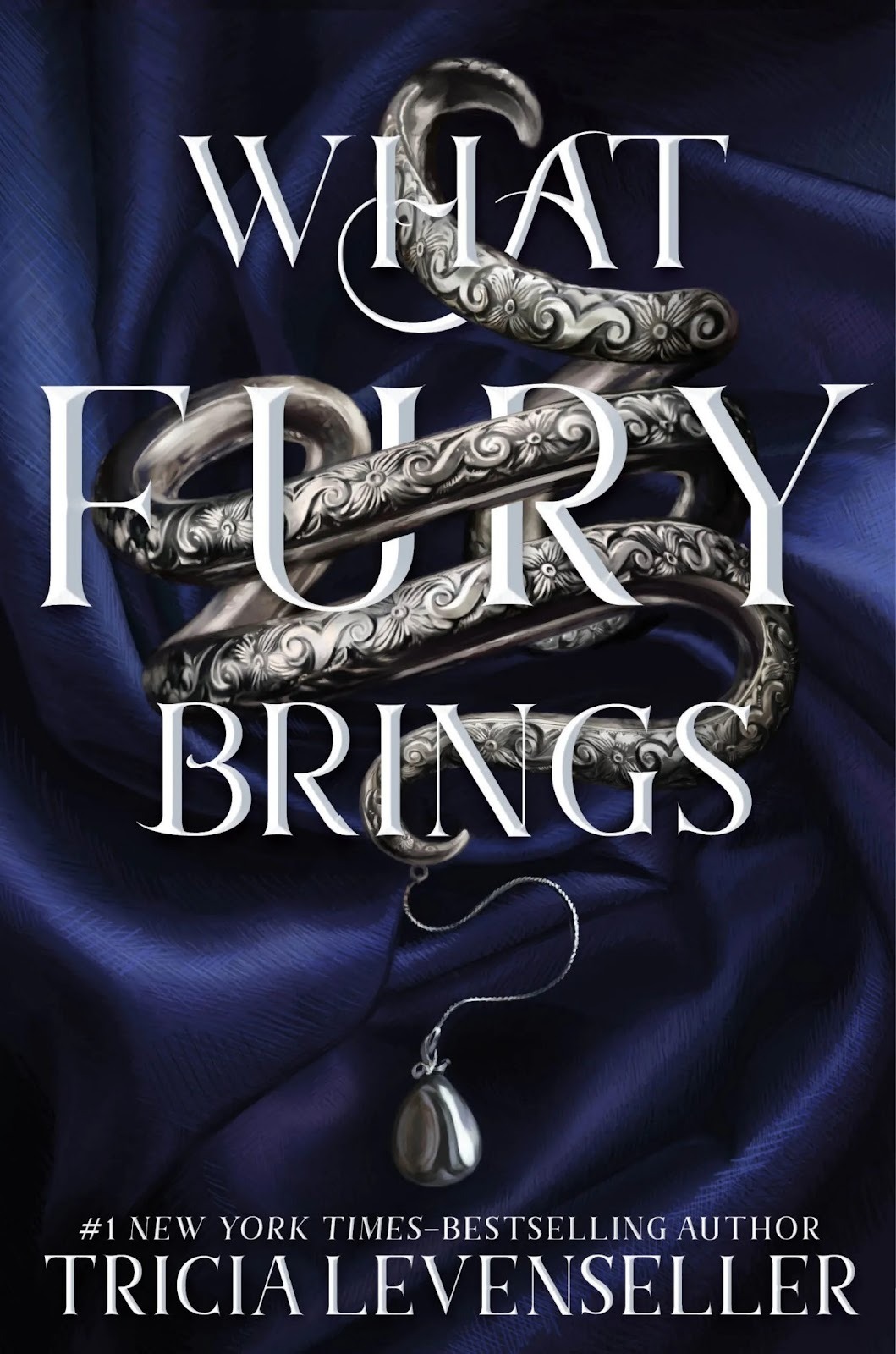
“What Fury Brings” by Tricia Levenseller [Femdom Book Review]

What Fury Brings by Tricia Levenseller

In a Greco-Roman fantasy world, various gods award their client populations gifts. For the country of Amarra, that’s to be stronger than any (cis) man, a fact that has led to a warlike society of Amazons with a distinct man shortage in their upper caste, causing them to have a practice of forced marriage harvested from their neighbors. Meanwhile everywhere else is a sea of ultra machismo masculinity.  In reaction, the Amarrans are also hard, harsh and violent, including our protagonist, Olerra, one of the leading candidates for the (elected) throne of her country. She’s hoping that she can leverage her status as general to impress her electorate (a small council of noble women), and in service to that she decides that nothing but the hand of a neighboring prince will do. 

Amarra’s’ most immediate rival a people who worship the god Brutus and therefore are known even internally as Brutes.  It is known that Brutes get higher than average fecundity thanks to their deity, but turn around and use that to create a culture of very fragile patriarchy, where the most powerful treat their wives and daughters as non-entities, but live in terror of their sons. For me I was a lot more curious about the fertility gift. We established that the Amarran strength wasn’t limitless as the King of the Brutes could still fight off multiple warriors, is the fertility a gender based blessing? What are the limits here? The King has multiple children but nothing unusual for someone having a lot of sex sans birth control over several decades. We hear about his five sons, of which the male protagonist is the eldest, and a daughter, while a reasonably determined person can get into the double digits if they keep at it most of their adult reproductive life. My grandfather, for example, is the youngest of 10.

When we learn Olerra’s darkest secret, that she lacks the strength awarded to all cis women of her society, I had suspected the actual truth would be that nobody in the society had real magic and it was social constructs the whole way down. You can still take that reading here as correct, but that’s not where this story goes. 

Instead it’s warrior/warrior, abduction and forced proximity plus fake romance, with a liberal pile of femdom to glue it all together. Olerra conspires to abduct a husband from the heart of her enemy’s kingdom and grabs the wrong brother, Sano, the crown prince. Sanos decides, for strategic reasons, not to correct this misunderstanding up front and then they slowly come to fall in love as Olerra does her level best to “housebreak” her captive into the more demure model of Amarran masculinity and he comes to appreciate her pure hearted sincerity. 

The way to read this is to turn your brain off and enjoy the ride. Up front, any nitpicking of the world building comes at the expense of the dubcon femdom. Likewise, a book which gives you an on page reason to refer to men as Brutes is not trying to be subtle and realistic. And in doing relax and enjoy approach, it also needs to be said that there’s nothing here that, gender flipped, would be remarkable in a romance about a male warrior-noble abducting a bride. Romance heroines have been slowly chipping away at their hot blooded ambitious warrior captors until they mutually surrender to the bonds of true love since forever. And they have done so on looser premises than this. 

It is true that somewhere in the back of What Fury Brings you can see the DNA of Wonder Woman, in the idea that a society under loving female authority would be largely utopia, but unfortunately somehow men get in their own way of accepting that. But this is also a sort of gender flip Gor, for despite being liberated for 500 years, the glue that holds Amarran society is the humiliation and subjection of men. Amarrans are inordinately obsessed with that, particularly the nobles, with lots of stories about how terribly rapey men are amidst a brutal culture of female on male rape. Again, take this as a feature not a bug. 

Probably because of that aforementioned clause that deity gifts are still beatable by exceptional individuals, Amarra really leans into restrictions on their men well past even the strictures of even an actual historical roman slave.  Even fighting back to the point of drawing blood from a woman is a death sentence and the murder of one noble woman, Olerra’s mother, lead to a purge of all adult noble men. 

Timelines get a bit hazy here, as the husband kidnapping is described as a tradition, but the massive gendercide that’s made it more popular happened within Olerra’s lifetime. The absolute trauma of everyone else’s father, adult son, brother or grandfather being murdered is not something that ever comes up, even though every adult noble woman you would interact with in the story would have lost multiple loved ones to a purge that made even some of the more out of hand European witch burnings seem restrained. You really have to just accept this is a convenient man shortage. 

Still, what is difficult to put your finger on is just how much this is a matter of unreliable narrators, how much is plot convenience and how much is a society that really, really hates cis men to the point of undermining its own modern feminist inclinations. What point do you need to be, after all, to overreact so wildly you are murdering everyone from 85 to 18 under suspicion of conspiracy to rebel? And what does this end up saying to the idea that “if women were in charge things would be different” when they are objectively worse? 

The book gives the on-page explanation this is what fury brings, but 500 years is a long time to stay mad, a timeline under which, for example, the real world went from medieval to space exploration (or if you want to stay Greco-Roman, the Athenian heyday to the advent of Christianity in the Roman empire). This has nothing to do with fury and everything to do with an intersection of fantasy clichés of excessively long timelines. The geography is pretty handwavey too, with the capital of Amarra and Brutus a short carriage ride from each other, yet different enough in climates to justify one character needing sun protection. Again, the parts of Northern Italy and Southern Italy where you can get that much genetic and climate drift are still considerably further apart. But will we let errors in cartography get in the way of pornography?

I only flag the nitpicks in the end, not because I think the book is bad for its flaws, but because the audience for femdom romance is excruciatingly selective. Forewarned means that you can go into this without a common response I find in our reader circles of getting your hopes up and then feeling particularly betrayed. I obviously can’t flag everything you the reader might personally find irksome, but I do these reviews to help people get an idea of what might be worth taking a risk on. 

And, ultimately everything is just here as a premise to justify the kidnapping of the male lead and make him more special. This isn’t a story about a woman trying to reform her society because her brother’s life was made forfeit by a deeply violent society, it’s one where the heroine being middling bad (for no reason other than random chance) in a society of terribly bad is a ray of reforming hope. 

Of course, lest you worry this is a TERF paradise, the opening glossary makes sure we are aware the Amarrans have a queer positive culture, with trans, non-binary and same gender couples galore. This is unlike the Brutes, who expect this to keep on the downlow.  Unfortunately though, it’s the sort of trans positive culture where any gender non-conformity to the binary firmly lands you in third gender status. The goddess gift of strength doesn’t work on trans women, yes, but they don’t get it, and it also does not work on trans men. I am going to give the writer the benefit of the doubt and say there’s no reason to assume their deity is perfect rather than that it’s an endorsement modern trans people are less valid.

The other part that’s very much a symptom of the modern era is what’s *not* included in the trigger warnings. We hit the ground running in a battle to take down the King of the Brutes, whereby the solution to his behaviour was to live capture, tie him to a chair, gloat a bit and then release him to his people stark naked to humiliate him. The King then goes home and strips his adult sons stark naked to flog them. Four chapters in and the fetish counter is making constant dinging noises, but none of this is being interpreted as vaguely sexual for purposes of warning the audience. 

This is really a problem about fetish stuff versus social norms about content notes. Because much of what is kinky is not inherently sexual, it means that it exists in a context of plausible deniability. But neither is the dubcob being flagged. The book depends heavily on body betrayal syndrome, and the male lead being aroused by something to make it clear surprises are ok. Things like tying the lead up and fingering his ass, without him realizing that was a possibility, are ok if he expected to have some sort of non-PiV sex. The trigger warnings demurely say the sexual assaults are off page, but every facet of this story is relentlessly horny.

Which is probably the books most winning feature. Every single part of it is twisted itself into the sole purpose of offering you more attempts at femdom for women and theorizing about a masculine friendly version of F/m. Want not men doing naked oil wrestling for your amusement? It’s got that. Sex markets where you can get a skilled man into what really gets you off? It’s got that too. Lovingly lavish descriptions of male fashions to simultaneously emphasize masculinity and make the man into a delectable and beautiful object of desire? It wants you to have that. 

But for me, my biggest personal nitpick (outside the recent voluntary gendercide being handwaved as more inconvenient than traumatic) is probably the part where Sanos comes to internalize Ammaran social superiority. There’s a reasonable conversation about the limits of trying to protect your kin from sexism versus social reform, but the point he is won over is that common men in the street seem happy in their subjugated position. There’s some contrast here in that while Amarran nobles are absurdly decadent in their harems, whereas there’s implication that commoners don’t have time for thirty men to exist in entirely decorative subjugation, but enough context clues to know that men are so constrained in this society they aren’t really out without female escort and they aren’t handling money. 

This is generally held up to being what Sanos and Olerra both see as ok. They don’t want all the grooming and domestic violence in either direction, but they are nobles and their concept of the world is not one where hierarchies are flattened, only softened. 

But there are moments where that background assumption gets a bit messy, never more so than the self congratulatory attitude around the penis guillotine scene. It’s presence is framed as being used to punish the worst of the worst, a man who raped a child. The idea is that it tells you that Amarra is harsh but fair, at worst a little preoccupied with certain risks over others. 

In actual impression it comes across that there’s such an appetite for seeing bad things happen to men that Amarra, lacking enough villains in their own borders, imports criminals from other countries so people can come and watch an evil man get his comeuppance. And our female protagonist gives our male protagonist a little lecture about how it helps with the inherent make tendency to rape…despite our introduction to her culture involving a paralytic toxin that leaves you with an erection used on consorts who misbehave, the villain openly being known to being likely to force an underage member of her harem to consummate and another character being considered unremarkable that she has a harem of entirely children. The book lets us know she is actually running a clandestine orphanage not a grooming operation, but apparently Amarra is so anti man that keeping a couple of dozen boys as consorts in training is less weird than openly running a school for under privileged boys. 

Meanwhile a lot of dialogue between the characters repeatedly confronts Sanos with his hypocrisy. Olerra is supposed to be the one who thinks bigger than him, but from an audience perspective, we are able to see her blind spots but he can’t. Inversely Sanos is not so far behind her as Olerra acts. She calls out his tendency to use chivalry in place of systemic repair, but he has something that’s much harder to discard in misogynistic cultures, the belief in fundamental inherent gender equality. Sanos somehow manages to avoid all the usual baggage that women are dumber, more cowardly, manipulative, etc.. that goes with real world sexism. 

So the guillotine becomes one of those moments where I can’t tell if this was supposed to be porn or praxis, but mostly it was a moment of the book trying to have their cake and eat it too. I base this on the fact that Amarra also uses voluntary eunuchs as high prestige servants  for unclear reasons. These men, it is made clear, are not being punished, but if you want a job in a noble household as a man it’s a mandatory requirement. Why? No reason given, so I think Levenseller just likes castration as a fetish. But the narrative also wants to have some moral line and it does ask you to give them more but in that I can here. 

Finally, in trying to bridge that problem of making members of a monstrous society sympathetic, the tactic deployed is that we are shown much worse people. The king of the Brutes abuses his sons, and Olerra’s rival to the throne is (most disgusting of disgusting vices)… a sadist!!!    

Sadism here is depicted as impossible to exist in a context of consent. It has to be the violent mishandling of unconsenting men, and is contrasted with the mainline Amarrans way of controlling their men, keeping them physically restrained and sexual tease and denial. It’s a sort of tyranny of gentle femdom, which as a story is supposed to let you relax your moral calibration to sample your edge fetishes as bad things and have your main ones as acceptable. As a premise it is understandable, but it also puts you in an awkward position that your happily ever after creates a line where half the stuff you enjoyed as a reader is going to arbitrarily be put in the shameful category. 

Thus penis guillotines are for good women to get off to bad men being chopped. Abusing your sex slaves is for good women to be titillated by but to ultimately condemn.  Other things are made arbitrarily ok, but ultimately when good triumphs in this story most of the stricter and more cruel fetish parts are to be swept up off the stage like discarded lingerie after a burlesque show. 

And I think the part of the ending that might make at least some potential audience give it a hard pass is in the HEA. After Olerra has fought many times over and won due to a combination of sheer skill, cunning and purity of heart, and after Sanos has learned to trust her and let her lead; they are cozy together as a couple discussing the future. And Olerra mentions they might switch sometimes. As character development it’s her learning to trust men and be vulnerable, as a Domme it was the disappointing inevitability of how tied to the situation a lot of the kink was. Olerra wasn’t constantly restraining Sanos because it was her fetish, she was frightened of him having the upper hand. When she loses that fear, she loses her justification to tie him up. 

For most people that’s going to be enough, but I know some of you would find a hint of switching would make you feel entirely undermined, so I think I need to mention that. 

But, caveats aside, I actually liked it. I liked the sex scenes. I liked the slow mutual understanding. I liked Sanos being an object of display and the almost fourth wall breaking internal observation he made about how shocking it was he got to be beautiful. I even liked the premise that the most popular brothel in Brutus as a make-believe version of Amarra because while the narrative through Dani’s perspective implied it was just to humble powerful women, I think it also pointed to how miserable men in ultra patriarchy are that they can’t help yearning for something else. It also delivered something a lot of femdom books struggle with, two leads I liked and thought suited each other. It even evaded one of my least favourite femdom tropes that submissive men in particular have to be inherently feminized to occupy that role. 

And, ultimately, even if the leads end with the shy possibility of switching on the table, it’s also notable that in a book which is incredibly open about sex, did not see fit to write that.  Sure, it’s there to let us know femdom doesn’t have to be compulsory, but you never get the vibe you as the audience were being told you had to endure some male dom as turn about. 

Which, review-wise, it’s good. It hits everything most people who want more femdom romances are looking for. While some books are a chore to get through, I knocked this one off in two binge read sessions, entirely entertained the whole time.


Where to buy: 

Author website: Tricia Levenseller

Liked this review? Check out more titles in my 2026 Femdom Book Review Project!

“Deliver” by Pam Goodwin [Femdom Book Review]

Deliver by Pam Goodwin book cover, showing a man with bound wrists and intense green eyes

Completely breaking with tradition, this extremely dark romance starts an otherwise entirely M/f series off with a femdom couple. Liv is part of a criminal organization, the fantasy kind, that makes millions abducting and training people for sexual servitude. This was just supposed to be one more job for her, just another mind to break and body to twist to the needs of the future client. She’s learned to be hard, after going through the same process herself, and is ever aware of the lethal consequences for failure. It’s not just her life on the line, the organization takes hostages, promising death… or worse.

However, there’s something about her latest victim, the virginal football star and seminary student Joshua, that gets under her skin. His real submission, his goodness and their intense chemistry are throwing off her careful system. He’s supposed to be for the client.  She has plans to follow and people to protect, but it’s all too tempting to take him for herself.

As well as more traditional trigger warnings that are likely implied in the premise or mentioned on the author’s site, if any hint of bad things or the dominant character being put in a submissive position is a limit for you, you will want to skip this one. Liv spends much of the book at the mercy of the man who captured her originally, who still holds a twisted degree of power over her. She’ll break free eventually, but there will be lots of bleak scenes that reinforce Liv is not acting on her own initiative. The relationship between her and Joshua is a real matter of mutual attraction that eventually gets its happily ever after with her still his dominant, but this is not a straight forward power fantasy, it’s a lampshade, permitting us to ride along with evil acts while absolving the heroine for her part in them.

I think it also suffers from not always trusting the heroine to be impressed by the hero unless he can rhinohide and force some vulnerability out of her. Joshua resists to a degree that can sometimes be frustrating (Silver listening to my read along describes it as “rude!!!”). I also think the need to keep her redeemable pulled some punches that didn’t need pulling. It gives you some final act twists to further push that point of her actually being ok, but it probably could have just gotten by on those last bits alone.

Which, I suppose, also needs flagging that this is a deeply silly book. Real sex trafficking is not the plot of Taken, nor are such elaborate investments needed to put vulnerable individuals at the mercy of the wealthy and powerful. How things get resolved also requires a significant perspective shift on just how far the reach of the criminal organization was… but if you are reading a dark romance about kidnapping and then corrupting a virgin college linebacker you probably aren’t demanding detailed and plausible world building. There are moments where I giggled at what wasn’t supposed to be funny and “so bad its entertaining” parts, but the tin is clearly labled.

Besides, its nice to have a heroine who gets to dominate in a way that violates the hero’s consent, stay dominant and stay alive. Many stories will let things go dark, but they often do so at the cost of killing off the heroine, disempowering her, or at least having her end up alone. True, it does so by undermining her own capacity to be evil, but as an experiment on how to pull off the subject matter you could do worse. It’s almost a pity this seems to be the writer’s only foray into femdom because I wouldn’t have mind giving this another shot.

I will also say there’s a very conservative-side-of-true-crime vibe here, in so much that it’s been set in a sort of fantasy otherwise more familiar to the sort of person who warns you traffickers will leave a coin on your car to mark you for being later kidnapped. Nevertheless the hero, for all his gruff resistance, gets to be the hot objectified one and there’s a sort of Eurydice can take care of herself vibe from the heroine. There might be shades of QAnon here, but neither must we assume the writer thinks the world actually works that way. It’s just as plausible to take away that the silly parts make this less grim and exploitational than a more realistic account of how abuse goes down.


Where to Buy: The author actually offers this one for free on her site

“Green and Gold” by Gwendolyn Harper [Femdom Book Review]

Green and Gold: An Erotic Irish Fairytale by Gwendolyn Harper

When Sloane comes to stay in a small Irish village to care for her ailing grandfather, she attracts the attention of not one but two men. Liam, a local cab driver, and Darragh, a fairy king. These men may differ strongly in background, but they are united in one thing, the desperate desire to submit and serve her. The possibilities seem endless, but Sloane has to worry… can a girl maybe be a bit too lucky? (Spoilers: No, no she can’t)

I freely admit pulled this one out of the archive of my to be read pile based entirely on its thematic relevance to the month more so than anything else. And, I went into this with very low expectations as a result. St. Patrick’s Day, history of sectarian violence not withstanding, isn’t really much of a holiday. There’s green beer, green cake, and maybe some muddled imagery confusing four leaf clovers and shamrocks, alongside pots of gold and rainbows. The book has all hints of being at about the same depths. 

Nevertheless, Green And Gold  takes itself more seriously than a book about a three way femdom relationship with a Leprechaun might, and this makes it readable. It doesn’t rush the sex, and avoids describing people in terms of breasting boobily, or confining all activity to the bedroom. It’s cheesy, but the conceits like using the stoplight safeword system “green” regularly during play were more dad joke head shake worthy than tiresome. 

That being said, while it gives us some time to warm up to the protagonist, it never forgets this is a work of fetish porn. Most of the text is just a vicarious ride along of two consenting, but ultimately mundane BDSM relationships separately getting off the ground and eventually coming to mingle. Negotiations are made. Ideas are proposed. Kinky acts are done and go well. People orgasm. People are very grateful to each other. There’s a lot of mutual gratitude amidst the gratification, and a lot of declarations of affection, attraction and attachment. 

Otherwise, the protagonist, Sloane gets what she wants with minimal trouble. When challenges occur, they are always within her capacity to overcome them. The pattern follows that the heroine will identify a problem, worry a little and then the entire universe conspires with her to fix it. This might be more off-putting if it wasn’t part of the book’s larger premises, enjoying things being unfair in your favour. 

Findom, ironically, is one of the most taboo fetishes for all it enjoys a current state of popularity. There’s something about women openly and avariciously wanting things that attracts a particular social ire. This is the second romance novel I have read on the subject (review still pending), and while Preferential Treatment was about the complicated relationship poverty gives you to money, this is pages and pages of hungry receiving intermixed with more traditional femdom activities. This one doesn’t want to tug your heart strings or play on your guilt over wanting things. Green and Gold just wants your mouth to water as you imagine getting anything you could possibly buy with a credit card, while the most handsome man in the world is so happy for you he has an erection. 

Likewise, the all too convenient manifestation of unicorn poly can similarly be understood through that lens. Wanting partners who are open to sharing, but conveniently only into you is also a taboo desire. Worried boyfriend #2 will be hurt that you didn’t tell him about your financial arrangement with your boss? Nope, he is just happy for you and thinks your boss is hot too.  Worried the faerie king with infinite resources will want another lover alongside you if you have an open relationship? Nope, he cheerfully admits he doesn’t really have any other options anyway, so everything comes up you shaped. 

Of course there’s a trade off that by having few problems there’s not a lot of substance where the men are involved. One has a stressful job, the other one has… his sister’s cat to look after? But, once more the reader is being freed from a hint of tension. Two perfect boyfriends with almost no baggage! If you don’t have cat allergies and don’t mind the occasional mystical jet lagged lover needing to be put to bed, the fantasy remains that the world shall revolve around you. Even your mildest problems are merely opportunities to win and be praised, or anxiety you can release after receiving unconditional reassurance.

And in a reality where women can’t even masturbate without some bright bulb writing earnest essays that our sexual fantasies aren’t morally affirming enough, there’s something particularly transgressive about that naked display of unpunished greed. I personally tend to prefer a sharper edge to my fiction, but sometimes you want something that’s the literary equivalent of eating a jar of cake frosting. 


Where to buy: Author site

The Sea Witch by Katee Roberts [Femdom Book Review]

The Sea Witch by Katee Roberts A Wicked Villains Novel

Despite being published, hardcover and bought by me at Beguilded Books, The Sea Witch is a shameless #AUMafia #Fairytale #OlympicGods F/mf fanfic, with no pretense its leads, Zurielle, Ursa and Alaric, aren’t cribbed directly from the Disney version of themselves. It’s here to deliver up a bunch of group sex scenes and intermittent impact play, with a bonus side of virginity auction and secret kinky crime families. Nevertheless, I maintain the belief that there’s no premise too silly or formulaic that it cannot be saved by good writing. I like F/fm. My own personal tastes and expression of my asexuality end up coming out in practice as a sort of bisexuality, and sapphic, menage or not, is one of the places it is much easier to find femdom.

Unfortunately this one was a slog, leaving me skimming the sex scenes and taking not even smug schadenfreude flavoured so-bad-its-good pleasure as it shoehorns in the worst parts of Mafia romance, fairytale retellings and secret BDSM society stories. Worse than being particularly offensive, it was boring.

Of course I have no pity for Disney being borrowed from. That corporation has injected itself in virtually anything public domain shaped, and premises like Once Upon a Time and the Kingdom Hearts game series establish world building where all the bits and pieces of their version of things interact is open to reimagining. The fact that in a better world our folklore wouldn’t all be filtered through the Mouse can be balanced that stealing is important for reimagining them back into collective ownership. But, here the parts that were clearly Disney shaped were invasive as hell, a sort of smug mugging moment where almost every background character was reminding you who they were by their barely changed names. Except when they weren’t changed at all, the logic of who did or didn’t get altered itself a bit hard to follow.

Greek myth was universally under their original names. Hades, Megara and Hercules are in another triad (though Hades having any opinion at all on Hercules being an another artifact of Disney). Aurora, we are informed, has hair shifting between pink and blue (Disney again), but she has a thing with the crime boss Malone. For some reason Jamine and Jafar get to keep their original names (even though they don’t get names in the original Aladdin), and are of course an item and also doing crime boss things, but we also needed to know about Gaeton, Beast and Isabelle off doing a sex show in a way that was really more like blatant ads for another book. That’s what most of the fac fic parts read like, characters doing cameos in the most ham handed sort of way. You know when an actor gets too successful in a particular role and you can’t help that intruding into their later parts? That’s what’s happening here. 

But sure, whatever, Robert needs to get paid and endless overlapping series are the order of the day. As I said, maybe this book might have been rescued on the strength of its kink or the strength of its plot. Ideally both.

Kept in perfect isolated innocence by her crime boss father, honeypot Alaric has lured her from shining Olympus to the dangerous Carver City, under the pretext that he’s trapped in debt bondage to Hades. To raise the money to free him she immediately goes to her father’s enemy, Ursa, for a solution to raise the money. That solution is to auction her virginity. The result is that she somehow ends up in Ursa’s penthouse alternately sulking and orgasming. As it turns out this is a set up. Alaric and Ursa are an item, and this is really just part of Ursa’s revenge scheme against Zurielle’s father.

As far as the femdom elements, most of this is focused on Zurielle having a four day sexual awakening as a sub. The b-plot is the titular Sea Witch using this foray into unicorn poly to bridge a trust gap between herself and her more longer term sub partner, Alaric, but ultimately this is also about her coming to decide that Zurielle is indispensable as well. Ursa dominates everyone, Alaric alternates between light dominance of Zurielle and being treated as a sex toy Ursa uses on Zurielle. I should be able to enjoy this, and there are moments of Alaric’s submission to Ursa, both directly to her or when he is being wielded on Zurielle where I thought this had promise.

I think where things went wrong is an inconsistent handling of the darker parts of the story. It’s one of the most obnoxious habits of BDSM romances, when it comes to consent versus conflict, to try to have their cake and eat it too. Plots must set up a scenario where the characters are in peril, use the symbolism of BDSM to further add a sense of danger, and then every three pages have the characters confirm they are consenting even when nothing about the setup wants that to be implied. The result is much like the habit of barely legal porn to have the lead shriek, every so often “I am only 18!” This is largely for the benefit of the censors. 

Meme: The myth of consensual sex. A couple agree they consent, but jesus doesn't
Basically, all creative fiction has to be published like you are considering this scenario.

I like non-con. I think these are fictional characters, and eternally link back to that tumblr essay about diagetic versus non-diagetic BDSM. But I do not live in a world that’s friendly to this sort of approach. 

Historically, you cannot openly sell non-con BDSM as non-con BDSM. At best it needs to be erotic horror or erotic thrillers, providing a Hays Code style figleaf like True Crime does that lets you wallow in darkness as long as the text provides not one whiff of a happy ending. Or, in romance it needs to be passed off with a sort of surreptitious don’t ask don’t tell where you absolutely refuse to acknowledge anyone is getting raped or this is being done for audience titillation. Flagging it as BDSM is a no-no, because you can rip a bodice, tie up a character, or kidnap them, but heaven forfend anyone admit they get off about that part. You can’t even just tag it with the nonos and assume the reader will understand fiction, because even that level of admission can be enough to get you in trouble. You at best have to host trigger warnings on an author site.

As a result, everything that gets sold is done so under the Eye of Sauron level terror of either the credit card processors or some country’s only vaguely dormant obscenity laws will lash out and not only drag that work into the bowels of hell, but the author, publisher, retailer and the other authors too. Along with their bank accounts. 

The result is that Zurielle needs to remind us she’s participating with the ability to say no. Scenes open with the ritual repeat of safewords. Worldbuilding is used to show how safety mechanisms have been put in place. Everything should be fine, since after all everyone’s an adult and had been interviewed and their ability to change their mind discussed.

…Except everyone involved in the facilitation of Zurielle’s adventures is a murderous crime boss, or related to one. Ursa’s called The Sea Witch because she drowns people. Hades, who sets up an elaborate escrow system that is supposed to preserve Zurielle’s ability to opt out, is also holding Alaric in plausible enough debt bondage he can’t simply leave his job as a pro-sub. When someone actually spirits a clearly consenting Zurielle away from the people who bought her, that person is understood to face a dire (if horny) punishment. The stakes of everyone’s hijinks are a risk of at least nameless side characters dying in gang war.

Efforts to make a distinction about the Real Bad Guys falls flat too. By book end, everyone agrees that Carver City is not as bad as Olympus because *they* don’t do human trafficking. In the middle of their human trafficking operation. Thus Zurielle’s father’s business is enough to be considered a bridge too far for Zurielle, but at the same time Ursa’s vengeance is being sought because she was edged out of that business. A bit of fussing is done by Zurielle about still being okay with all these crimes, but her conclusion is that her actual moral qualms can be satisfied by knowing that Ursa says she’s not that bad.

This is somewhat of a tragedy because rather than talking about consent in any sort of nuanced way you get this sort of outcome. It’s consent theatre, rather than good consent practice, but it is being passed off as the real thing enough to pass the censorship of bodies who neither understand nor care about actual consent. Of course combating that’s a lot to expect from an unassuming Disney menage BDSM romance. If you are looking just for that aforementioned femdom threeway where she bosses a male and female sub to fuck at her direction or you really, really needed an Ursula/Eric tentacle dildo pegging scenario you will get what you are looking for. For anything more than that, the best I can say is that this book getting not 1 but 2 updated, increasingly professional covers and a fancy hardcover at least means people are buying enough femdom for the author to think it’s worth it.


Where to Buy: Author’s Website

“The Only One” by Daisy Jane [Femdom Book Review]

The Only On by Daisy Jane. A shirltless man in a backwards had kneels and embraces the waist of a brunette woman in a mechanics coverall. A key dangles from her hand.

As is somewhat the habit of femdom romances, this one pops up in the tail of a “Wrench Kings” series, a collection of erotic romances about banging small town mechanics. Unlike most of the stories you find in this part of the genre, the subtitle and branding make it very clear it’s going to focus on gentle femdom.  Thus two silly innocents decide that because Delane, the female protagonist, has listened to a lot of femdom erotica on audiobook she’s going to teach the virginal male lead, Miller, some more confidence with women. Gentle femdom shall follow, but what Delane thinks is a casual short term deal obviously becomes something much more. 

Much of the rest of the book being readable depends on delivering on that premise in a way that accepts this is a stupid plan. As you might imagine, Delane is also a virgin and she’s flying by the seat of her pants. Whether or not you enjoy it will have to depend on how ok you are with the main characters both lacking not just a clue, but probably the entire current in print line of Hasbro board games. At least this defect essentially drives the major conflict of the story, since Delane not knowing any better is a plausible justification for having the courage to try randomly dominating a cute coworker. The persistent real world belief that femdom in the apex expression of feminine wiles and savoir faire makes the mess the characters get themselves in feel perfectly plausible.

Flawed protagonists notwithstanding, the rest of the plot is pretty standard: sex lessons with building chemistry; a horrible ex boyfriend stalking and harassing in the background; and a background cast of heart-of-gold blue collar people not particularly concerned about minor physical violence, but also heavily invested in each other’s love lives. Big dreams that stay in the immediate orbit of their community; and maybe a bit too much Not Like Other Girlsing around imagined competition that the female lead is at least able to recognize might be a bit unfair to the strangers she projects it on. These tropes aren’t remarkable to find in their niche (small town contemporary), but it’s a good reminder that it’s perfectly possible to stick to an ultra traditional format and showcase a non-traditional dynamic. 

Where it’s weak is that the sex framing is sometimes awkward. Within the first forty pages the text from Delane’s perspective has had her mention her nipples feeling hard in two separate incidents. Likewise, it’s not enough that she enjoys her porn, but we get text samples of what she is listening to , while she lingers credulously on her imagining things must work exactly on page. It is, to be frank, the sort of porn I wouldn’t review for this project, though it makes for an interesting contrast because Jane is clearly trying to make these vignettes of audiobook samples feel over the top. However, once it gets rolling the flow of libidinous references gets less shoehorned feeling.

While I think I personally lean a lot rougher in tastes, there’s a sort of dorkish realism to the spice between the actual characters that never loses sight of how this looks when real people do it. It does make things go perhaps a bit too easily for both parties, but since the underlying theme of the book is about the characters getting over the idea they are unworthy due to their psychological hang ups and lack of confidence, it makes thematic sense. 

And people really do act like this. Places like r/femdomcommunity gets a regular amount of people whose only Sex Ed is porn. We tell people to get their butts to a munch, but this is easier said then done if you live in a town with less than 100k people, and even then most femdom is couples awkwardly working it own on their own. The text doesn’t actually show when Delane switches from purely porn driven advice to what is clearly other online research, but you could imagine the phases of their relationship as a series of her frantically searching for advice or ideas to do with her new partner.

Everything else is unapologetically (and unselfconsciously) sappy. The male lead is every part a perfect gentleman, an escapee from the very Christian commune of his birth who cooks well, volunteers with the needy and steps into ideal son in law mode long before the couple makes it official. And, while Delane does fuck up by leaning into Miller’s own assumptions about her experience level, ultimately they are written as being able to salvage their dynamic on the other side of the necessary confessions and realignment of their perceptions of each other. It can drag a bit at the end where the story extends well past the HEA being established, but only via giving you about three more chapters worth of the main characters getting what they want and loving eachother.

Otherwise what I liked was that you will find both chastity cages and pegging here long before these people try out PiV. BDSM is never treated as the hard mode you can’t start with. The female lead has a bit of a chip on her shoulder about people she perceives as being traditionally femme, at least in the pink Pilates princess sense, but the narrative is otherwise both relentlessly sex and also porn positive. While the characters do lack for any real formal discussion about consent, likewise the pacing and framing is set up so you at least don’t worry anyone is being coerced. Overall I think femdom could use a lot more optimism about how much writers lean into it in romance. Thus, even if this is overall outside my favourite tropes and kinks to read for fun, I also feel it skillfully accomplished taking things that usually go very regressive and delivering a very progressive approach to kink and who can do what to whom, regardless of gender.


Where to Buy: The Only One: A Soft Femdom Romance (Wrench Kings Book 3) by Daisy Jane

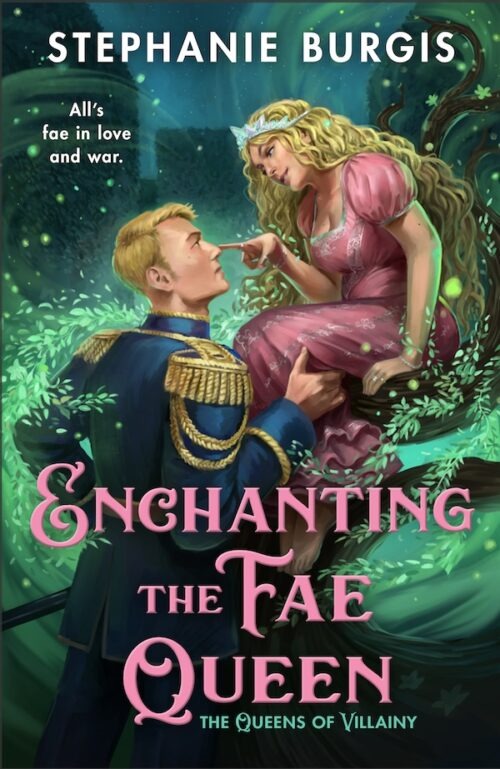
“Enchanting the Fae Queen” by Stephanie Burgis [Femdom Book Review]

Enchanting the Fae Queen by Stephanie Burgis cover. It shows a blonde woman in a princess dress booping the nose of a blond man in a blue military uniform. The tagline is "All's fae in love and war"

When you are trying to find femdom books, while some things tag themselves explicitly, a lot more of what is out there hides in plain sight. You have to either read everything and hope to be surprised or try to make educated guesses from the subtext inherent in a book’s premises or the cover art. This review is a follow up after an unexpected find, the next book in a series “The Queens of Villainy”, and I preordered it almost immediately finishing the preceding story, Wooing The Witch Queen. 

Well, I’ve read it. Let the author enjoy her well deserved status on the USA Today best seller list for this book, but Enchanting the Fae Queen is not following up on the overt femdom themes of the last one. There’s a switch/primal thing being attempted here instead, which is many people will like, but not my cup of tea. 

It’s a fluffy cupcake, full of banter and glitter and rapid fire fae perils. Other reviewers are showering it with stars and I absolutely won’t stand in their way. I hope Burgis continues to climb to a well deserved state of ongoing success.

Besides switching still shouldn’t entirely invalidate someone’s dominance just because they don’t do it all the time. And Burgis hardly promised this was going to be femdom, too. She only promised a captive male lead who is an uptight golden boy over-achiever virgin and you could argue I just got my hopes up too much. So, with that in mind, here is my own opinion of what is wrong here, outside of just the fact that I don’t like male dominance. 

Most notably, I don’t think Burgis trusted her audience enough to make Lorelei have any unlikeable traits linked to anything the character excelled at. I feel like she had to make the character’s malice so ineffectual because she was worried the captivity plot would erode the potential space for consent, but accidentally replicated one of my major pet peeves with how sexism impacts the genre of romance. Female characters aren’t actually allowed to be competently bad or otherwise effectively mean, because writers fear audiences will think they are unredeemable more so than the same behaviour from a man. 

I won’t say writers are obligated to pretend that isn’t a real bias when they consider creating a marketable work, but it does become immediately obvious whenever a female character is supposed to be dominant even part of the time. And it sucks. 

Of course people are forever kidnapping each other in romances. Readers like a good forced proximity and peril story and it injects a frisson of darkness many people find titillating. However, because of the gendered way we assume characters are allowed to behave, when a male character kidnaps a female character he gets way more grace to be threatening. Of course his motives may vary. Sometimes he is a ruthless pirate. Or doing it for her own good to hide her from her real enemies. Or consumed with BDSM flavoured lust. Regardless, the captivity is always treated as a real peril and his capacity to do so is based on a recognized ability to handle himself and exert an actual ongoing threat. 

When female characters kidnap male characters it’s almost always an immediate farce, full of whimsical misunderstandings and feminine embarrassment. Her motives always have to be noble, or at least coerced by outside forces and almost immediately things dissolve into a sort of baby voiced “gee mister I didn’t mean you any harm, honest I didn’t even know how guns worked when I shot you, aw shucks, don’t be maaaaaad”. Then the captive dude grudgingly comes to accept she doesn’t have a malicious bone in her body, she just got carried away, etc… but he is also at no point going to be more than surprised to find himself detained. Furthermore, once he realizes she is responsible, he will adopt a stern faced “little girl this prank has gone too far” attitude. She will blush and fume and stamp her little feetsies before ultimately coming to conclude the hero knows best. 

As a dominant top who is here to get thrilled by the hero actually being bested and helpless, I am very used to being recommended toothless kidnapping farces, of which this is yet another unremarkable example. What I want is gender flipped Beauty and the Beasts, what I get is stories where men being abducted can’t really do more than be irritated because a woman did it. Burgis is writing in the YA space so there wasn’t going to be much real darkness to begin with, but if this book was trying for a powerful take-charge heroine it undermined her too much to make that feel remotely plausible. 

Thus the intermittent bondage inflicted on the male lead is not quite enough to get over the way the heroine’s behaviour and reactions undermine things.  Even when she has the upper hand she immediately starts whimpering that she doesn’t feel powerful because he is hot. I would say this was trying to make sure it strangled all elements of power exchange all together, but notably the hero is allowed to take her in his strong grip and fantasize about her reaction to being helpless to him without being overwhelmed by her beauty. When they are in opposition he simply isn’t scared, just inconvenienced, whereas she is constantly terrified by the idea he might get her off.

This extends to the characters’ behavior and reactions outside of the romantic parts. We are supposed to take her seriously, but Lorelei is just too childish for me to buy the “appearances can be deceiving” premise she’s been given as far as her frivolity being an act. She’s not playing it up, she really is an impulsive hot mess who shouldn’t be put in charge of a lemonade stand, much less be a head of state. 

Although the story starts off with a show of her dramatic magics and her pulling off a surprise abduction of a VIP, it quickly loses that steam. Almost immediately the plot lands them in a death trap she needs the hero’s help to escape, but they are there entirely due to her own prior, somewhat baffling choices. Thus, the peril feels that if happens because she incompetent and over confident, rather than an unforeseeable curveball. Indeed, as if to drive this home, the narrative has her mention how she’s a victim of constant assassination attempts and treachery from Fae and mortal alike, but she’s genuinely caught flat footed that someone maneuvers against her while she drags a prisoner through a somewhat dubious team building scheme. 

The queens part of the “Queens of Villainy” framing device is also getting pretty strained here too. Saskia, protagonist of Wooing The Witch Queen, does queen related activities that show that the day to day of her nation is deferred to a Prime Minister, but she’s still serving her nation by shoring up the magical defences. And there’s discussion of how her hereditary legitimacy is holding together a much more consensus bases compromise system. Meanwhile, Lorelei’s role as monarch of Balravia has moved her into whatever the Political Science version of sexy lamp territory. 

We are told the throne was bitterly fought for, and that she had to take it to protect the Fae minority within its borders, but we don’t even get the skeleton of a plan for how she is achieving this. Is she veto-ing laws? Sending troops to suppress Fae hunters? Organizing faerie affirmative action programs to ensure diverse representation in the civil service? We will never know this. She is the queen in the very conservative Romantasy sense of right of birth followed by right by violence. Her dad made a deal with the Fae and Lorelei has imported Fae handmaids, so presumably Balravia has to listen to her. But this book could have easily made her just a powerful citizen of the country and nothing else would change about the story, particularly because she can just vanish for days at a time and her citizens don’t seem effected. 

(Side note, as far as her only other act of leadership we see her barging into the party of a neighboring empire and terrorizing the other guests. We are told they deserve this for expelling their Fae population, but this is never framed as an if/then threat, just a show of power the guests react to with reasonable fear for their lives. This is very a Saturday morning cartoon level simplification, depending on a premise that these hoity toity Empire bigots won’t immediately read this as an act of war. C’mon Lorelei, Baron Midtier Moderate over there just pissed himself because he thought he was about to be ended by greenery. You think this is advancing equality? Your whole pitch is that you are telling them you are just having fun, so the magical equivalent of firing a gun into the air isn’t even tied to a stated grievance deeper than not being invited to a party. She’s supposed to be a champion of the downtrodden but her goal appears to be to make people think Fae are capricious lunatics.)

Otherwise, Lorelei does absolutely zero actual leading, whining even her closest advisors (who are also all fae for some reason) push her around. She has a seat at the table in an alliance, but has already fucked up with them in the last book. About the only relevance her monarch status really provides here is her petulant insistence that faeries in the Fae only realm use her title as Queen, not her title in their world as Princess. But, ultimately she’s still all Tiara and no Tax Policy. 

Burgis has made the male lead, Gerard an ascetic virgin, and Lorelei’s an openly lusty hedonist, but any actual sexual interactions and she’s not doing anything remarkable with that experience while he already magically knows what to do with no real direction. This isn’t pulling off inverted expectations either, the narrative just doesn’t trust the heroine enough to actually have made any part of her supposed past sexual escapades rewarding.

And I think that’s the part I found most peeving. In a genre currently ruled by fanfic style tags as marketing, this book did promise certain things via its tropes and then failed to properly explore them. 

I think Burgis was trying for her female lead being misrepresented as an overstated succubus due to slut shaming. Instead it kind of comes across as anti-sexual exploration. Lorelei has been hurt repeatedly by all past lovers while Gerard saved himself for reasons, as it turned out, included simple disinterest in anyone else as much as it being the right choice pragmatically. Because all her past lovers were false and murderous, Lorelei is supposed to be traumatized and closed off, whereas Gerard saved himself for his true love… and has zero sexual hang ups. 

And Gerard (and what we should assume is based on his lifetime of experience with his trusty hand?) is written as veritable sex god. There’s ways to subvert the trope of blushing virginity, but from a first kiss that may very well be his first kiss ever he is doing the lip biting thing that really isn’t a rookie friendly maneuver. That’s just iffy writing. And nothing else is particularly plausible after that.

Wooing The Witch Queen was almost sexless, but this book’s couple does plenty of going at it on page. I am starting to wonder if the choice in the first book wasn’t to keep things YA friendly, but because either Burgis or their editor cannot imagine sex where the woman isn’t the one behaving like a cliché heroine who has never known such pleasure from a man (who incidentally knows her body better than she does). It’s very boilerplate sex.  The progressive kind of boilerplate, where we make sure the reader knows her orgasm is a priority, but very box ticking nevertheless. 

And another thing, since I think I am struggling to stay positive here and might as well get it off my chest… There’s only so many times Lorelei can break off their embrace with “no, I am actually too scared to do this because it feels good!” and then get gently put down again by the hero before you don’t want them to try again until they have an adult conversation. Likewise the narrative repeatedly reassuring us Gerard immediately stops goes from a hat tip to the importance of consent to worryingly repetitive that he needs to acknowledge in his own head he isn’t going to rape her.  

Even outside of sex, Enchanting the Fae Queen is too eager to show how similar the characters are to actually let Lorelei be better than Gerard at anything that matters, even things she should far exceed him at. He knows about as much magical lore as she does, navigates the Fae realm as equally competently as someone who is one, and handles the other Fae about as effectively as she does. In his one moment of real vulnerability to Fae more so than her is really more of a her problem that she has to surrender to. 

Meanwhile, Lorelei is not a good leader; not a particularly effective strategist; not particularly bright; not remarkably good at sex; and not really well respected even by technical peers. There’s a scene where the book compares her to a small animal desperately trying to protect babies, and maybe it was trying to get across that actually she had a heart of gold, but mostly it served to emphasize how her immaturity diminished her. She’s not a good person, she’s a smol bean who has been handed power by other people. This is a bad contrast against someone you built up as a self made genius. He overcame all odds and is stressed by the demands placed on him, but also self assured inside and out. She’s a scared, clingy baby telling us she’s only “pretending” to be extremely emotional. And lots is said about how it benefits her not to be taken seriously, but we never see that give her any advantage.

Now granted, there’s a scene at the end where the hero suddenly gets hit with the idiot stick and needs rescuing too. But, at that point Lorelei immediately turns to her other magical alliance besties to do most of the heavy lifting, concluding actually she needs to accept they are allowed to scold her like a junior member of the group if they are to help her. The story arc here is how the Queen of Fae learns to open herself up and accept other people will make good choices for her and how she very much never knows best by herself. 

There a turn of phrase I like for what happened here, the Impossible Burger Romance (credit @thedextriarchy.bsky.social) where a writer tries a non-traditional premise, but is so concerned the readers won’t be happy with that they immediately veer back into doing the most traditional story they can. As a result this isn’t even a switch romance. This is a Daddy and brat story where Daddy likes to be consensually topped from time to time, even if babygirl feels shy when she does it. The book desperately wants there to be a girl power element, without trusting the heroine to have any real power of her own. 

Sure, maybe that’s your thing, but it’s poison to writing even a part time power exchange dynamic and it’s not a stable enough foundation to pull off the nemesis part either. Lorelei’s not Gerard’s enemy, she’s, at best, a tsundere whose idea of plotting and international intrigue is a literal stink bomb. By book’s end she has his attention and Gerard’s bridges are duly burned with his own faction, what even are they going to banter about to play fight over? 

In aggregate it delivers a light afternoon read where two characters bicker their way through a series of challenges while slowly succumbing to their desire for each other. That’s enough to sell a book. But as well as not delivering what I hoped it might, it’s also not enough to sell what it advertised it was trying to do. I think this is a pity because Burgis has been better when they stay non traditional and would have been a better book if they did that here too. I will finish things up with the third book when it comes out, but it won’t be with any raised hopes. 


Where to buy: Enchanting the Fae Queen by Stephanie Burgis

“At His Countess’ Pleasure” by Olivia Waite [Femdom Book Review]

At His Countess' Pleasure by Olivia Waite. The cover depicts a woman in a red dress with clasped hands. She is standing against a blue background.

After a scandal between the families puts Anne Pym and her sisters in a socially precarious position, Simon Rushford, Earl of Underwood aims to resolve this reputational damage by making her his Countess. A whole bunch of light, entirely consensual femdom ensues while Anne adjusts to this marriage and comes into her own, with the rest of the plot conflict being driven by Anne attempting to live up to her own expectations as much as those of others, and Simon being a bit dumb. 

This is one of those 3.5 star situations, where its good parts were somewhat smothered by its problems. That’s not to say I hated the book, even if I was exasperated with it (and the characters) at times. Its main flaw is that it’s under done, but in the sense that it desperately needed more book to fill out what it was trying to do. Waite can write, with a particular knack for sex scenes, but the flow of individual pieces is very choppy. However, as far as erotica and hand under the covers reading, it executes what it is trying to do sincerely and with enough story and commitment to physical realism to underline it’s trying to take its own material seriously.

Other than that, though, the conflict here is probably the book’s weakest part. There’s plenty of problems for the heroine to solve, such as finding her feet in society, managing various scandals, and reconciling herself to things she can’t have, but we take until the last third of the book before there’s any real challenge. Capital R Romance (as a genre) has a beat structure and theme that isn’t being hewed to very hard here. Particularly germaine to abandoning forumula, the hero is a kind of gormless easy going individual who seems to exist to be agreeable and reassuring, but also cause most of the fuck ups. He is certainly very earnest, but also very stupid in a way that’s never particularly explored, essentially leaving the other half of the potential plot conflict entirely unaddressed. 

Particularly notable is that he is an utter dumb-dumb about sex, to the extent that a first major point of drama in the relationship is that he is flabbergasted to discover that a change in costume is enough to render his wife attractive. Nevertheless, his Madonna/Whore complex causes no further dysfunction in their love life and does nothing to change his opinion of her when he discovers she likes fucking him. This is a bit of a head scratcher that he is very bought into the idea of duty, proprietary and the fragility of women of his social class, but has none of the drawbacks this is usually packaged with in real life. 

Instead, Simon is written like someone who would be startled to discover carriages that aren’t painted red can still go fast. Inversely, Anne’s makeover from debutante pastels to bright colours (this being all it takes for Simon to realize she is hot) is in no way an effort to dress for his benefit, a purely happy accident. She likes fucking her husband, once he shows an interest in her, but her love for him never shifts from an increasingly appreciative check list. Additional tinkering could have taken this from Anne reacting to things and concluding it could be much worse, to her own example being a more traditional catalyst of change in her partner as well. 

Still, the main conceit the book is built on is pretty refreshing. Anne is a plausible sexually dominant, including approaching the inevitable historical romance virginity loss scene with full enthusiasm instead of a rather cliche reticence. Inversely, I enjoyed her hesitancy in figuring out her new social milieu and reconciling the real fact that dominants are not magic fountains of universal confidence. The plot, had it held together a little better, had its interesting points and avoided a lot of the more irksome versions of the tropes it explored. 

But I would have liked to see Simon ever have to confront the fact that he caused not only most of the problems in this book, but is largely insulated by his privilege in a way others are not. We are supposed to treat his marriage to Anne as some sort of mutual sacrifice, but in reality, he gives her a very difficult job entirely for his benefit. At no point does his terrible decision making process ever cause him real consequences, largely because Anne keeps dealing with it for him. No lessons are learned, Simon shall be Simon until he dies. 

This earnest range of fuck ups even starts with the prior book in this series, where we are told he plays an accidental part in the leaking of someone’s nude painting. The scandal from that is what puts Anne in a position where marriage to her is a sort of rescue, but even so she also represents a convenient solution to his feeling of obligation to marry someone out of duty. Then, once their sex life is off and humming we discover actually he knocked up his last mistress, but once again Anne is dealing with the worst of it entirely to his advantage. I am not even asking for a comeuppance. It’s just that Simon is never significantly impacted by any of this, and always less than Anne.

Indeed Simon does not get so much as a side eye from being surprised all the unprotected sex he had with other women he wasn’t married to resulted in pregnancy and then this secret being mismanaged by him. He talks about not being as slutty as his brother, and this, by his measure, seems to have been enough in his mind and nobody confronts him about this because the book keeps very modern sensibilities. No sex, no matter how irresponsible, is to be shamed. So, instead, he is briefly flustered by the mess, then Anne solves his problem, he then wanders off to play with the new baby. 

The strongest conflict, found in the last third of the book, doesn’t really concern Simon at all, just Anne putting up with a lot for her cousin (heroine from the last book) and confronting finding out something about herself that will impact their life together, rattling her confidence in the process.  This, about three months into their marriage (timelines are a bit rushed, it might have been max a year), puts a bit of a damper on their sex life while she deals with her feelings about that. It’s here you see where this would be a better book if Waite had given it more time. We could have built into this better about what sudden sexual dysfunction means to Anne. Instead, problem established we lurch into a happy ending by way of a pegging scene and then a time skip. 

Honestly, the pegging prose itself was well done, and so rare to find that I can forgive a lot. Nevertheless, it’s that ongoing choppiness of flow here that makes this scene nice but bewildering, rather than fantastic. What could have been an additional escalation becomes simply a dildo out of left field. 

To emphasize on how bizarre this is, nothing to this point suggests anything more sexually adventurous on Simon’s part than oral sex. A bit of editing could have handled this better, dropping the more complicated kink sooner into his perspective or maybe exploring that as part of the Madonna/Whore thing we started with. Instead we are left head scratching. How does Simon know about butt stuff, a historically realtively supressed sex act even compared to oral? We never get much insight, but for plot convenience he has a porn image to share with his wife as a way of guide and the firm belief this is just what Anne needs. Is this a secret vulnerable fantasy he dwelled on, revealed only as an act of trust? Did he do this loads with those prior partners? No, it’s pretty much just Simon doing Simon things.

By his logic, if Anne is feeling depressed enough she doesn’t want to do PiV, clearly what Simon thinks will cheer her up is putting a dildo in his butt. Tahdah, no more pressure on her to be wet enough to penetrate! Luckily, as pretty much every other hare brained idea of Simon’s so far, it goes great. 

About the only thing I can say to Simon’s credit is that he always does the wrong thing, but says the right thing afterwards. He offers Anne no help figuring out posh society, but cheerfully reminds her she is doing great while watching her struggle from the sidelines. He drops a surprise baby in her lap, fluffs about in a panic until Anne rescues him and then turns into instant perfect modern dad so the audience can coo over baby time. When Anne is sad because of a thing she has learned that impacts their sex life he says something supportive about centering her feelings not his. And then he offers her his butthole in this trying time. 

This is probably something of a pattern with how the book treats solving problems. When Simon played a part in harming Anne and her family, his solution to marry her is treated rather like a unilaterally good thing, rather than either excessive to what had been actually asked of him (and a gift with considerable strings). When the impregnated former mistress shows up on the doorstep, Anne in turn adds her to the household with a job, purely so Simon can get more time with the baby, and we are supposed to assume that this is a lovely, gracious thing to do to the other woman and not, again, a hard job that asks her to continue to subordinate herself to both main characters for a problem largely caused by Simon. The pegging at the end is almost a rule of thirds conclusion of this pattern. The problem of being unable to feel as aroused because of a very real point of stress is treated like Anne’s problem that Simon tenderly solves. In reality, it’s Simon saying “here is a sex act we can do when you aren’t as horny that will still benefit me”.

Simon adds to Anne’s life by adding massive social prestige and wealth, but in his own self characterization, this is more like the desirable cart attached to a particularly clumsy ox. The rest of Anne’s life is not particularly a net positive by his presence in it, and at times he feels his positives are more like a sexy lamp that could be replaced by a wise mentor stock character. One can even read a darker interpretation of his marriage to Anne that he knows he’s actually offering a less than good deal and figured her desperation would make up for it. 

These, incidentally, are all interesting conflicts that could have been addressed if we had about 25% more book. I credit Waite here that she’s clearly got the insight and writing ability to have ironed out these problems and made Simon either less of a bliss-ninny or have him reign in more of his worst tendencies in regards to this flaw as part of character development. I also don’t think the circumstances this was published in gave Waite the support to do so, thus one can’t complain too much.

This forms, by the way, the crux of my review dilemma. To nurture more femdom books into existence, existing works must be more widely read and shared. Nevertheless, this must be done with compassion and the knowledge that writers in this niche are operating at a severe disadvantage, most typically in the indie space.

As an indie, “At His Countess’ Pleasure” must be judged, not by the standards of the bigger budget books, but what is accomplished with less. One thus forgives much: typos, lower grade graphics on the covers, things that didn’t always land as precisely as we might hope, and so on. Often they are the byproduct of a single creator wearing many hats, and these errors really can be treated as irrelevant to the overall whole.  As an example of the genre of Romance, and assuming the creator had all the tools of a big budget book, this needed to go back to the metaphorical kitchen. As an example of something put together cottage industry style with no support to speak of and profit margins that border on an entirely labour of love level, Waite pulled this off phenomenally, bringing her talent and technical skill to a part of the book market that can trend into shovel ware. 

Thus my conclusion: it wasn’t a waste of time to read this and if Waite does any other femdom I’d happily give that a shot too. As an Erotic Romance, it’s a bit weak in how it assembles the R part, but if you are into firm but gentle F/m, the E is solid and could stand on its own if that was all you wanted.


Where To Buy: At His Countess’ Pleasure by Olivia Waite