My 2026 Femdom Book Review Project

2026 Femdom Book Review Project

Ok, if you haven’t noticed, this blog has popped out of a semi-hiatus and there’s been a much more regular appearance of one kind of post: Book Reviews. That’s intentional. While I have always wanted to review more works of this type, at least so far I’ve been able to keep up a once a week (every Sunday) schedule. The goal is 50 books for this year, both new and old.

I am looking for books that are intending to appeal to lifestyle dominants. The main focus will be on fiction, particularly romance, but also occasionally guides or other works as applicable. The main point of this is covered by my somewhat tongue in cheek stated goal of More Porn for Dommes, but it would be more accurate to describe the project as trying to get more attention to things that work for us and discuss what isn’t working.

This will also include negative reviews. I’ve wrestled with this a lot, but I think the only thing that does a book more harm than speaking poorly about it is not speaking about it at all. After all there’s a whole subfield of book hunting where people find what they like by the trigger warnings or people scathingly disparaging something a particular reader is actually looking for.

As a single individual I am not the ultimate authority what is and isn’t good, of course. No review I write should be taken as the last word. Nevertheless, I think my opinions can matter and what I trust is that if you think I am wrong you will feel compelled to go contradict me and sing the praises of the book you loved more so than if I said nothing at all.

I will not accept author review copies, I always feel like crap if I hate it. As an author you are welcome to try to let me know you have a work available I haven’t covered yet, but I will try to either buy what I review, get it from a library or look for general free book promotions. There will not be affiliate codes attached to these reviews in any sense. Where possible I will try to link to the author page or preferred retailer, avoiding Amazon as much as possible. If you are the author you may ask me to update me sales/where to find it link to one that best helps you.

Works that use AI (covers, text, even promo) will be excluded. Please don’t.

What You Can Do To Help

Buy the books I cover! Review the books you read as well, not just where you got them, but sites like Romance.io, the romance subreddits (as applicable), Storygraph and even Goodreads. If you wrote a review of something I also covered, please feel free to share a link to that review in the comments of that post. I am open to reciprocal link sharing between review bloggers.

Also! Review books I did not cover. Tag them with “femdom” so other people can find them (and me). Make your own lists of books you liked. Share those lists! As always curation, curation, curation. It’s the only way we can get things out there.

I may reactivate my Patreon at a later date (maybe if I keep this up for another few months and can tell it’s become a habit), but for now please put your money towards supporting authors and buying their works. And if you can’t afford that, ask your local library to buy a copy. You will be surprised what they will keep in stock!

2026 Reviews So Far

(In Reverse Chronological Order)

July

  • “The Admiral’s Acquisition” by Luna Gold

June

May

April

March

February

January

“The Only One” by Daisy Jane [Femdom Book Review]

The Only On by Daisy Jane. A shirltless man in a backwards had kneels and embraces the waist of a brunette woman in a mechanics coverall. A key dangles from her hand.

As is somewhat the habit of femdom romances, this one pops up in the tail of a “Wrench Kings” series, a collection of erotic romances about banging small town mechanics. Unlike most of the stories you find in this part of the genre, the subtitle and branding make it very clear it’s going to focus on gentle femdom.  Thus two silly innocents decide that because Delane, the female protagonist, has listened to a lot of femdom erotica on audiobook she’s going to teach the virginal male lead, Miller, some more confidence with women. Gentle femdom shall follow, but what Delane thinks is a casual short term deal obviously becomes something much more. 

Much of the rest of the book being readable depends on delivering on that premise in a way that accepts this is a stupid plan. As you might imagine, Delane is also a virgin and she’s flying by the seat of her pants. Whether or not you enjoy it will have to depend on how ok you are with the main characters both lacking not just a clue, but probably the entire current in print line of Hasbro board games. At least this defect essentially drives the major conflict of the story, since Delane not knowing any better is a plausible justification for having the courage to try randomly dominating a cute coworker. The persistent real world belief that femdom in the apex expression of feminine wiles and savoir faire makes the mess the characters get themselves in feel perfectly plausible.

Flawed protagonists notwithstanding, the rest of the plot is pretty standard: sex lessons with building chemistry; a horrible ex boyfriend stalking and harassing in the background; and a background cast of heart-of-gold blue collar people not particularly concerned about minor physical violence, but also heavily invested in each other’s love lives. Big dreams that stay in the immediate orbit of their community; and maybe a bit too much Not Like Other Girlsing around imagined competition that the female lead is at least able to recognize might be a bit unfair to the strangers she projects it on. These tropes aren’t remarkable to find in their niche (small town contemporary), but it’s a good reminder that it’s perfectly possible to stick to an ultra traditional format and showcase a non-traditional dynamic. 

Where it’s weak is that the sex framing is sometimes awkward. Within the first forty pages the text from Delane’s perspective has had her mention her nipples feeling hard in two separate incidents. Likewise, it’s not enough that she enjoys her porn, but we get text samples of what she is listening to , while she lingers credulously on her imagining things must work exactly on page. It is, to be frank, the sort of porn I wouldn’t review for this project, though it makes for an interesting contrast because Jane is clearly trying to make these vignettes of audiobook samples feel over the top. However, once it gets rolling the flow of libidinous references gets less shoehorned feeling.

While I think I personally lean a lot rougher in tastes, there’s a sort of dorkish realism to the spice between the actual characters that never loses sight of how this looks when real people do it. It does make things go perhaps a bit too easily for both parties, but since the underlying theme of the book is about the characters getting over the idea they are unworthy due to their psychological hang ups and lack of confidence, it makes thematic sense. 

And people really do act like this. Places like r/femdomcommunity gets a regular amount of people whose only Sex Ed is porn. We tell people to get their butts to a munch, but this is easier said then done if you live in a town with less than 100k people, and even then most femdom is couples awkwardly working it own on their own. The text doesn’t actually show when Delane switches from purely porn driven advice to what is clearly other online research, but you could imagine the phases of their relationship as a series of her frantically searching for advice or ideas to do with her new partner.

Everything else is unapologetically (and unselfconsciously) sappy. The male lead is every part a perfect gentleman, an escapee from the very Christian commune of his birth who cooks well, volunteers with the needy and steps into ideal son in law mode long before the couple makes it official. And, while Delane does fuck up by leaning into Miller’s own assumptions about her experience level, ultimately they are written as being able to salvage their dynamic on the other side of the necessary confessions and realignment of their perceptions of each other. It can drag a bit at the end where the story extends well past the HEA being established, but only via giving you about three more chapters worth of the main characters getting what they want and loving eachother.

Otherwise what I liked was that you will find both chastity cages and pegging here long before these people try out PiV. BDSM is never treated as the hard mode you can’t start with. The female lead has a bit of a chip on her shoulder about people she perceives as being traditionally femme, at least in the pink Pilates princess sense, but the narrative is otherwise both relentlessly sex and also porn positive. While the characters do lack for any real formal discussion about consent, likewise the pacing and framing is set up so you at least don’t worry anyone is being coerced. Overall I think femdom could use a lot more optimism about how much writers lean into it in romance. Thus, even if this is overall outside my favourite tropes and kinks to read for fun, I also feel it skillfully accomplished taking things that usually go very regressive and delivering a very progressive approach to kink and who can do what to whom, regardless of gender.


Where to Buy: The Only One: A Soft Femdom Romance (Wrench Kings Book 3) by Daisy Jane

“Enchanting the Fae Queen” by Stephanie Burgis [Femdom Book Review]

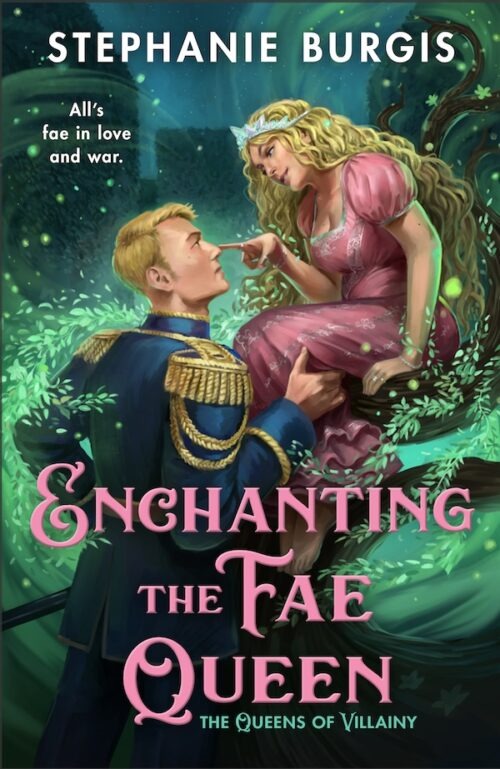
Enchanting the Fae Queen by Stephanie Burgis cover. It shows a blonde woman in a princess dress booping the nose of a blond man in a blue military uniform. The tagline is "All's fae in love and war"

When you are trying to find femdom books, while some things tag themselves explicitly, a lot more of what is out there hides in plain sight. You have to either read everything and hope to be surprised or try to make educated guesses from the subtext inherent in a book’s premises or the cover art. This review is a follow up after an unexpected find, the next book in a series “The Queens of Villainy”, and I preordered it almost immediately finishing the preceding story, Wooing The Witch Queen. 

Well, I’ve read it. Let the author enjoy her well deserved status on the USA Today best seller list for this book, but Enchanting the Fae Queen is not following up on the overt femdom themes of the last one. There’s a switch/primal thing being attempted here instead, which is many people will like, but not my cup of tea. 

It’s a fluffy cupcake, full of banter and glitter and rapid fire fae perils. Other reviewers are showering it with stars and I absolutely won’t stand in their way. I hope Burgis continues to climb to a well deserved state of ongoing success.

Besides switching still shouldn’t entirely invalidate someone’s dominance just because they don’t do it all the time. And Burgis hardly promised this was going to be femdom, too. She only promised a captive male lead who is an uptight golden boy over-achiever virgin and you could argue I just got my hopes up too much. So, with that in mind, here is my own opinion of what is wrong here, outside of just the fact that I don’t like male dominance. 

Most notably, I don’t think Burgis trusted her audience enough to make Lorelei have any unlikeable traits linked to anything the character excelled at. I feel like she had to make the character’s malice so ineffectual because she was worried the captivity plot would erode the potential space for consent, but accidentally replicated one of my major pet peeves with how sexism impacts the genre of romance. Female characters aren’t actually allowed to be competently bad or otherwise effectively mean, because writers fear audiences will think they are unredeemable more so than the same behaviour from a man. 

I won’t say writers are obligated to pretend that isn’t a real bias when they consider creating a marketable work, but it does become immediately obvious whenever a female character is supposed to be dominant even part of the time. And it sucks. 

Of course people are forever kidnapping each other in romances. Readers like a good forced proximity and peril story and it injects a frisson of darkness many people find titillating. However, because of the gendered way we assume characters are allowed to behave, when a male character kidnaps a female character he gets way more grace to be threatening. Of course his motives may vary. Sometimes he is a ruthless pirate. Or doing it for her own good to hide her from her real enemies. Or consumed with BDSM flavoured lust. Regardless, the captivity is always treated as a real peril and his capacity to do so is based on a recognized ability to handle himself and exert an actual ongoing threat. 

When female characters kidnap male characters it’s almost always an immediate farce, full of whimsical misunderstandings and feminine embarrassment. Her motives always have to be noble, or at least coerced by outside forces and almost immediately things dissolve into a sort of baby voiced “gee mister I didn’t mean you any harm, honest I didn’t even know how guns worked when I shot you, aw shucks, don’t be maaaaaad”. Then the captive dude grudgingly comes to accept she doesn’t have a malicious bone in her body, she just got carried away, etc… but he is also at no point going to be more than surprised to find himself detained. Furthermore, once he realizes she is responsible, he will adopt a stern faced “little girl this prank has gone too far” attitude. She will blush and fume and stamp her little feetsies before ultimately coming to conclude the hero knows best. 

As a dominant top who is here to get thrilled by the hero actually being bested and helpless, I am very used to being recommended toothless kidnapping farces, of which this is yet another unremarkable example. What I want is gender flipped Beauty and the Beasts, what I get is stories where men being abducted can’t really do more than be irritated because a woman did it. Burgis is writing in the YA space so there wasn’t going to be much real darkness to begin with, but if this book was trying for a powerful take-charge heroine it undermined her too much to make that feel remotely plausible. 

Thus the intermittent bondage inflicted on the male lead is not quite enough to get over the way the heroine’s behaviour and reactions undermine things.  Even when she has the upper hand she immediately starts whimpering that she doesn’t feel powerful because he is hot. I would say this was trying to make sure it strangled all elements of power exchange all together, but notably the hero is allowed to take her in his strong grip and fantasize about her reaction to being helpless to him without being overwhelmed by her beauty. When they are in opposition he simply isn’t scared, just inconvenienced, whereas she is constantly terrified by the idea he might get her off.

This extends to the characters’ behavior and reactions outside of the romantic parts. We are supposed to take her seriously, but Lorelei is just too childish for me to buy the “appearances can be deceiving” premise she’s been given as far as her frivolity being an act. She’s not playing it up, she really is an impulsive hot mess who shouldn’t be put in charge of a lemonade stand, much less be a head of state. 

Although the story starts off with a show of her dramatic magics and her pulling off a surprise abduction of a VIP, it quickly loses that steam. Almost immediately the plot lands them in a death trap she needs the hero’s help to escape, but they are there entirely due to her own prior, somewhat baffling choices. Thus, the peril feels that if happens because she incompetent and over confident, rather than an unforeseeable curveball. Indeed, as if to drive this home, the narrative has her mention how she’s a victim of constant assassination attempts and treachery from Fae and mortal alike, but she’s genuinely caught flat footed that someone maneuvers against her while she drags a prisoner through a somewhat dubious team building scheme. 

The queens part of the “Queens of Villainy” framing device is also getting pretty strained here too. Saskia, protagonist of Wooing The Witch Queen, does queen related activities that show that the day to day of her nation is deferred to a Prime Minister, but she’s still serving her nation by shoring up the magical defences. And there’s discussion of how her hereditary legitimacy is holding together a much more consensus bases compromise system. Meanwhile, Lorelei’s role as monarch of Balravia has moved her into whatever the Political Science version of sexy lamp territory. 

We are told the throne was bitterly fought for, and that she had to take it to protect the Fae minority within its borders, but we don’t even get the skeleton of a plan for how she is achieving this. Is she veto-ing laws? Sending troops to suppress Fae hunters? Organizing faerie affirmative action programs to ensure diverse representation in the civil service? We will never know this. She is the queen in the very conservative Romantasy sense of right of birth followed by right by violence. Her dad made a deal with the Fae and Lorelei has imported Fae handmaids, so presumably Balravia has to listen to her. But this book could have easily made her just a powerful citizen of the country and nothing else would change about the story, particularly because she can just vanish for days at a time and her citizens don’t seem effected. 

(Side note, as far as her only other act of leadership we see her barging into the party of a neighboring empire and terrorizing the other guests. We are told they deserve this for expelling their Fae population, but this is never framed as an if/then threat, just a show of power the guests react to with reasonable fear for their lives. This is very a Saturday morning cartoon level simplification, depending on a premise that these hoity toity Empire bigots won’t immediately read this as an act of war. C’mon Lorelei, Baron Midtier Moderate over there just pissed himself because he thought he was about to be ended by greenery. You think this is advancing equality? Your whole pitch is that you are telling them you are just having fun, so the magical equivalent of firing a gun into the air isn’t even tied to a stated grievance deeper than not being invited to a party. She’s supposed to be a champion of the downtrodden but her goal appears to be to make people think Fae are capricious lunatics.)

Otherwise, Lorelei does absolutely zero actual leading, whining even her closest advisors (who are also all fae for some reason) push her around. She has a seat at the table in an alliance, but has already fucked up with them in the last book. About the only relevance her monarch status really provides here is her petulant insistence that faeries in the Fae only realm use her title as Queen, not her title in their world as Princess. But, ultimately she’s still all Tiara and no Tax Policy. 

Burgis has made the male lead, Gerard an ascetic virgin, and Lorelei’s an openly lusty hedonist, but any actual sexual interactions and she’s not doing anything remarkable with that experience while he already magically knows what to do with no real direction. This isn’t pulling off inverted expectations either, the narrative just doesn’t trust the heroine enough to actually have made any part of her supposed past sexual escapades rewarding.

And I think that’s the part I found most peeving. In a genre currently ruled by fanfic style tags as marketing, this book did promise certain things via its tropes and then failed to properly explore them. 

I think Burgis was trying for her female lead being misrepresented as an overstated succubus due to slut shaming. Instead it kind of comes across as anti-sexual exploration. Lorelei has been hurt repeatedly by all past lovers while Gerard saved himself for reasons, as it turned out, included simple disinterest in anyone else as much as it being the right choice pragmatically. Because all her past lovers were false and murderous, Lorelei is supposed to be traumatized and closed off, whereas Gerard saved himself for his true love… and has zero sexual hang ups. 

And Gerard (and what we should assume is based on his lifetime of experience with his trusty hand?) is written as veritable sex god. There’s ways to subvert the trope of blushing virginity, but from a first kiss that may very well be his first kiss ever he is doing the lip biting thing that really isn’t a rookie friendly maneuver. That’s just iffy writing. And nothing else is particularly plausible after that.

Wooing The Witch Queen was almost sexless, but this book’s couple does plenty of going at it on page. I am starting to wonder if the choice in the first book wasn’t to keep things YA friendly, but because either Burgis or their editor cannot imagine sex where the woman isn’t the one behaving like a cliché heroine who has never known such pleasure from a man (who incidentally knows her body better than she does). It’s very boilerplate sex.  The progressive kind of boilerplate, where we make sure the reader knows her orgasm is a priority, but very box ticking nevertheless. 

And another thing, since I think I am struggling to stay positive here and might as well get it off my chest… There’s only so many times Lorelei can break off their embrace with “no, I am actually too scared to do this because it feels good!” and then get gently put down again by the hero before you don’t want them to try again until they have an adult conversation. Likewise the narrative repeatedly reassuring us Gerard immediately stops goes from a hat tip to the importance of consent to worryingly repetitive that he needs to acknowledge in his own head he isn’t going to rape her.  

Even outside of sex, Enchanting the Fae Queen is too eager to show how similar the characters are to actually let Lorelei be better than Gerard at anything that matters, even things she should far exceed him at. He knows about as much magical lore as she does, navigates the Fae realm as equally competently as someone who is one, and handles the other Fae about as effectively as she does. In his one moment of real vulnerability to Fae more so than her is really more of a her problem that she has to surrender to. 

Meanwhile, Lorelei is not a good leader; not a particularly effective strategist; not particularly bright; not remarkably good at sex; and not really well respected even by technical peers. There’s a scene where the book compares her to a small animal desperately trying to protect babies, and maybe it was trying to get across that actually she had a heart of gold, but mostly it served to emphasize how her immaturity diminished her. She’s not a good person, she’s a smol bean who has been handed power by other people. This is a bad contrast against someone you built up as a self made genius. He overcame all odds and is stressed by the demands placed on him, but also self assured inside and out. She’s a scared, clingy baby telling us she’s only “pretending” to be extremely emotional. And lots is said about how it benefits her not to be taken seriously, but we never see that give her any advantage.

Now granted, there’s a scene at the end where the hero suddenly gets hit with the idiot stick and needs rescuing too. But, at that point Lorelei immediately turns to her other magical alliance besties to do most of the heavy lifting, concluding actually she needs to accept they are allowed to scold her like a junior member of the group if they are to help her. The story arc here is how the Queen of Fae learns to open herself up and accept other people will make good choices for her and how she very much never knows best by herself. 

There a turn of phrase I like for what happened here, the Impossible Burger Romance (credit @thedextriarchy.bsky.social) where a writer tries a non-traditional premise, but is so concerned the readers won’t be happy with that they immediately veer back into doing the most traditional story they can. As a result this isn’t even a switch romance. This is a Daddy and brat story where Daddy likes to be consensually topped from time to time, even if babygirl feels shy when she does it. The book desperately wants there to be a girl power element, without trusting the heroine to have any real power of her own. 

Sure, maybe that’s your thing, but it’s poison to writing even a part time power exchange dynamic and it’s not a stable enough foundation to pull off the nemesis part either. Lorelei’s not Gerard’s enemy, she’s, at best, a tsundere whose idea of plotting and international intrigue is a literal stink bomb. By book’s end she has his attention and Gerard’s bridges are duly burned with his own faction, what even are they going to banter about to play fight over? 

In aggregate it delivers a light afternoon read where two characters bicker their way through a series of challenges while slowly succumbing to their desire for each other. That’s enough to sell a book. But as well as not delivering what I hoped it might, it’s also not enough to sell what it advertised it was trying to do. I think this is a pity because Burgis has been better when they stay non traditional and would have been a better book if they did that here too. I will finish things up with the third book when it comes out, but it won’t be with any raised hopes. 


Where to buy: Enchanting the Fae Queen by Stephanie Burgis

“His Secret Illuminations” by Scarlett Gale [Femdom Book Review]

The TL;DR for this one is that a physical difference (big streetsmart warrior woman/small booksmart mage) forms our starting premise for an opposites attract dynamic to blossom in some cozy adventuring fantasy. Why it’s good is entirely in the execution, and its runaway popularity for an indie is a good thing to point to whenever anyone says femdom books are not marketable. It deserves the love it gets, and in further emphasis of its merits, if you extracted any of the overt kink or romance elements it would still stand on its own without them.

Although I actually read His Secret Illuminations several years ago, back when it came out, I am using the purchase of the physical books as my excuse to finally get around to gushing about my enjoyment of them, and of course giving it a re-read.

Our protagonist, Lucien, is a monk, from an isolated monastery from the most hardline version of his sect. That sect has hired Glory of the Snow, a massive, blonde and vaguely Viking coded woman, to retrieve some stolen books. She’s worked with the monastery before on smaller quests, giving the couple time to have a meet cute and establish a bit of mutual interest, but the need for retrieving the Macguffin gives a convenient impetus to throw them together. Glory, for all her fighting prowess, lacks the magic Lucien has that will let him track and correctly identify the missing items. This, in turn, throws him well out of his comfort zone, both having to navigate his extreme sexual repression and figuring out how to function in a world where every choice is no longer made in service to the monastery.

As far as the fetishes being indulged here, Gale does a good job with playing with the fantasy of Lucien’s extreme innocence and naivety well for self indulgence purposes, but without tripping into being tedious or making one unduly concerned about his ability to consent. Importantly, for those of you who may hesitate because of the number of strangers who keep calling you Mommy uninvited, at no point does it ever stray into making him full on hobosexual-helpless. The fantasy here isn’t about him being without life coping skills, rather giving a way to gender bend the princess-in-the-tower trope. And to justify a nearly stratospheric amount of yearning on the male lead’s part. 

Inversely, Glory’s endless well of patience still manages to remain a power fantasy for a dominant reader, because a great deal of emphasis is put on making Glory a complete person and giving Lucien lots of opportunities to show his use to her. She is allowed to be appreciated for what she is good at, and the falling in love part on her side is essentially discovering just how rapidly he gets up to speed and is then able to keep up with her. The premise is opposites attract, yes, but the conclusion is competence likes competence, even if this can take many forms. Likewise how the other characters react to the budding romance also makes it clear that Lucien and Glory are each other’s type, but it’s not making any sort of fundamental judgment that only these two could truly love each other, or their ability to appreciate each other is some sort of virtue.

The overt femdom elements likewise flow very naturally, in so much that there’s an almost mirror scenario going on that the more comfortable Lucien gets with the outside world, the more intensely we get to see him yearn to be mauled and pinned by Glory. Thus, while the couple doesn’t actually bang until the very last chapter, by the second half of the book the spice has started to seriously kick in. Using Lucien here as the perspective character seems to mostly be because the reader is assumed to want to focus most closely on all the horny submissive vulnerability he is giving off.  

As far as the sex scenes, I would describe them as a natural continuation of the overall themes of exuberant self discovery. The whole book is an immersive sensory experience with a lot of emphasis on embracing the whole body, just as much through food, bathing, clothes and physical activity. Inversely, the real conflict of the book is largely internal. Though there’s many smaller adventures along the way, from medical emergencies to heists, Lucien’s main struggle is with religious guilt, and its typical over emphasis on discomfort and deprivation. 

The way Glory is constructed and how we are allowed to get to know her is also extremely refreshing. Fetishization is often synonymous with objectification, and the larger culture we live in struggles with the idea of a dominant woman as an anomaly. All too often fictional female dominants can veer into becoming avatars of inspiration more so than human beings. This can be particularly the case when the domme character’s role is as a guide (or an antagonist). Sometimes you counter balance this by giving her a challenge of her own to surmount, but inversely this can lead to these characters being stuck being incomplete until the sub comes along. Glory is fine. She doesn’t need a partner not as an act of bitter rebukement, and she has enough openess to others Lucien can have a reciprocal relationship, but we absolutely avoid any hint of feeling ashamed, freakish or rejected without reducing her down to some sort of inexplicable force of nature.

I don’t mind stories of overcoming the world’s efforts to make women small, submissive and compliant, but while there is one scene where those pressures are explored as a potential hazard the book otherwise goes out if its way to make sure you know that’s more of a minority opinion among the citizens of the world. Sometimes, as a dominant reader you need a break from being told you are a freak, even a virtuous one, you know?

I also think it’s worth talking about how much this intersects between wish fulfillment and the mundane beliefs of the culture that produced it. As much as you could call this a Romantasy, it’s equally on the spectrum of being a LitRPG. That’s not to say that the characters have explicit game style overlays and talk about their abilities in terms of levelling up, but the strongest influence here on the setting and plot is on the norms we accept from fantasy TTRPGs. That’s a world where we accept that “adventurer” is a job, where people doing that job have specialized roles like Fighter or Wizard. Likewise, the story is told through an alternation of giving the character a challenge to solve as a group and a period to rest and improve their skills and gear. Thus, tonally what you are getting here benefits from giving you the vibes of playing a very interesting roleplaying game without but without any of the mechanical elements of the game intruding on the story it’s trying to tell or requiring any familiarity with the hobby.  


This choice of medium is ideal for the sort of story Gale is trying to tell. Most obviously, the premise depends on the fact that the game systems that influenced it decided to move away from default sexism baked into the mechanics of the game (for example avoiding adding gender based penalties or bonuses). The other reason is one that gets less spoken of. The elements that make a game function overlap so much with how modern kinky people get up to their shenanigans that the latest edition of The Dungeon Master’s Guide opens with instructions on how to conduct a consent negotiation one could practically lift unchanged and use in a much more intimate context. This cross pollination is intentional and direct, a symptom of the observation that the Venn Diagram between nerdy and creative hobbies and the people who do BDSM is essentially a circle.

For His Sacred Illuminations, therefore, not making your characters approach the ethos of sex like a kinky person would be weirder than the fact that they do. So, as a result, everything works.

Lasty though, I will flag that Gale has actually split things into two books. His Sacred Incantations finishes the couple’s overall story, but the ending of the first and second parts is much more a matter of the pragmatics of serialization than any real completed story arc in the first volume. You could argue that you have reached the traditional romance part’s conclusion by the end of book 1, and book 2 is more about drawing you deeper into the world, but I believe book 2 is just important for what it is trying to do, which, having set up the dynamic between the characters we now get to see it in action.

I think that’s particularly important, given that their initial dynamic is built on setting based power imbalances, whereas in book two we get to see the dynamic run on a firmer foundation of mutual reliance. If you are willing to take the risk on it, buy both books in one go.


Where to get your own copy: Author’s website, directly.

“Dominating Mr. Darling” by Victoria Vale [Femdom Book Review]

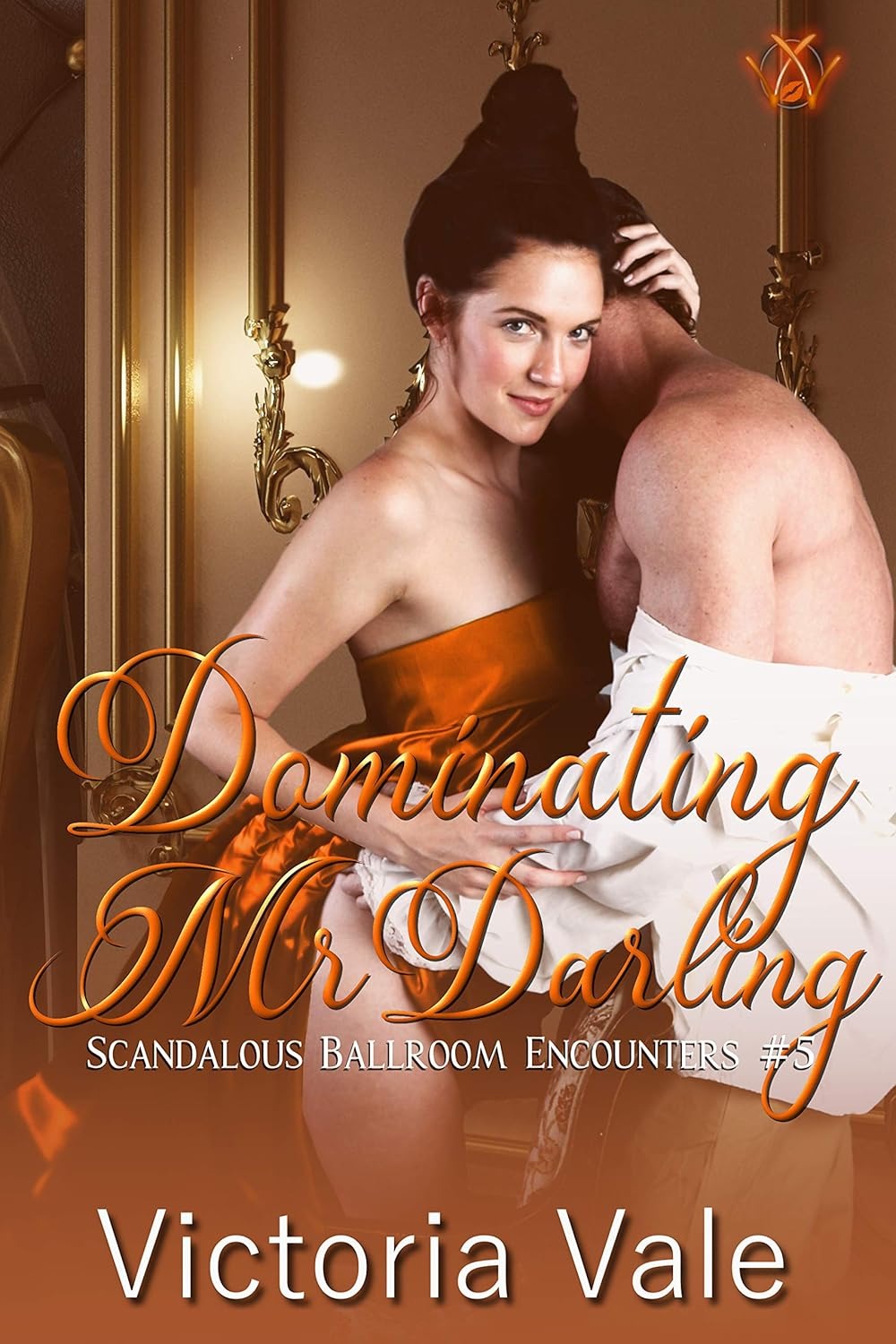
Dominating Mr. Darling by Victoria Vale, a cover showing a woman in an orange dress smiling as her arm is wrapped around a man half out of a loose white shirt.

Well, they can’t all be winners, I guess? Although “The Damsel” by the same author is probably on my short list for favourite works out of everything I have reviewed so far, “Dominating Mr. Darling” by Victoria Vale definitely isn’t.  Honestly, it’s pretty bad. A bait and (literal!) switch storyline; an actively annoying male lead; and a tendency to contradict its own premises mean I just didn’t like this one, and I don’t think most people will either.

As far as plot, here’s the jist: She’s the sister to the nobility, an heiress with an immense dowry. He is a mere mister with a bankrupt farming concern that desperately needs an infusion of capital. She’s an experienced dominant, but though he has never done anything like this before he quickly becomes immersed in her world. The book sells itself as a Domme (Lady Amelia Fitzwilliam) finally finding the perfect sub for her (the titular Mr. Darling), in an erotic historical romance setting. What you actually get is not that. 

Instead, this is about a woman who normally identifies as a dominant learning to love and be vulnerable through her submission to the male lead. While it implies that after this she goes back to being dominant with him, the book doesn’t trust the premise enough to allow her self discovery to be possible through someone else’s submission. If you were buying this based on the implications of the title and blurb, you are going to be disappointed. 

If you are the sort of person who is specifically seeking books with femdom in them, you are going to hate the book based on that problem alone. Perhaps unique of all groups, because of the normative pressures against women being dominant or men being submissive, we tend to be extra sensitive to anything that implies this is a phase, a facade or otherwise lacks a full emotional range.

Even so, sometimes even a serious flaw like that can just be an error in marketing. However, none of the other pieces of Dominating Mr. Darling come together well, either. Not the depictions of BDSM; not pulling off the stakes of the conflict; and not the figleaf of a historical setting. Each individually doesn’t work well, and in combination only serves to emphasize the flaws of the other parts. 

Of course, romance has always had a fuzzy attitude towards historical accuracy, treating it as negotiable. For every Flowers from the Storm, you are going to get a dozen Bridgertons. That’s not a bad thing, sometimes the past is just an excuse for pretty ballgowns or certain kinds of drama, and we aren’t here for the other stuff. And BDSM romances often take liberties too, favouring interesting conflicts over being strict manuals of how to kink responsibly. This is a feature not a bug. There’s room for books about healthy BDSM as just how the couples connect, but not all fantasies need to be diegetic good representation.

But, where Dominating Mr. Darling pairs vaguely Regency tropes (balls, social season, titles, marrying for money by default) with contemporary assumptions about how BDSM works (safewords, leather corsets), both feel like they were sort of counting on the other part to compensate for any compromises made. 

The historical setting gives us some costuming and a smattering of aesthetics. But, otherwise, for most of the book this really could have been about contemporary ultra rich people and nothing would have changed. Our heroine is an heiress who hangs out in men’s wear in casinos and fairly openly takes lovers inside and outside her own social class. At the same time, she is described as being the belle of good society, going so far as to be called “the Incomparable” by the consensus of the other aristocrats. Because we are in historical land she does have to contend with pressure to marry and the implication that doing so is a more or less one way journey, but there’s basement dungeons and modern style sex parties just about everywhere. Thus, because there’s no actual teeth to any of the other draw backs fo the setting, the result makes her seem like a rebel without a consequence.

Inversely, for all it pays lip service to modern concepts of consent, the lack of practical understanding of theory would probably be better suited to one where the characters could plead ignorance due to time period. Either you are telling a story where your husband has full legal rights over you and this is about how you navigate that as a person who wants to dom OR you are telling a story where those rules don’t apply. But then if you do that you lose a lot of leeway for the people to be trash at the BDSM part, which this book depends on to drive the conflict. 

Which is to say even as a switch romance it still falls on its face. The hero is an idiot who repeatedly wildly over steps whenever he is in a dominant role. His first decision, when faced with an opportunity to take charge for an evening, is to try to use that for real world leverage (commanding her to marry him). His next jaunt at that is to force her to reveal her secret in the most traumatic way possible. The third time involves her stripping off her fetish gear style symbols of dominance for some sort of reconciliation, after he has demanded she not shut him out when he fucked up the prior time. At no point does anyone acknowledge just how ridiculous that is because the reader is supposed to see this behaviour as daring and romantic. He cares about her so much he will take big swings and big risks, forcing her to do what she secretly wants. 

Sure, that’s a common part of submissive fantasies, but even if you are looking to do that you need to actually reasonably sell the idea that the dominant has the skill to do that. Or even that she needed to be rescued from her false front. Obviously I have my own reader bias about the trope that dominant seeming women just need the right man to take them down, but it doesn’t even do this well either. 

Instead, the book hasn’t taken the time to set up a premise where she is making a distinction between a mistress persona and herself, or how much her wild child self presentation is actually a smoke screen. For example there’s absolutely no role conflict after he marries her and sets her to the high femme business of ornamenting his home. All her earlier casino crossdressing becomes irrelevant and she takes to her midbook rustication with nary a bit of tension. Inversely, despite the book wanting us to take him equally seriously as a dominant, it also doesn’t suggest any effort on his part to learn to do this safely or respectfully. Or even that he understands what he did has been consistently bugnuts. He is supposed to be brash, but mostly this just comes across as entitled. 

The book takes a lot of time to establish she took years of supervised instruction to dominate well (not something I even enjoy, but hey, that’s the book’s argument about how this works, not me), but two scenes later, both extreme disasters, and the hero is treated as on par with her for his ability to take charge. Not only does this make for an obnoxious character, it becomes just another facet of how Mr. Darling’s monumental ego is treated as a good thing, and Lady Amelia’s confidence is something to be disrespected.

It also struggles with a problem many romance novels do, when the universe conspires to undermine one of the characters and make it clear everyone else has collectively concluded any resistance on their part to the other lead is silly. Faced with ambivalence or issues, everyone is quick to remind Lady Amelia this guy is clearly different to her and this would be good for her. Any misgiving she has is treated like she just needs to open up her heart a little, every conversation with other characters and the dialogue always slides to how good the hero will be for her if she only stops trying to trust her own judgment. One conversation between the men later and Lady Amelia’s primary source of social protection, her brother, is completely won over and her to tell her why she really needs to go along with this Mr. Darling person. Even when he openly tells her brother the object of his affection has said no after a verify ham handed proposal. 

But we never see why Mr. Darling is different in a good way. Lady Amelia’s clearly found other subs to play with in the past. We get hints she’s struggled to find one eligible for class reasons, but we never actually learn why this guy is not like the other nobles and gentry. It seems to be trying to imply nobody else would ever bother to challenge her tsundere façade, but she is never given enough unreasonable prickles to pull that off. 

Nor do we really confront the fortune hunter aspect on Mr. Darling’s part, and how she gets treated like the hot piece of ass attached to some tempting investment capital. It’s used in a sex scene and they sort of bring it up as a bickering topic, but the narrative and dialogue of the other characters agree this is to be treated as petty on her part to consider it. The best angle we go for is that he was obviously going to marry wealthy, but she is a special money source, unlike any other heiress.  The benefit to Lady Amelia is supposed to be that she’s so traumatized by her past that only Mr. Darling can actually accept her and tear down her walls. But at no point is she unreasonably pushing people away. Actually she’s always written as being open to others and letting them please her. Past partners have not been given their walking papers for getting too close, she just has a lively history of causal sex.

Which might be the ongoing thematic issue, the over reliance on tropes doing the heavy lifting, and a very fanfic style presumption there’s automatic audience buy in. 

Fanfic often skips explaining or fully addressing character motives, because the audience already knows who they are and where the characters are coming from. Pregnant Batman discovering he is the Joker’s secret Omega only needs to explain how that differs from our existing assumptions about how that would go down. It tonally also trusts the audience is ok with everyone being keyed up. In the same way, genre fiction can sometimes get a little bit of leeway around this, for example we accept the past generally had more rigid gender roles. Nevertheless, when you use those expectations to try to frame everything out and then repeatedly act in contradiction to them you end up sounding incoherent. 

I think the best example of the book’s over reliance on cliché was when she’s just married the hero and is touring the dilapidated manor her heiress money is going to be used to fix up. While doing so, she meets his family and then when the couple continue away after that scene the hero says, gladly, how the place desperately needs a feminine touch. 

That’s a pretty common historical romance chestnut, the idea that a woman is the secret ingredient to turning a house into a home. Sure, if we are here to enjoy the love lives of titled nobility, what’s a little complementarian sexism in our fun pretend time? This is at least accurate to how they thought. Only, the book has so little interest in matching its tropes with what is on page that it never acknowledges that we also just met the hero’s mom, who lives in this house and has only been widowed for two years. This is her house too, presumably decorated and managed by her for the majority of her adult life. The mother is not depicted as incapacitated from domestic management either, they just aren’t rich enough to give the place a full turn over. Oh, and he also lives with his unmarried sisters, women who are ostensibly trained to do this domestic management too. But they don’t count. 

A better handling might examine this as ironic flattery, or confront how dismissive he is to the other women in his life, or even establish why domesticity isn’t their cup of tea. Or address how a woman who wants to flout society’s rules settles into playing literal homemaker without even an internal struggle. But this book is running like a check list. He doesn’t say it because this makes any sense, it’s because it’s an expected trope and the audience is presumed to want the vicarious interior design achievement fantasy as part of the setting. And because the other thing romances often offer is a ready made family who adores you, particularly one loaded with sequel bait characters, it also added the mom and sisters without really thinking over the implications on this book of why they were there. 

Looping back to my earlier criticism of the kinky bits, that problem of trope reconciliation also pops up in how incoherent it is over consent. The audience is presumed to want two things, the idea that BDSM is ok really (so we get modern safewords), but that it presents real danger (so we get coercive marriage proposals or just tossing a partner into subbing with little negotiation). We don’t unpack how surprise limit pushing is a bad idea, but we are supposed to accept it is reasonable to be upset. This is a world with safewords, but none of the other theory-of-CNC, like understanding people don’t always know to articulate limits. The second time the  hero causes a major problem through this, it almost seems like all the safety framing was actually supposed to undermine her for not speaking out in the moment, but then we immediately skip to the next trope, “if someone loves you they chase you” and off he goes after her. 

However, because we never addressed or properly set up any of the other parts going into that conflict, what we actually get is the female lead being cornered between the arbitrarily present misogyny of the vaguely historical setting (but only when it’s narratively convenient as a motive) and her own clumsily written self loathing. Here is another trope to check off, reassuring your lover they aren’t really damaged goods. That’s supposed to make him a good man, but it’s handled so poorly it basically comes across as him accepting her apology that he has repeatedly hurt her, and then her making one more sacrifice to reassure him she’s actually his. 

Thus the full narrative arc becomes: Woman with severe self worth issues covers it up with rebellion of society’s rules, but comes to surrender herself to a man who will tolerate she’s not easily submissive because she is hot and rich. Oh boy. When we get our happily ever after she’s supposed to go back to dominating him, but we are to understand she now knows her palace and will confine it to bedroom only topping while she spends the rest of their marriage paying for his new roof and curtains.

A few more thoughts…

As you might have guessed, I am tentatively embarking on a 2026 femdom book review project. This means, as long as I can endure it, one book a week, live on Sundays. The challenge with the pace I set for myself is that it means committing myself to efficiency, avoiding things ending in a DNF. It also means being willing to make negative reviews.

Previously, I had thought to avoid that, since there’s so few femdom books out there and the creator space is so much a poorly compensated labour of love that I was concerned this was going to act as yet another a caustic deterrent. On the other hand, I have determined that you, the reader, are capable of making the distinction between me disliking  a book and it being objective trash. And furthermore I decided that worse than reviewing a book negatively is never reading it at all. 

But, I also  think reading books you don’t like is actually helpful in figuring out what worked about the ones you did. At my most vain I think I am read by enough writers that articulating problems can also help with one of this project’s other problems. Femdom books a dominant might enjoy reading or are not necessarily written for specific kind of gaze many subs (of any gender!) find irksome aren’t really even established enough to be a coherent category people might market or create for. We have a huge problem of not only finding what we are looking for, but also articulating what we want in a way that reliably helps us get it.

So my criticism is also a matter of context. For example, Dominating Mr. Darling is a sequel to a prior book that was M/f, focusing on the heroine’s brother. Did it ask the dominant male lead of the prior book to formally submit to the heroine a bunch to reconcile his own icy heart? I strongly suspect it didn’t. At the same time, the prior book was also about opening yourself up to love after severe trauma, and we meet the hero of the last book as now being very meek and considerate around his wife.

So, narratively, Dominating Mr. Darling is also hitting another, more invisible problem in genre expectations. A lot of romance is actually a power fantasy about a person’s journey to success through making a more established or at least typically unassailable person bend to them due to the love they have for an otherwise weaker person. A lot of M/f romance does that, so do most books where a hero starts out through dint of setting or just sexism end with him crooning helplessly over the heroine, transformed by the power of love. And, honestly often the appeal of these characters (billionaires, peers-of-the-realm, vampires, etc…) is what their power can do for the other protagonist when properly harnessed.

When you start taking away bits of stereotype, which you have to do to tell a femdom story, you start seeing the cracks more. Even if this book was less of a mess, essentially trying to steamroll over its own writing with boilerplate genre expectations, you kind of struggle with the gender thing. Unless this is an else-world where anyone can be anything, the experience of having any gender is indelibly filtered through how sexism impacts you. Femdom is a niche apart from BDSM as a whole because the starting context of violating your enforced gender norms unavoidably alters how one experiences things. (That’s even if your experience is to assert you actually are just like the other male doms, you are still stuck having to do so)

A lot of femdom stories try to tell an inversion, a sort of role reversal. What if she was the one with all the power to start? Some don’t, for example Heather Guerre’s Preferential Treatment and What Was Meant to Be are more classic in the starting power dynamics. Either way, the whole category is still going to have choppy issues unless it acknowledges the role gender typically plays in romance. 

And I think F/m books struggle with the male lead as much as the female one. Even in books I otherwise liked, they often fail to deliver the idea that the man is a net positive in the happily ever after. Any romance can struggle to do that, of course, but because they often involve robbing the male lead of part of the toolkit he would normally have to prove his worth, a recurring thing I trip over in these books is you often think she is better off single.

And I think that’s what this book gave me. It helps me understand what I am looking for is an equal partner who can submit without being a sandbag. Whether a book can pull that off is probably going to be a big part in how much I feel it’s a satisfying HEA. And, to take this review back to where I came in, I suppose I would also like to talk about why The Damsel, by the same author, worked for me, but this one failed spectacularly.

On the face of it it should be a pretty similar arc. A couple meet in a kinky hookup where she initiates him through light bondage, and then he comes to understand her darkness inside. Both end with a softer, more vulnerable dominant. A fundamental difference, I think is not just that Vale avoided the incongruent check list tone of Dominating Mr. Darling, but also she trusted her characters more to do shit together that complimented each other. Her male lead wasn’t just offering understanding, but real help. And, inversely the help the heroine needed did not completely undermine her. 

The messages here, around dominance, also couldn’t be more different. In Dominating Mr. Darling, ultimately only submission is allowed to be true vulnerability. In The Damsel, submission is also strength and offering dominance is inherently expressing an act of trust in your partner. What I would therefore be interested to see is if Vale’s next F/m work leans more to the former or to the much more satisfying latter.


Where to get it: Dominating Mr. Darling