“Preferential Treatment” by Heather Guerre [Femdom Book Review]

"Preferential Treatment" by Heather Guerre

I think there’s some note of consistency that although I am much more likely to drop a less known work as a review on my blog, inversely precisely because a thing I have read is popular I assume that I have reviewed the things that people are more familiar with in the genre of femdom romance. I liked Preferential Treatment when I read it, enough so that I regularly list it in a top 5 recommendations when people ask for a femdom romance book. I am not the only one who makes this suggestion either. 

In actuality it looks like I hit What Was Meant To Be, but not this one yet. This is a pity, because the book isn’t merely a great read, but also, in my opinion, the last word needed in the genre of Billionaire Romances. And by this I mean that it’s a beautifully constructed reply from a population that’s getting awfully sick of oligarchs and the power differences they represent. 

For doing so the book gets some negative reviews as “preachy”, which I think says more about the reviewers than its protagonist driven rejection of what that kind of wealth represents. Most billionaire romance heroines aren’t comfortable with the sheer gravitational pull of the hero’s wealth, but this one at least can articulate the problems she has clearly. 

And for all the lead is introduced as a more traditional meet cute through a chance encounter, it is remarkably realistic for the rest of it. The book gives you a happy ending, but it doesn’t flinch in how it constructs how people behave when massive amounts of money are on the table. 

Specifically, a major theme running throughout it is the complicated relationship poverty gives you with money, but also the conflict inherent in ones aesthetic preferences towards symbols of opulence, versus your actual coping skills as you try to escape that state of deprivation. Growing up in what passes for poor in Canada, there was also more of this book that personally resonated with me for non-femdom reasons to boot. I don’t just recommend it because it’s entertaining, but because it’s an incredibly genre savvy response to a lot of the problems in both romance and how we imagine femdom works versus how it actually works.

This is despite the how the premise and the male lead’s attitude to the woman he is into are possibly as far from an ideal starting place for a healthy relationship as you can get. Russian Billionaire Mikhail Volkov decides that his low level worker has the makings of a good domme when, not knowing who he is, she responds to his entitled behavior with firm pushback. To get her interested he gives her access to his near limitless resources, an offer that the heroine, Kate Pasternak is desperate enough not to turn down. She’s in a rough place in her life right now with a bunch of lingering medical debt, but there’s really never been a point when she’s been able to enjoy any financial stability. This is a lifeline, a chance to finally clear a hurdle between a net worth in the negatives and maybe have an emergency fund or start saving for retirement. Kate’s ambitions are incredibly modest.

A typical billionaire romance would then have the kink be forced gifting, where the heroine dub-con whines and blushes her way through the hero’s largess, protected from ever having to confront being perceived as greedy by his forceful choice to shower her with his largesse. This fantasy is probably as old as dirt at this point, a tension produced by suppressing your appetite for material things that’s enforced by social norms almost as strict on women as the one around sexual purity. The act of being a dominant unavoidably evokes three vices women are not supposed to have on our own behalf: aggression, overt sexuality, and selfishness. Thus being a domme is not just the archetypical bad girl, she’s the worst girl. All dommes have to deal with this, one way or another. 

Findom, as it is popularly understood, has sins two and three particularly emphasized under its umbrella automatically. I have said before that it exists because there’s few things women can do more transgressive than express ambitious ingratitude. We are supposed to permit men to be our social superiors and then be rewarded for loving their inner selves, not treat their sexual and romantic attraction to us as an overt vulnerability to extract from. Even sex work isn’t free from this, perpetually victim of the fictional construction of the woman who despite her job has a heart of gold, as if being someone’s paid worker was inherently implying blackmail of the client. Findom generally says fuck that, gimme. And people tend to feel at best ambiguous. 

Yet, most women like stuff and money, as a symptom of being human. Everyone needs stuff and money to not die. And the stuff and money, historically and currently, is disproportionately gated in the hands of men. You can try to earn your own stuff and money, but the people who have the majority of it did not earn it through sheer hard work. And then of course there’s a severe social penalty for asking for stuff or money for being female even in wage negotiations. 

If that wasn’t enough, of course, humans are preternaturally attached to the Cinderella myth. That’s the idea that it’s viable for women to do some sort of extreme cross class marrying into money if you are just that good, either through your virtues or strategic gold digging. The reality, of course is that marriage statistics do not show that happens at all. Marrying into money is not very common, and particularly not gender linked as a man is as likely to do so as a woman is. 

Findom exists as a result of both the belief money can be easily finessed from men and a male anxiety that in a rigged system they will never truly be loved for themselves, only what they can offer. 

And for its sins, the salt people hurl at it is legendary. In day to day interactions with the internet, more kinky people can be counted on to be critical of findom than pretty much anything else, even the stuff that plays with much more noxious taboos, like rape. Every bad stereotype people can make about women is dusted off: deceptive, seductive, addictive. Men, inversely, are cast as sweet naïfs, wistfully lured in by pure hearted loneliness. 

Green And Gold, another exploration on Findom, dealt with that stigma by drowning the dominant in reassurance. Nothing she desired was capable of being outside of what her two eager male leads wanted to give, and her primary power was rooted in simply gatekeeping her ability to receive. To an extent this is true to real life power exchange. Florid fantasies not withstanding, it’s ultimately bordered by the limits of your submissive partner. In an ideal world that’s bordered by your limits too and you have a balanced dynamic. Nevertheless, that assumes a circumstance without conflict, which is great in practice but not ideal for a story. 

I think Preferential Treatment is also about escaping the other, very real life problem of simply ending up being someone’s fantasy fulfillment version of power. 

This is a problem for all dominants, but I think femdoms even more so. You learn pretty early on that the intersection between human nature and misogyny means a culture where men generally say they want women who are lively and assertive. The most macho cultures, be paradox, seldom actually prize total submission in their women, instead idealizing women who defer to them but also otherwise behave as if the symbols of masculinity they prize were also more valuable to them. 

As a dominant this leads to a vexatious category of men who pursue you because they think you are actually some sort of extra complicated brat, or your inclinations are simply a defence mechanism that makes you extra choosy. But external to the fetish aspect, you still need to navigate an assumption on the part of many sub dudes that firecracker or ice queen, you are ultimately still his to channel or receive on his terms and not the other way around. Mikhail, the book’s Billionaire hero, is very much of that mold. He is certainly happy to have her dominate him in very closed circumstances, but his proposition comes with NDAs, a great deal of ambiguity and the real world power imbalance that even if she did object to anything he did or want other than what he wants she has no real ability to counter him.

Kate is otherwise sketched out as how dommes actually are, in really sharp contrast to how most men who fetishize us imagine us to be. This includes the limits of the common bitch-in-heels over achiever stereotype dominants are awarded. There’s this tendency to assume sheer gumption can overcome systemic issues, and that you are some sort of heroic, magnetic figure where assertiveness or confidence are the limitless scaffold you build around people so they cannot but help going in the direction you choose. 

Kate is not unflappable at all. She’s all flap, barely held down, her appearance of cool-headed boundaries and absolute accident based on Mikhail reading way more into their first interaction than is there. By pure luck, his silly, fetishized stereotype actually leads him to find a lifestyle domme with a knack for improvising with his rather lousy material and enough cynical insight to notice the limits of how much he is actually willing to submit. 

A blind read through left me angrily screeching at the book on her behalf while he continued to suck, while simultaneously deeply invested in her getting some sort of happy ending. It’s almost ironic most readers were prepared to overlook his consistent selfishness while calling out her critical and vocal socialism. 

Which, side note, here is another place Guerre is being clever with her use of tropes. While most Russian male leads are chosen exoticism largely based on emphasizing social biases about people on the borderline of whiteness (about as yikes as you are thinking), Guerre has done two things here. Firstly, her female protagonist’s surname is also Russian, making it clear we aren’t going there. Secondly she’s put her timeline that her male lead grew up in the worst sort of deprivation during the transition of the fall of the Soviet Union. If you are going to have at least a semi serious discussion about socialism, someone familiar with the way authoritarianism poisoned things, and the additional complexity of the immigrant experience gives you much more interesting fodder here. 

Likewise on the subject of poverty, Guerre gets across not just the foundational parts being systemic, familial and long lasting, but also the cultural alienation when you are confronted by wealth. Wealth is a foreign country. 

I occupy an awkward place, a rich man’s unexpected, youthfully created bastard, born to a bohemian mother from the sort of gnarly intergenerational situation that layers queerness, neurodiversity, intellectual brilliance and an interlude with, I am not making this up, MKULTRA. This means that I have this odd experience of growing up in what passes for poverty in Canada but occasionally getting dunked into the world of people who live sublimely comfortably. And you wouldn’t believe the guilt and sense of constant anomie that produces. 

Likewise there’s something in Kate I could vividly feel, the way her curated vintage aesthetic was a bridge, as all alt fashion is, outside of easily code readable class markers. Which works until you hit exposure to something actually expensive that has hidden infrastructure. Or something that was, for you, unthinkable. I cannot review this without talking about how this book ended up being deeply personal in this sense. 

I married a nice, upper middle class software engineer from the Midwest, who is not, as far as humans go, at all extravagant, particularly not for his social class. But there’s always little moments where the sort of diagonalization of our overlapping cultural pieces, the creativity, the kink, the nerdery do not entirely obscure the nice straight lines of his world compared with the turbulent ripples of mine. 

There’s a point in the story where Kate starts coming unglued, revolving around a piece of luxury cookware. The overt language of her meltdown is that she has determined that despite coveting it, she has no idea how one even integrates such a thing into one’s actual cooking. The underlying issue is that this temporary exposure to wealth isn’t helping her actual problem of living with lifelong instability, and the debt that’s put on her, in knowledge but also an ability to trust. Mikhail, for his part, is mystified. He is doing nice things, getting to give as an act of service and all it is doing is making his dominant cry. 

Their way through is a fundamental truth about making BDSM work for the long haul, you both have to be who you actually are with each other in a way that is immensely vulnerable. For this couple, it is about dismantling the wall his money has put between them. It is also about transitioning from serving his idealized Kate, a person he needs to be implicitly impressed by and endorsing of his status to feel safe with, to offering himself to real Kate. The person who he wanted at the start of the book, who when confronted by an entitled peer doesn’t back down. 

Because this is entirely told through Kate’s perspective, Mikhail’s transformation is a bit of a cypher, and he never really gets a scene where he articulates to her why he is able to go along with the change in direction she wants. But, I think Guerre has given us enough ground work we can take this as a matter of show don’t tell. What carving away his real billions is about is acknowledging that these are actually getting in the way. 

If you judged by the cover and blurb Preferential Treatment sounds like it will be yet another silly escapist bit of Cinderella fantasy fluff. Yet, what you get is something so solid it stands distinct in its own genre. It manages to understand and respect the tropes it is working with (romance land Russians, wealthy male leads, femdom), but in combining them, comes through with something wholly unique. And I think it speaks to something else as well, that the femdom part is probably what most made this possible. 

While all billionaire romances see their heroines eventually find some sort of comfortable equilibrium with the menace their lover’s wealth presents, the taboo breaking aspects of femdom becomes, through its inherent potential for iconoclasm, a way to pass through one of Romance’s more tricky barriers. A cardinal rule is that all stories must have a happy ending, but more often than not, books where the male lead has a huge advantage over the female lead require us to leave him that way and count on the strength of his love to abrogate it. She will always be more exposed than him, by class, by sexism, by being the one who married into the money, but trust me bro, he loves her, so that’s fine. 

Sometimes that can be enough, but sometimes it is nice for the heroine to say all the quiet parts out loud, and to strip the hero truly naked in the process. 


Where to buy: Barnes & Noble

Author website: HeatherGuerre.com

Liked this review? Check out more titles in my 2026 Femdom Book Review Project!
“Dominating Mr. Darling” by Victoria Vale [Femdom Book Review]

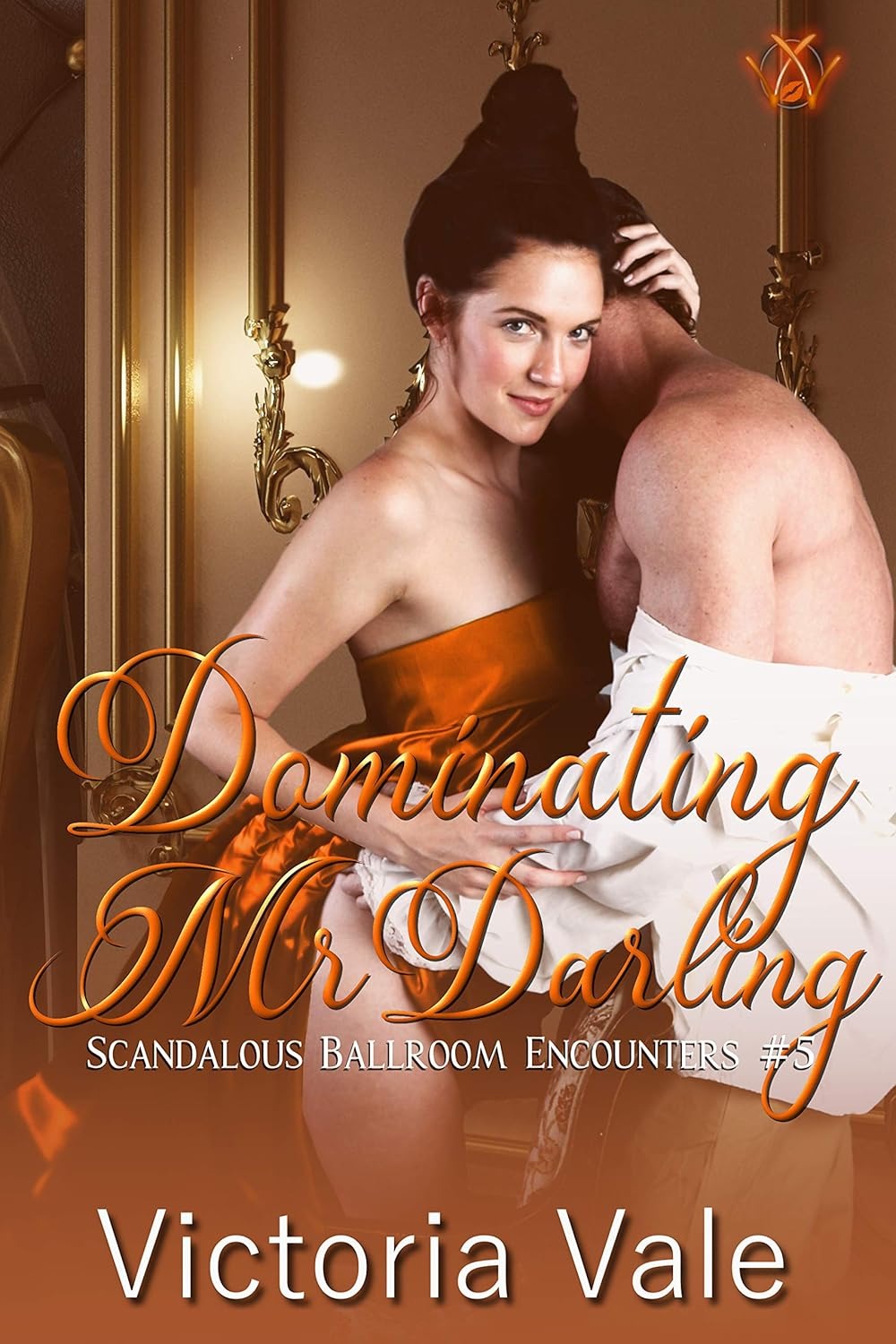
Dominating Mr. Darling by Victoria Vale, a cover showing a woman in an orange dress smiling as her arm is wrapped around a man half out of a loose white shirt.

Well, they can’t all be winners, I guess? Although “The Damsel” by the same author is probably on my short list for favourite works out of everything I have reviewed so far, “Dominating Mr. Darling” by Victoria Vale definitely isn’t.  Honestly, it’s pretty bad. A bait and (literal!) switch storyline; an actively annoying male lead; and a tendency to contradict its own premises mean I just didn’t like this one, and I don’t think most people will either.

As far as plot, here’s the jist: She’s the sister to the nobility, an heiress with an immense dowry. He is a mere mister with a bankrupt farming concern that desperately needs an infusion of capital. She’s an experienced dominant, but though he has never done anything like this before he quickly becomes immersed in her world. The book sells itself as a Domme (Lady Amelia Fitzwilliam) finally finding the perfect sub for her (the titular Mr. Darling), in an erotic historical romance setting. What you actually get is not that. 

Instead, this is about a woman who normally identifies as a dominant learning to love and be vulnerable through her submission to the male lead. While it implies that after this she goes back to being dominant with him, the book doesn’t trust the premise enough to allow her self discovery to be possible through someone else’s submission. If you were buying this based on the implications of the title and blurb, you are going to be disappointed. 

If you are the sort of person who is specifically seeking books with femdom in them, you are going to hate the book based on that problem alone. Perhaps unique of all groups, because of the normative pressures against women being dominant or men being submissive, we tend to be extra sensitive to anything that implies this is a phase, a facade or otherwise lacks a full emotional range.

Even so, sometimes even a serious flaw like that can just be an error in marketing. However, none of the other pieces of Dominating Mr. Darling come together well, either. Not the depictions of BDSM; not pulling off the stakes of the conflict; and not the figleaf of a historical setting. Each individually doesn’t work well, and in combination only serves to emphasize the flaws of the other parts. 

Of course, romance has always had a fuzzy attitude towards historical accuracy, treating it as negotiable. For every Flowers from the Storm, you are going to get a dozen Bridgertons. That’s not a bad thing, sometimes the past is just an excuse for pretty ballgowns or certain kinds of drama, and we aren’t here for the other stuff. And BDSM romances often take liberties too, favouring interesting conflicts over being strict manuals of how to kink responsibly. This is a feature not a bug. There’s room for books about healthy BDSM as just how the couples connect, but not all fantasies need to be diegetic good representation.

But, where Dominating Mr. Darling pairs vaguely Regency tropes (balls, social season, titles, marrying for money by default) with contemporary assumptions about how BDSM works (safewords, leather corsets), both feel like they were sort of counting on the other part to compensate for any compromises made. 

The historical setting gives us some costuming and a smattering of aesthetics. But, otherwise, for most of the book this really could have been about contemporary ultra rich people and nothing would have changed. Our heroine is an heiress who hangs out in men’s wear in casinos and fairly openly takes lovers inside and outside her own social class. At the same time, she is described as being the belle of good society, going so far as to be called “the Incomparable” by the consensus of the other aristocrats. Because we are in historical land she does have to contend with pressure to marry and the implication that doing so is a more or less one way journey, but there’s basement dungeons and modern style sex parties just about everywhere. Thus, because there’s no actual teeth to any of the other draw backs fo the setting, the result makes her seem like a rebel without a consequence.

Inversely, for all it pays lip service to modern concepts of consent, the lack of practical understanding of theory would probably be better suited to one where the characters could plead ignorance due to time period. Either you are telling a story where your husband has full legal rights over you and this is about how you navigate that as a person who wants to dom OR you are telling a story where those rules don’t apply. But then if you do that you lose a lot of leeway for the people to be trash at the BDSM part, which this book depends on to drive the conflict. 

Which is to say even as a switch romance it still falls on its face. The hero is an idiot who repeatedly wildly over steps whenever he is in a dominant role. His first decision, when faced with an opportunity to take charge for an evening, is to try to use that for real world leverage (commanding her to marry him). His next jaunt at that is to force her to reveal her secret in the most traumatic way possible. The third time involves her stripping off her fetish gear style symbols of dominance for some sort of reconciliation, after he has demanded she not shut him out when he fucked up the prior time. At no point does anyone acknowledge just how ridiculous that is because the reader is supposed to see this behaviour as daring and romantic. He cares about her so much he will take big swings and big risks, forcing her to do what she secretly wants. 

Sure, that’s a common part of submissive fantasies, but even if you are looking to do that you need to actually reasonably sell the idea that the dominant has the skill to do that. Or even that she needed to be rescued from her false front. Obviously I have my own reader bias about the trope that dominant seeming women just need the right man to take them down, but it doesn’t even do this well either. 

Instead, the book hasn’t taken the time to set up a premise where she is making a distinction between a mistress persona and herself, or how much her wild child self presentation is actually a smoke screen. For example there’s absolutely no role conflict after he marries her and sets her to the high femme business of ornamenting his home. All her earlier casino crossdressing becomes irrelevant and she takes to her midbook rustication with nary a bit of tension. Inversely, despite the book wanting us to take him equally seriously as a dominant, it also doesn’t suggest any effort on his part to learn to do this safely or respectfully. Or even that he understands what he did has been consistently bugnuts. He is supposed to be brash, but mostly this just comes across as entitled. 

The book takes a lot of time to establish she took years of supervised instruction to dominate well (not something I even enjoy, but hey, that’s the book’s argument about how this works, not me), but two scenes later, both extreme disasters, and the hero is treated as on par with her for his ability to take charge. Not only does this make for an obnoxious character, it becomes just another facet of how Mr. Darling’s monumental ego is treated as a good thing, and Lady Amelia’s confidence is something to be disrespected.

It also struggles with a problem many romance novels do, when the universe conspires to undermine one of the characters and make it clear everyone else has collectively concluded any resistance on their part to the other lead is silly. Faced with ambivalence or issues, everyone is quick to remind Lady Amelia this guy is clearly different to her and this would be good for her. Any misgiving she has is treated like she just needs to open up her heart a little, every conversation with other characters and the dialogue always slides to how good the hero will be for her if she only stops trying to trust her own judgment. One conversation between the men later and Lady Amelia’s primary source of social protection, her brother, is completely won over and her to tell her why she really needs to go along with this Mr. Darling person. Even when he openly tells her brother the object of his affection has said no after a verify ham handed proposal. 

But we never see why Mr. Darling is different in a good way. Lady Amelia’s clearly found other subs to play with in the past. We get hints she’s struggled to find one eligible for class reasons, but we never actually learn why this guy is not like the other nobles and gentry. It seems to be trying to imply nobody else would ever bother to challenge her tsundere façade, but she is never given enough unreasonable prickles to pull that off. 

Nor do we really confront the fortune hunter aspect on Mr. Darling’s part, and how she gets treated like the hot piece of ass attached to some tempting investment capital. It’s used in a sex scene and they sort of bring it up as a bickering topic, but the narrative and dialogue of the other characters agree this is to be treated as petty on her part to consider it. The best angle we go for is that he was obviously going to marry wealthy, but she is a special money source, unlike any other heiress.  The benefit to Lady Amelia is supposed to be that she’s so traumatized by her past that only Mr. Darling can actually accept her and tear down her walls. But at no point is she unreasonably pushing people away. Actually she’s always written as being open to others and letting them please her. Past partners have not been given their walking papers for getting too close, she just has a lively history of causal sex.

Which might be the ongoing thematic issue, the over reliance on tropes doing the heavy lifting, and a very fanfic style presumption there’s automatic audience buy in. 

Fanfic often skips explaining or fully addressing character motives, because the audience already knows who they are and where the characters are coming from. Pregnant Batman discovering he is the Joker’s secret Omega only needs to explain how that differs from our existing assumptions about how that would go down. It tonally also trusts the audience is ok with everyone being keyed up. In the same way, genre fiction can sometimes get a little bit of leeway around this, for example we accept the past generally had more rigid gender roles. Nevertheless, when you use those expectations to try to frame everything out and then repeatedly act in contradiction to them you end up sounding incoherent. 

I think the best example of the book’s over reliance on cliché was when she’s just married the hero and is touring the dilapidated manor her heiress money is going to be used to fix up. While doing so, she meets his family and then when the couple continue away after that scene the hero says, gladly, how the place desperately needs a feminine touch. 

That’s a pretty common historical romance chestnut, the idea that a woman is the secret ingredient to turning a house into a home. Sure, if we are here to enjoy the love lives of titled nobility, what’s a little complementarian sexism in our fun pretend time? This is at least accurate to how they thought. Only, the book has so little interest in matching its tropes with what is on page that it never acknowledges that we also just met the hero’s mom, who lives in this house and has only been widowed for two years. This is her house too, presumably decorated and managed by her for the majority of her adult life. The mother is not depicted as incapacitated from domestic management either, they just aren’t rich enough to give the place a full turn over. Oh, and he also lives with his unmarried sisters, women who are ostensibly trained to do this domestic management too. But they don’t count. 

A better handling might examine this as ironic flattery, or confront how dismissive he is to the other women in his life, or even establish why domesticity isn’t their cup of tea. Or address how a woman who wants to flout society’s rules settles into playing literal homemaker without even an internal struggle. But this book is running like a check list. He doesn’t say it because this makes any sense, it’s because it’s an expected trope and the audience is presumed to want the vicarious interior design achievement fantasy as part of the setting. And because the other thing romances often offer is a ready made family who adores you, particularly one loaded with sequel bait characters, it also added the mom and sisters without really thinking over the implications on this book of why they were there. 

Looping back to my earlier criticism of the kinky bits, that problem of trope reconciliation also pops up in how incoherent it is over consent. The audience is presumed to want two things, the idea that BDSM is ok really (so we get modern safewords), but that it presents real danger (so we get coercive marriage proposals or just tossing a partner into subbing with little negotiation). We don’t unpack how surprise limit pushing is a bad idea, but we are supposed to accept it is reasonable to be upset. This is a world with safewords, but none of the other theory-of-CNC, like understanding people don’t always know to articulate limits. The second time the  hero causes a major problem through this, it almost seems like all the safety framing was actually supposed to undermine her for not speaking out in the moment, but then we immediately skip to the next trope, “if someone loves you they chase you” and off he goes after her. 

However, because we never addressed or properly set up any of the other parts going into that conflict, what we actually get is the female lead being cornered between the arbitrarily present misogyny of the vaguely historical setting (but only when it’s narratively convenient as a motive) and her own clumsily written self loathing. Here is another trope to check off, reassuring your lover they aren’t really damaged goods. That’s supposed to make him a good man, but it’s handled so poorly it basically comes across as him accepting her apology that he has repeatedly hurt her, and then her making one more sacrifice to reassure him she’s actually his. 

Thus the full narrative arc becomes: Woman with severe self worth issues covers it up with rebellion of society’s rules, but comes to surrender herself to a man who will tolerate she’s not easily submissive because she is hot and rich. Oh boy. When we get our happily ever after she’s supposed to go back to dominating him, but we are to understand she now knows her palace and will confine it to bedroom only topping while she spends the rest of their marriage paying for his new roof and curtains.

A few more thoughts…

As you might have guessed, I am tentatively embarking on a 2026 femdom book review project. This means, as long as I can endure it, one book a week, live on Sundays. The challenge with the pace I set for myself is that it means committing myself to efficiency, avoiding things ending in a DNF. It also means being willing to make negative reviews.

Previously, I had thought to avoid that, since there’s so few femdom books out there and the creator space is so much a poorly compensated labour of love that I was concerned this was going to act as yet another a caustic deterrent. On the other hand, I have determined that you, the reader, are capable of making the distinction between me disliking  a book and it being objective trash. And furthermore I decided that worse than reviewing a book negatively is never reading it at all. 

But, I also  think reading books you don’t like is actually helpful in figuring out what worked about the ones you did. At my most vain I think I am read by enough writers that articulating problems can also help with one of this project’s other problems. Femdom books a dominant might enjoy reading or are not necessarily written for specific kind of gaze many subs (of any gender!) find irksome aren’t really even established enough to be a coherent category people might market or create for. We have a huge problem of not only finding what we are looking for, but also articulating what we want in a way that reliably helps us get it.

So my criticism is also a matter of context. For example, Dominating Mr. Darling is a sequel to a prior book that was M/f, focusing on the heroine’s brother. Did it ask the dominant male lead of the prior book to formally submit to the heroine a bunch to reconcile his own icy heart? I strongly suspect it didn’t. At the same time, the prior book was also about opening yourself up to love after severe trauma, and we meet the hero of the last book as now being very meek and considerate around his wife.

So, narratively, Dominating Mr. Darling is also hitting another, more invisible problem in genre expectations. A lot of romance is actually a power fantasy about a person’s journey to success through making a more established or at least typically unassailable person bend to them due to the love they have for an otherwise weaker person. A lot of M/f romance does that, so do most books where a hero starts out through dint of setting or just sexism end with him crooning helplessly over the heroine, transformed by the power of love. And, honestly often the appeal of these characters (billionaires, peers-of-the-realm, vampires, etc…) is what their power can do for the other protagonist when properly harnessed.

When you start taking away bits of stereotype, which you have to do to tell a femdom story, you start seeing the cracks more. Even if this book was less of a mess, essentially trying to steamroll over its own writing with boilerplate genre expectations, you kind of struggle with the gender thing. Unless this is an else-world where anyone can be anything, the experience of having any gender is indelibly filtered through how sexism impacts you. Femdom is a niche apart from BDSM as a whole because the starting context of violating your enforced gender norms unavoidably alters how one experiences things. (That’s even if your experience is to assert you actually are just like the other male doms, you are still stuck having to do so)

A lot of femdom stories try to tell an inversion, a sort of role reversal. What if she was the one with all the power to start? Some don’t, for example Heather Guerre’s Preferential Treatment and What Was Meant to Be are more classic in the starting power dynamics. Either way, the whole category is still going to have choppy issues unless it acknowledges the role gender typically plays in romance. 

And I think F/m books struggle with the male lead as much as the female one. Even in books I otherwise liked, they often fail to deliver the idea that the man is a net positive in the happily ever after. Any romance can struggle to do that, of course, but because they often involve robbing the male lead of part of the toolkit he would normally have to prove his worth, a recurring thing I trip over in these books is you often think she is better off single.

And I think that’s what this book gave me. It helps me understand what I am looking for is an equal partner who can submit without being a sandbag. Whether a book can pull that off is probably going to be a big part in how much I feel it’s a satisfying HEA. And, to take this review back to where I came in, I suppose I would also like to talk about why The Damsel, by the same author, worked for me, but this one failed spectacularly.

On the face of it it should be a pretty similar arc. A couple meet in a kinky hookup where she initiates him through light bondage, and then he comes to understand her darkness inside. Both end with a softer, more vulnerable dominant. A fundamental difference, I think is not just that Vale avoided the incongruent check list tone of Dominating Mr. Darling, but also she trusted her characters more to do shit together that complimented each other. Her male lead wasn’t just offering understanding, but real help. And, inversely the help the heroine needed did not completely undermine her. 

The messages here, around dominance, also couldn’t be more different. In Dominating Mr. Darling, ultimately only submission is allowed to be true vulnerability. In The Damsel, submission is also strength and offering dominance is inherently expressing an act of trust in your partner. What I would therefore be interested to see is if Vale’s next F/m work leans more to the former or to the much more satisfying latter.


Where to get it: Dominating Mr. Darling

“Surrendering to Scylla” by Wren K. Morris [Femdom Book Review]

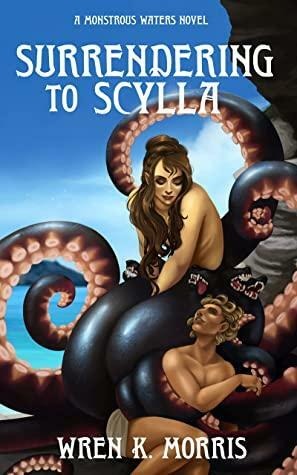
Surrendering to Scylla but Wren K. Morris

A cursed nymph living a life of violent retribution comes to love and be loved by a gentle, shipwrecked fisherman. She’s been hurt badly before, but through the power of his endless patience, a strong fawn response from his own prior trauma and the power of forced proximity, love is found (as well as general deference to her authority). 

It’s a Greek myth retelling and monster romance, between Scylla, the sea monster, and a man who is like not like the other terrible men she has met before. He is patient enough with her prickly side to let her come to trust him, and he is devoid of the dominating masculinity of all her prior suitors. There’s lots of overtly coded, unapologetic femdom and a lot of feelings.

If you like your ladies strong and your men soft, and you want to watch the most bitter woman in the world be loved anyway, you may find this was just what you were looking for. There’s lots of action, tentacles and high drama, and pretty reasonable pacing. It’s even the first book of the series, rather than sticking the femdom in the ass end of the book list when all the creative juice is wearing thin. Unfortunately I didn’t personally find it worked for me, but I can see why people do, and what in it was done very well. 

For positives, you get a heroine who is allowed to be physically monstrous, biblically accurate style. Scylla has tentacles aplenty and vicious dog heads at her waist, and rips several people in half. She is a Gothic villain in the style usually only permitted to male characters, the brooding brute. The plot is also constructed into a coherent narrative by someone who clearly knows their myths. A barren island’s cave system makes for a novel and occasionally oddly comfy setting. I liked the slice of life parts. 

Unfortunately, for me, all this is held back by a chronically weak male lead (in more than the physical sense) and a cartoonish level of simplicity to its approach to the bad guys. And, as a modern retelling, for all it tries to tweak itself to a more feminist framing, with its emphasis on female rage, the rewards of being true to yourself while opening up a little to love are a bit dubious.

I also found it couldn’t seem to commit to how unlikeable the heroine is supposed to be. That’s not something I would call a fatal flaw. It’s well understood that female characters are held to higher standards to sweetness and thematically this is about not having to be nice. Nonetheless, there’s a bit of awkwardness in how much we the reader are supposed to buy her self justification. Retellings of the villain figure stories often struggle with this, explaining away what modern audiences might particularly take issue with to the point of dilution or failing to address them satisfactorily. While the Greeks themselves gave most popular characters in their stories different interpretations that could be completely contradictory, I found Surrendering to Scylla a bit tonally indecisive in how bad it wanted her to be read as. Greeks often elided around that problem with tragedy, of which this would otherwise stand well as, but Romances have to give you a Happily Ever After. Unfortunately, this one tried to do so without deciding if the characters needed to resolve or soften most of their flaws, or lean into them. 

So, we linger on Scylla’s suffering to make her understandable, first her objectification as a nymph, her status as collateral damage to a deluded Circe, and so on. Usually this sort of framing is done to make a character’s behavior understandable and sympathetic. Inversely, she has an awful lot of self pity for a serial killer and very little self reflection about her own prejudices around other monsters. The story also acknowledges that she is actively luring people to their death for the crime of being in the same zipcode and not as discriminating a killer as she puts herself to be. Morris isn’t going for the me-or-them completely misunderstood monster. I actually liked this part, but her unchanging embrace of that came at the expense of Ophelo’s likeability in a way that I don’t think was intended. It also ends up highlighting how simplified all the other characters are in their uncritically described awfulness, which can be confusing.  

Because additional characters are left in very reductive shapes, it’s very undecided about what I would describe as how much we should take seriously the leads’  trauma goggles. Narrative seesaws between hints of complexity and hard binaries, where people are all good or all bad.  It therefore feels a bit like we are getting things through the perspective of our two leads, but not given space to acknowledge they are unreliable narrators. 

For example, in the setting “Sailors” are officially distinct from the male lead, a “Fisherman”. The former is a sort of long voyaging traveller, the latter, we are led to understand, is a skilled trade everyone spits on. Why do Sailors sail? Scylla would say they are greedy, but stops short of saying they are all raiders. They have treasures on their boats sometimes. That’s about the level of motivation we get here, so we can only infer most of them are traders. Regardless, Sailors are all characterized as absurdly awful, murderous jerks. Some of this is being played for laughs, with how ridiculous the characters are. But at the same time we are supposed to see them as a real danger to Ophelos, including implications (off page) he has been repeatedly sexually assaulted. Thus, the book struggles with the nuance it wants to insert. 

Scylla has a massive blind spot where her interactions with the world essentially amount to avoiding Gods and being exasperated strange horrid Greek men want to fuck her. She’s clearly never thought about any mortal who wasn’t cut in the heroic measure, and while those that do have nothing to recommend them, those that don’t are largely outside of her interests.

For example, she is hard done by and alone thanks to the curse. But she also keeps mentioning off hand there’s another monster in line of sight from her own home that she has clearly made zero effort to contact. We never learn why, but she is also offended to be compared to other monsters without a lot of caveats on Ophelos’s part. This isn’t one of those “monster is our word, you can’t use it” either. She just blithely assumes that her neighbour isn’t worth talking to.

Ophelos, on the other hand, is comically bullied. He is so bullied, the story makes it clear that even his father was bullied. Everyone bullies him so hard and so mean, but he kills and catches fish so good that the Sailors brought him along in the boat. The rest of his character is basically one giant trauma fawn response. When he isn’t fawning he is clinging. The clinging is framed as the courage of his love, but given the other thing we know is the only people who didn’t bully him were older women he helped in the past, there’s a streak of self preservation here that never gets addressed. And nonetheless, his actual backstory is life in a small village followed by travel with horrid louts. For all his time on boats he has never seen the world without bringing a gang of assholes with him wherever he goes.

While Sylla is permitted to do things female characters usually don’t get to, Ophelos’s most positive trait is his complete inability to pose any meaningful threat to Scylla. This makes her feel safe, but ultimately that’s all he can offer. It feels like in an effort to emphasize the distinction between them it ends up giving Scylla depressingly low standards. 

Ophelos embodies that observation that if you are the sort of person who waxes at length that dogs are better that people, what you mean is you prefer beings you have all the power over who depend on you completely. It’s not wrong to fantasize about making someone into your literal emotional support pet.  It just made it hard for me to feel Scylla was actually getting a good deal. 

I think my “come the fuck on” moment with this book was probably the relationship’s third real conflict. After an interlude of innocent-in-a-Gothic-castle style standard warming to each other, a gang of Sailors show up and attempt to fight Scylla. Ophelos wanders into this, and, after the Sailors’ offer of rescue is rejected by him, turns on Ophelos as well. As is a traditional trope, Scylla takes a mild injury defending him, but when she is snuggling him in the aftermath he is also not comfortable with the carnage he just witnessed and blurts out he forgot she was a monster.  Scylla reacts by storming off, rejection sensitivity dysphoria personified. When they both cool off, Scylla apologizes for not realizing gore could be off-putting… and Ophelos apologizes for letting his empathy get in the way of her murder and making her feel bad that he was openly upset. Even though, he says, he can’t help noting those dudes she ripped asunder could have easily been him, he knows she needs to do this as a part of herself. 

Not “you were only protecting yourself and me!” Not “you couldn’t help it, you lost control” or even “yes, it’s bad but your monster part needs to feed”. Just that this is important to her, so who is he to get in her way or question that? We see that Ophelos fully acknowledges that Scylla is a monster in the behavior sense not the physical sense. It’s this point that we realize just how cooked this young man’s brain is. Supposedly soft, gentle and almost cloyingly sweet Ophelos is very bought into his role as a barnacle on bad people. 

Scylla can kill a thousand other Ophelos, in his mind, as long as he gets to stay by her side. He doesn’t even characterize the victims as bad people, they just aren’t him so it is not his business. His thought process is that he believes he has to be with a monster anyway and at least this one loves him and confines the violence to others. Ditto, we are supposed to take Ophelos’s repeatedly refusing to be sent away as a strength of his devotion and character.  He is just more scared of being alone and losing Scylla’s angry defensive energy. Ophelos isn’t nice, he is a Nice Guy. 

I think why this galled me is that I spend a lot of time around people with a lot of overt female rage, and have had a fair bit of it myself. I am often spikey and bristle easily. And one thing you have to be mindful of is that there’s a category of Not Like Other Boys that will sort of remora onto women they see as having more fight than them. And notably they tend to conflate ability to be mildly helpful to people and a lack of their own ability to express agency as being inherently more good and thus above reproach (and more worthy of you). Ophelos gave up trying to be meaningfully good a long time ago, and his frightened reaction is supposed to be a momentary lapse he will try hard to get over.

There’s a bit in the last third of the book where she’s temporarily restored to a nymph and they maintain their D/s dynamic. Normally I would find that refreshing, as often resolving the plot’s source of conflict in a femdom story ends the dynamic. Unfortunately Ophelos’s unaddressed trauma and perpetual identity of victimhood dilute its impact. Scylla the nymph is still stronger than Ophelos, because his level of ability to stand up to her begins and ends with requesting that she only call him Pet during play (and not leave him alone). You get the clear impression that even subtracted from her physical augmentation, if she wanted to she could still take him to the tideline and hold him under water until the bubbles stopped. The part of her that made her a monster is also still there, even if the tentacles are temporarily back to legs. And, ultimately, they are basically living in a rental owned by her divine dad at this point. He might have insisted this is where he wanted to be but the alternatives have been clearly spelled out as death or more Sailor based abuse.

I also think the other point of hesitation for me is that in femdom circles there’s a tendency to be uncritical about the motivation for doing sadomasochistic hijinks is only just retribution for the pain of living under patriarchy. As a fantasy flavour it is no worse than say, pretending to be a pirate. As a thing to wade through though from people being serious, it’s basically the constant message that femdom is just another trauma induced personality disorder. Not that the drama of trauma can lead to accidental fetish material, but there’s a slice of the larger community who are doing this because they sincerely see it as a compromise needed to deal with the hazards of heterosexuality.

If Scylla, given choice, is still the monster, I would have also liked to have seen how Ophelos handled choice more meaningful than “noooo, I want to be with yooooooou” when confronted by separation others chose for him. Morris was probably being true to the myth here, in so much that there wasn’t any material to build out from, but at least once it would be nice to see him choose her when the alternatives weren’t objectively and unambiguously more crap. 

Nevertheless, being fair, this is a fantasy not a relationship guide. If Ophelos is little more than the rescue dog that encourages a traumatized woman to finally leave the house, that’s still an interesting story. And sometimes the best a real happy ending can offer us is living in a different, better house, and still with the good dog. Sometimes we don’t get over our bullshit or address our internal contradictions. And, I mean, come on, there’s graphic alien physiology monster sex. And captivity based femdom that stays femdom post captivity. And a happy ending that pleases the characters, even if it might not be perfect. 

“A Holiday Under Her Control” -Femdom Christmas Romantic Comedy

"A Holiday Under Her Control" a femdom romance by Pearl O'Leslie is depicted as a red book surrounded with more details you can find inside including: Finding love after a breakup, Woman Taking Charge, The Magic of Finally Feeling Seen, Femgaze Femdom, Sadism... with love and Her Hero? Her Sub. A caption lets you know it's available now

A lot of you have heard my particularly strident complaints that there’s a distinct lack of both femgaze femdom and femdom romances. So… I wrote a book! A sweet, sentimental and wonderfully cozy story about two people finding each other and falling in love through femdom. It’s spicy as a gingersnap, but it’s also a story about the magic of finally feeling seen by someone who completely gets you.

And yes, it’s available in both ebook and paperback!

What’s The Story?

Big city lawyer Trevor (personal injury, junior partner) has just been dumped on Christmas Eve. His fiancée’s return to her small home town has gone permanent after deciding to throw all in to save her father’s bakery. She blamed catching the Christmas spirit, but Trevor knows damn well that a reunion with a High School bad boy from her past is probably a much more significant factor than she’s letting on. Now he’s at a bar on Christmas day, trying to forget the worst Christmas of his life by burying himself in work. He’s ready to call Bah humbug! and stack billable hours, but holiday magic has other plans in the form of posh rich girl Elizabeth. She’s also smarting from a breakup of her own and makes him an offer: join her until New Year’s Eve for a get away in her family’s cottage and prove that the best way to get over someone is get under someone else.

Their chemistry is perfect, and Elizabeth’s never found someone so effortlessly able to be what she wanted. But with ghosts of relationships past haunting them both, can her sweet sadism and his desire to please be enough to see them together after the end of A Holiday Under Her Control?

Femdom Review “Pawn of the Cruel Princess” by Rebecca F. Kenney

“Pawn of the Cruel Princess” by Rebecca F. Kenney is a dark romance aiming for the trope of enemies to lovers. It’s got an ostensible femdom premise (male war captive of female royalty) but a decidedly switchy tone. Like many works trying to focus on sexual slavery while also trying to keep the characters likable, it relies heavily on external pressures pushing the couple together and forcing the female lead, Ruelle, into a more carnal dynamic with Ducayne. 

There is a plot here, as well, with shades of Gideon the Ninth. After our main characters’ introduction and torture room meet cute, we learn the flower of the youthful nobility (and their pleasure thralls) must congregate in one isolated place to party. Once at the resort, bad things must be grappled with and whodoneit mystery is presented. Ruelle brings enemy captain Ducayne to spite her Crown Princess sister, but also because she is attempting to politic her way into her own survival when her wicked sister eventually ascends the throne. Despite having virtually no time to train Ducayne, with the help of a magic tattoo and some negotiation, Ruelle secures his cooperation to at least vaguely attempt to pass as her submissive thrall.

The sister and the family dynamic here is extravagantly abusive. The society, for their part, is hypersexual with a great deal of focus on the owning and training of their thralls. This appears to be a common practice on the island shared by both Ruelle and Ducayne’s respective nations. Our framing device for why any of this needs explaining is that Ruelle is a virgin who has yet to cooperate with debauchery expected of a noble. 

Ducayne, for his part, instantly decides he doesn’t care about the side of a war he is on, but maintains an intense quantity of pride and belief in his own right to autonomy. He is also spends a lot of time thinking about the bad relationship he has with his mother. 

Both characters speculate they are kinky thanks to abuse from their parents. Much hay is made of the heroine’s inherent masochism, something that she is deeply uncomfortable with. The hero is forever pinning her against things and making threats. In this society, being aroused by bottoming is apparently shameful, and both characters grapple with discomfort that they are aroused by it, Ruelle more so than her thrall. There is something here about space for switches and lovers of primal, but if you are turned off by the sub manhandling the dominant and at least one scene of pretty much flat out non-con with another man for Ruelle, you might be annoyed.

I know this is a hot button issue for a lot of femdoms that even in fiction we don’t get to avoid being disempowered,, not to mention the external pressure that we are just feisty subs who will eventually be taught better. If anything that could even hint of that is triggering, you might want to skip this one.

On the other hand, for all of Ducayne’s bluster, his growing feelings for Ruelle quickly come to form an ongoing basis for his willing cooperation with his own subjugation, and he’s clearly aroused by being sliced up, verbally abused and manhandled by Ruelle. There’s more turbo brat here than full dominant from him, and his own violence towards Ruelle rapidly starts to resemble a sort of service topping. Ruelle is incredibly erotophobic and Ducayne’s role is to largely safely confront her with her own desire in a way that she can eventually accept. Inversely Ducayne shifts from being horny-for-his-enemy to deciding that she’s almost as much a prisoner as him and assuming a role of rescuer.

Also expect interludes with all the background characters, who are of every possible orientation. There will even be a sort of light love triangle with potential for a thruple explored, but this book isn’t aiming to be menage, just keeping most of the focus on kinky sex, more kinky sex and rather intense violence.

To its credit, when we get to the ending, while all romances must have a happily ever after (HEA), we also don’t get the sense this pair will transform to vanilla. They will probably remain stabby and primal, but ultimately the hero decides to accept something that keeps him subjugated to the heroine.

TL;DR

Domme-to-switch non-con with a brat and a very violent, gory plot. A lot of stabbing and slicing from the heroine. I found it perfectly readable, but the emphasis on the heroine’s masochism still needs flagging.

Unbound by Cara McKenna: Femdom Romance That Gets It

femdom romance

Update: This is a very old review. While I personally found this book fairly readable, I will caveat that it’s very low on the power exchange and the plot largely focuses on male shame around having a specific fetish and connecting through releasing that shame. It also has a MAJOR weight loss based theme for the female lead that needs specific trigger warnings.

Wanna know how you can take the tropes and rules of the genre of romance and make a well realized self discovery setting with flawed but pleasant characters, and write a femdom story that is believable? Tired of erotica aimed at sub men and looking for something written to please a female dominant?

Unbound, by Cara McKenna is one of my more pleasant surprises for 2016. Holy shit, is it a tightly little packaged example of a good, realistic femdom romance. You know how you really want something to exist, and you bemoan that you can’t seem to find it, and BAM, there it is, better than anything you could write?

I have a moderate romance novel habit, usually enjoying the so-bad-its-good and the occasional just plain good read as I do my daily commute to and from work. I’m usually a big fan of historicals, but Amazon gave this to me as a suggested read. Judging a book by its cover, it’s another shirtless headless dude with a vaguely kink hinting title, and I admit I was all prepared to hate read my way through a hideous M/f train wreck someone dashed off to pay the internet bill. I admit I am a snarky, mean reader. Then by a few pages in the author managed to make me go from predatory reviewer to tentatively intrigued:

There’s nothing in summary to make you expect something different. Our heroine, Merry, is off to do a hiking adventure in the Scottish Highlands. She’s recently lost her mother and a significant amount of weight, and is dealing with the ramifications of that. This is the first sign that we’re in for an actual treat- while most books handle weight loss like a Cinderella transformation, Merry is dealing with all the realities- loose skin, changed relationship with people that’s a mixed blessing, and trying to bend her mind around a healthy relationship with herself and her body. Rather than glamour, she’s feeling alienated from her identity as the fun fat girl- her long term FWB dumped her and she’s having to re-examine both her friendships and her relationships with herself. Then her swimming in a Scottish lake gives her dysentery.

In a writing genre where beleaguered heroines get dainty fevers and miraculously limited concussions, I’ll give the story props for going there. The narrative about as coy as the POV would give about the symptoms, but weak and fainty, she ends up on the doorstep of a local hermit, a guy with a Dark Past (TM). Our hero, Rob, is an alcoholic who deals with his problem by getting away from society. Oh, and he’s a pervert.

The book teases you, taking a slow burn approach to all things sexual, and I was all prepped to pout a little when it was revealed that he was a Secret Dominant who was going to Teach Her To Love Her Body Through Submission, when once again the book surprised me. Rob is a sub with a thing for scratchy rope. And Merry, who hails from the west coast fashion industry is fully aware of kink things and doesn’t miss a beat. Repressed and British bloke meets a woman whose backstory is a baby born of a gay man and a single-by-choice hippy mother. She’s not only cool with it, it doesn’t occur to her that he’s odd.

You know how rare it is to find writing that really gets it? That recognizes the pure joy that’s in the dominant side for women? Or that clues in how desirable a sub guy can make you feel?  I won’t get too spoiler heavy, but these characters manage to connect on multiple levels, both zingy chemistry, and no sense that the demons they battle are pure dramatic padding. And my goodness, it’s good to have a sub guy be written as a delicious piece of fuck meat, and a dominant heroine not have to use the proxy of Mistress AngryWhip to express herself.

One does not read romance to break free of comfortable formats- like watching baseball you go into it with expectations of the rules everyone is operating under. Consider this a perfect play, from someone who knows her genre well and knows how to speak through it to make a very modern, approachable story that delivers the obligatory warm and fuzzies while managing depth of character.